
Phone: +86 15398058207
E-mail: sales@flexiturn.com
Add: Room 603 Building C, The Huixin Center, Zhangba One Road, Yanta Zone, Xi'an City, Shaanxi Province, China
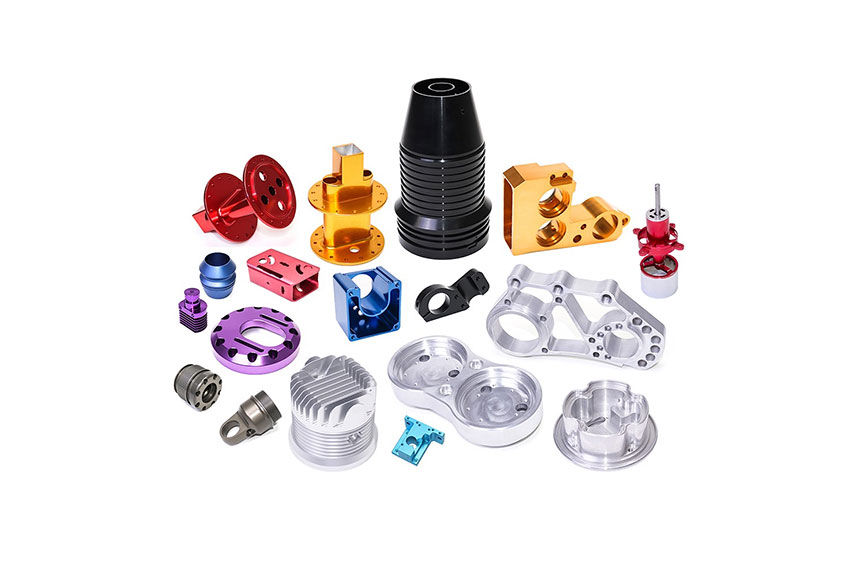
Common CNC metal parts surface treatment
Metal surface treatment refers to the process of performing specific physical, chemical, or mechanical treatments on the surface of metal materials. The purpose of doing so is to improve various aspects of the metal, such as corrosion resistance, mechanical properties, appearance quality, or other specific performance requirements.
The Importance of Metal Surface Treatment
1. Anti corrosion
2. Rust prevention treatment
3. Improve hardness and strength
4. Improve wear resistance
5. Improve heat resistance
6. Improve metal appearance
Classification of Metal Surface Treatment Processes
1. Improvement treatment: changing the surface state of the substrate through physical and chemical methods; The chemical composition of the substrate remains unchanged
2. By physical methods, the additive material is introduced into the matrix to form an alloying layer.
3. By chemical methods, the additive material and substrate undergo a chemical reaction to form a conversion film.
4. Add a layer of film on the surface of the substrate, which does not participate in the formation of the film.
Types of surface treatment for CNC precision metal parts
Electroplating is an electrochemical and redox process. Taking nickel plating as an example: immersing a metal component in a solution of metal salt (NiSO4) as the cathode and a metal nickel plate as the anode, after connecting a DC power supply, a metal nickel plating layer will deposit on the component. The types of electroplating include:
Galvanization: mainly used for corrosion prevention on steel parts, it is the most widely produced type of plating. Low cost, good corrosion resistance, and storage resistance, widely used in light industry, electromechanical, agricultural machinery, and national defense.
Cadmium plating: Cadmium plating on steel parts provides better protection than galvanizing in marine and humid atmospheric environments, and is commonly used for component protection in aviation, navigation, and electronics industries
Tin plating: The corrosion products of tin are harmless to humans and easy to solder. Tin plating is widely used in food packaging products, drinking utensils, tableware, and many parts in the electronics industry that require soldering.
Nickel plating: Widely used for both decorative and functional protection. The former is mainly used in electrical appliances, hardware, automobiles, etc; The latter is used for repairing products that are prone to wear and tear.
Copper plating: Copper plating is often used as an intermediate layer for other coatings to improve the adhesion between the surface coating and the base metal.
Chromium plating: The chromium plating layer has high hardness, excellent wear resistance, and low friction coefficient, and is used to protect decorative coatings, prevent rust, and beautify the appearance.
2. Polishing
Polishing refers to the processing method of using mechanical, chemical, or electrochemical actions to reduce the surface roughness of a workpiece, in order to obtain brightness (or to eliminate gloss) and a smooth surface. At present, it is widely used in various industries, such as consumer electronics such as mobile phones, home appliances, automobiles, etc
3. Wire drawing
Wire drawing refers to the surface treatment method of forcibly passing metal through a mold under external force, compressing the cross-sectional area of the metal, and obtaining the required cross-sectional area shape and size, which is called metal wire drawing technology.
4. Sandblasting
Sandblasting uses compressed air as the driving force to form a high-speed jet beam, which sprays materials (such as copper ore, quartz sand, iron sand, sea sand, diamond sand, etc.) onto the surface of the workpiece to be treated at high speed, causing changes in the appearance of the outer surface of the workpiece. Due to the impact and cutting effect of the abrasive on the surface of the workpiece, the workpiece surface obtains a certain degree of cleanliness and different roughness, improving the mechanical properties of the workpiece surface. Therefore, it improves the fatigue resistance of the workpiece, increases its adhesion with the coating, prolongs the durability of the coating, and is also beneficial to the coating.
5. Anodizing
Mainly refers to the anodizing of aluminum and aluminum alloys. Anodizing is the process of immersing aluminum or aluminum alloy components in an acidic electrolyte and using it as an anode under the action of an external current to form a corrosion-resistant Al2O3 (aluminum oxide) film layer firmly bonded to the substrate on the surface of the component. This oxide film has special characteristics such as protective, decorative, insulating, and wear-resistant properties.
6. Blackening and phosphating
Blackening: The process of heating steel or steel components in air water vapor or chemical agents to an appropriate temperature to form a blue or black oxide film on their surface. Also known as bluish hair.
Phosphating: The process of immersing workpieces (steel or aluminum, zinc parts) in a phosphating solution (a solution mainly composed of certain acid phosphates) and depositing a water-insoluble crystalline phosphate conversion film on the surface is called phosphating.
7. Powder coating
It is to use a powder coating device (electrostatic spraying machine) to spray powder coating onto the surface of the workpiece. Under the action of static electricity, the powder will be uniformly adsorbed on the surface of the workpiece, forming a powdery coating; The powder coating undergoes high-temperature baking, leveling, and solidification to become the final coating with different effects (different types of effects of powder coatings).
8. Metal electrophoresis
Metal electrophoresis is a commonly used surface treatment technique, suitable for coating and anti-corrosion treatment of metal products. It deposits metal ions through electrophoresis to form a dense, uniform, and highly adhesive coating, improving the corrosion resistance and decorative properties of metal products.
- Why Do CNC Machining Quotes Differ Between Suppliers?
- How to Prepare a CNC Machining Drawing for Manufacturing?
- How Does Part Geometry Affect CNC Machining Cost?
- Why Are Small Internal Radii Difficult to CNC Machine?
- How Do Deep Pockets Affect CNC Machining?
- Common CNC Machining Design Mistakes That Increase Cost
- How Can DFM Reduce CNC Machining Cost?
- What Is DFM in CNC Machining and Why Does It Matter?