
Phone: +86 15398058207
E-mail: sales@flexiturn.com
Add: Room 603 Building C, The Huixin Center, Zhangba One Road, Yanta Zone, Xi'an City, Shaanxi Province, China
How to choose a CNC machining factory?
How to Choose a CNC Machining Factory?
Choosing a CNC machining partner is one of the most critical decisions you will make for your product development and supply chain. The right shop can accelerate your time-to-market, reduce costs through design-for-manufacturability (DFM) input, and deliver consistent quality part after part. The wrong shop can leave you holding rejected parts on a tight delivery schedule. Most buyers compare two or three quotes and pick the lowest price. That works for a one-off prototype, but rarely works for a product that has to ship to customers, pass an audit, or scale from ten units to a thousand.
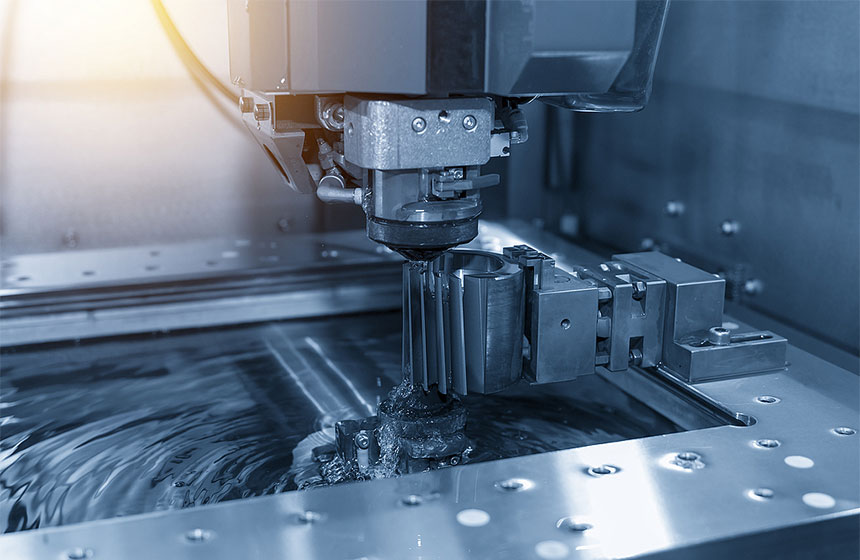
Here is a practical framework to help you choose a CNC machining factory that will be a true partner, not just a vendor.
Step 1: Define Your Requirements Before You Search
Before you send a single RFQ, write down what your part actually needs. This is the single biggest lever on supplier fit and the one buyers skip most often. Capture the following:
Volume tier. One-off prototype, 5–25 small batch, 100–500 pilot, or 1,000+ production. Shops are tuned for specific tiers.
Tolerance class. General (±0.005″), precision (±0.001″), or ultra-precision (±0.0002″ or tighter). Each step up shrinks the supplier pool.
Materials. Common 6061 aluminum and 304 stainless are universal. Inconel, titanium, PEEK, and other exotic materials narrow the pool fast.
Certifications and compliance. ISO 9001, AS9100D (aerospace), ISO 13485 (medical), IATF 16949 (automotive), ITAR registration, and DFARS-compliant material sourcing.
Inspection deliverables. Basic in-process check, First Article Inspection Report (FAIR), CMM report on every part, or full PPAP-style documentation.
Lead time. Standard (2–3 weeks), expedited (3–5 days), or rush (under 72 hours).
Budget per part and total program. A rough target so you can spot quotes that are too high or suspiciously low.
This brief becomes your filter. A shop that cannot meet your non-negotiables should not make your shortlist.
Step 2: Start With Capability, Not Price
The most common mistake in CNC supplier qualification is opening with a request for quotation before understanding what the supplier can actually do. Price is easy to compare. Capability is harder to assess but far more important.
Before anything else, understand the supplier's machining range:
What tolerances can they hold consistently—not theoretically, but in actual production?
What materials do they regularly work with?
Do they have multi-axis capability if your parts require it? A supplier with 3-axis machines quoting on a component that genuinely needs 5-axis machining will either quietly decline the work or produce parts that miss the mark.
Ask for a capability statement or a machine list. A reputable supplier will share this information upfront. If a supplier is reluctant to do so, that itself tells you something.
Look for suppliers equipped with multi-axis CNC mills (especially 5-axis), Swiss-type lathes, and CAD/CAM-integrated programming systems. Complex geometries require 5-axis machining to achieve single-setup operations, which prevents tolerance accumulation. High-end suppliers can hold tolerances within ±0.005 mm.
Step 3: Certification Is a Starting Point, Not a Conclusion
ISO 9001 certification is often treated as a green light in supplier selection. It should not be. ISO 9001 tells you that a supplier has a documented quality management system in place. It does not tell you how well that system actually performs, how recently it was audited, or whether processes have drifted since the last certification cycle.
Always ask for the certificate itself and check the expiry date. More importantly, ask who their certifying body is and whether third-party audits are conducted on a regular basis. For regulated industries, look for additional certifications like IATF 16949 (automotive) or AS9100 (aerospace), which carry significantly more rigour than the baseline ISO standard. Certification is the floor, not the ceiling.
For medical parts, require ISO 13485 certification. For automotive components, require IATF 16949.
Step 4: Inspect Samples Properly
Requesting a sample part is standard practice. Inspecting it properly is not. Too many procurement teams receive a sample, confirm it looks correct visually, and approve the supplier. Visual inspection alone will miss dimensional issues that matter in production.
If you are sourcing precision components, your sample inspection should include dimensional verification against the drawing, ideally using a coordinate measuring machine (CMM) or calibrated instruments rather than just a calliper and a good eye. Ask the supplier to provide a First Article Inspection Report alongside the sample. A supplier who produces these routinely is operating at a different level of quality consciousness than one who is unfamiliar with the process. The report tells you not just whether the part passed, but how close to the tolerance boundaries it was sitting - which matters a great deal when you move into volume production.
Request CMM test reports and surface roughness (Ra) data samples. Don't rely on final inspection alone - look for suppliers that employ statistical process control (SPC) and full material traceability throughout the production cycle.
Step 5: Evaluate DFM Support and Engineering Collaboration
A capable CNC machining partner will actively review your CAD models and propose structural optimizations. Modifying internal radii or standardizing wall thickness can reduce machining costs by 20% to 30%.
The best shops treat the relationship as a collaborative one, offering context and insight as part of the service. They will walk through process plans, explain how design decisions affect cycle time or scrap rate, and flag tolerances and features that drive cost. A shop that only responds to what is asked without proactively educating, flagging issues, or explaining tradeoffs puts the burden on you to know what you don't know.
Engineering collaboration also means DFM input before the first chip is cut. A true partner helps reduce cost, not merely execute prints as written.
Step 6: Visit the Facility - or Get Someone Who Can
There is no substitute for seeing a manufacturing facility in person. A factory visit reveals things that no document or video call can: how the shop floor is organised, how operators handle parts, whether measuring equipment is calibrated and in use, and whether the environment is clean enough for the tolerances being claimed.
Avoid shops that refuse tours. Newer machines hold tighter tolerances and run faster. Pay attention to communication quality and inspection capabilities.
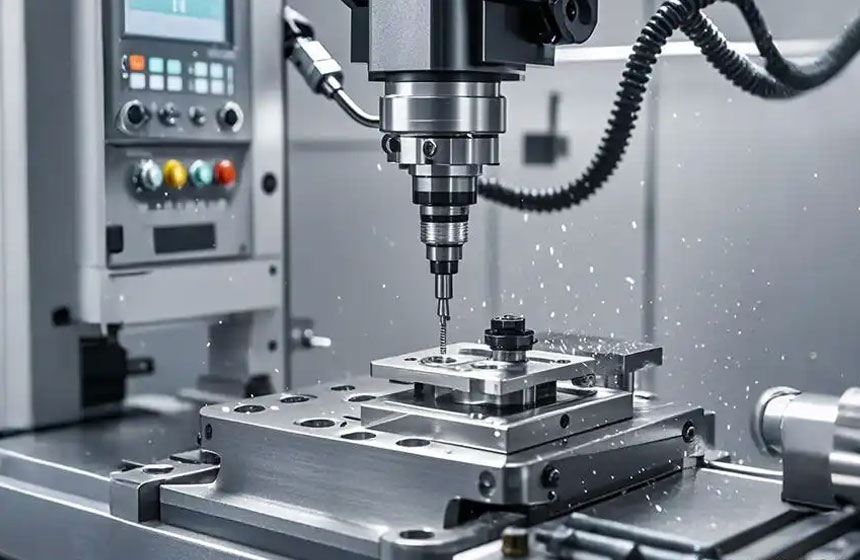
Why Choose FlexiTurn?
FlexiTurn is an online CNC machining enterprise built for the way modern engineers and procurement professionals work. We combine precision manufacturing capability with a digital-first experience that makes sourcing custom parts faster, easier, and more transparent.
Here is how FlexiTurn delivers on every criterion above:
Advanced multi-axis capability. Our fleet includes 3-axis, 4-axis, and 5-axis CNC machining centers, plus multi-axis turning centers. Complex geometries that require 5-axis machining are handled in single-setup operations, eliminating tolerance accumulation and ensuring repeatability.
Tight tolerances, consistently. We hold precision tolerances to ±0.005 mm and beyond for specialized components. Every part is inspected against your drawing - not just visually, but with CMM and calibrated instruments.
End-to-end quality management. We are ISO 9001 certified and maintain rigorous quality systems across every stage of production. For regulated industries, we can meet AS9100, IATF 16949, and ISO 13485 standards upon request.
DFM support built into the workflow. Our engineering team reviews every CAD model before production. We flag manufacturability issues early, suggest optimizations, and help you reduce cost without compromising quality.
Fast, transparent online quoting. Upload your CAD file, select your material and quantity, and receive an instant quote with DFM feedback. No back-and-forth emails, no hidden fees, no surprises.
Rapid turnaround. Standard lead times of 2–3 weeks, expedited options in 3–5 days, and rush service under 72 hours for urgent needs.
From prototype to production. Whether you need one piece for validation or 10,000 units for serial production, we scale with you.
Choosing a CNC machining factory is not about finding the lowest quote. It is about finding a partner who can deliver consistent quality, reliable delivery, responsive communication, cost stability, and engineering collaboration. Total cost of ownership—not piece price—is the right measuring stick. Quality escapes, rework, late deliveries, and emergency sourcing all carry costs that never appear on a purchase order.
FlexiTurn is that partner. We combine the precision and capability of a world-class machine shop with the speed and transparency of an online platform. Upload your design today and see the difference a real manufacturing partner can make.
- Why Do CNC Machining Quotes Differ Between Suppliers?
- How to Prepare a CNC Machining Drawing for Manufacturing?
- How Does Part Geometry Affect CNC Machining Cost?
- Why Are Small Internal Radii Difficult to CNC Machine?
- How Do Deep Pockets Affect CNC Machining?
- Common CNC Machining Design Mistakes That Increase Cost
- How Can DFM Reduce CNC Machining Cost?
- What Is DFM in CNC Machining and Why Does It Matter?