
Phone: +86 15398058207
E-mail: sales@flexiturn.com
Add: Room 603 Building C, The Huixin Center, Zhangba One Road, Yanta Zone, Xi'an City, Shaanxi Province, China
How Does Part Geometry Affect CNC Machining Cost?
When two CNC machined parts use the same material and have a similar overall size, their prices can still be very different. The reason is often the geometry.
A part with simple faces, accessible features, and few setups may be relatively straightforward to machine. Another part of similar size may require smaller cutting tools, deeper machining, multiple setups, or more complex toolpaths.
For buyers, understanding this relationship makes CNC quotes easier to evaluate. For manufacturers, reviewing the geometry before production helps identify opportunities to simplify machining without changing the part’s function.
At FlexiTurn, we provide factory-direct custom CNC machining based on customer drawings, CAD files, or samples. Our engineers consider part geometry, material, machining method, and production requirements when preparing a manufacturing approach for prototypes and small-batch production.
The Shape of a Part Changes How It Is MachinedCNC machining is not simply about removing material until a CAD model is reproduced.
The geometry determines how the machine, cutting tools, fixtures, and machining operations need to work together.
For example, a relatively simple aluminum bracket may require only a few milling operations. A similar bracket with deep pockets, narrow slots, angled surfaces, internal features, and machining on several sides can require considerably more programming and setup work.
This is why overall dimensions alone do not tell you whether a part will be expensive to machine.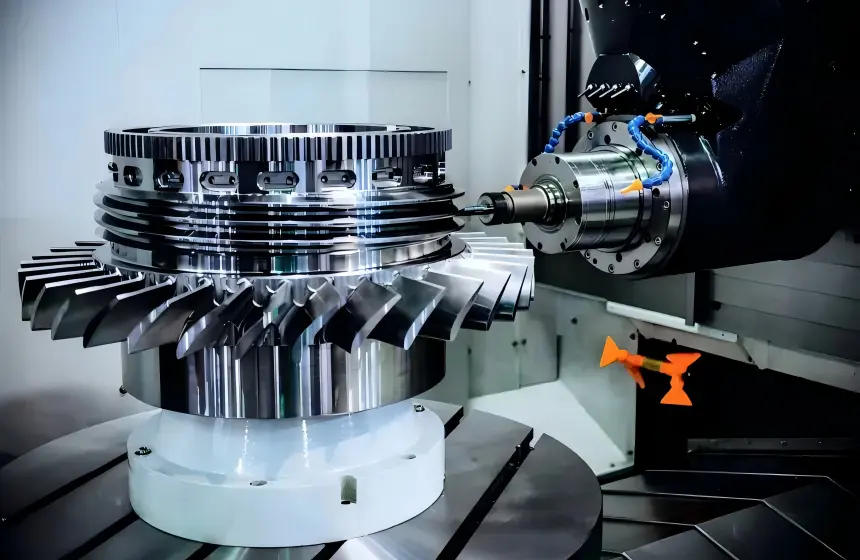
The important question is:
How difficult is it to reach and machine the required features?
Tool Access Is a Major Cost FactorOne of the first things a manufacturer considers is whether the cutting tool can physically reach the feature.
Open surfaces and shallow pockets are usually easier to access. Problems begin when features become deep, narrow, enclosed, or positioned behind other surfaces.
When access becomes difficult, the manufacturer may need to:
- use a longer or smaller cutting tool
- change the machining direction
- use additional toolpaths
- use a different machine configuration
- add another setup or fixture
Each of these decisions can increase machining time or preparation work.
This is also one reason FlexiTurn reviews customer drawings and CAD models rather than treating every custom part as a simple machining order. The geometry helps determine whether 3-axis, 4-axis, or 5-axis machining is more appropriate.
Deep Features Can Increase Machining TimeDeep pockets and cavities are a good example of geometry affecting cost.
A deep feature may require longer tools to reach the bottom. Longer tools are generally less rigid, so machining may need to be performed more carefully to control vibration and maintain the required result.
The tool may also need to remove material in several stages rather than cutting the entire feature aggressively in one operation.
That can increase:
- machining time
- number of toolpaths
- tool wear
- programming and process-planning work
The important point is not that every deep pocket is expensive. It is that depth relative to the feature’s width and the available tool access can make the feature more difficult to manufacture.
If a deep pocket is necessary for the part to function, it may be completely justified. If the depth is mainly a design preference, it may be worth discussing a simpler alternative with the machining supplier.
Small Internal Radii Can Affect Tool SelectionCNC milling tools are round, so internal corners naturally have a radius.
If a design contains very small internal radii, the manufacturer may need a smaller cutting tool to reach them. Smaller tools can remove material more slowly and may require additional machining passes.
This does not mean that small radii should always be avoided. Functional features sometimes require them.
The better approach is to distinguish between radii that are functionally necessary and radii that simply came from the CAD design.
For non-critical areas, a more practical internal radius can sometimes reduce machining difficulty without affecting the final application.
More Machined Sides Can Mean More SetupsAnother important factor is how many sides of the part need to be machined.
A simple block may be completed with one primary setup. If important features appear on several faces, the part may need to be repositioned and re-aligned.
Every additional setup can involve:
- fixturing
- alignment
- work coordinate setting
- toolpath verification
- additional machining time
More setups do not automatically make a part impractical. In many cases, 4-axis or 5-axis machining can reduce repositioning by providing better access to multiple surfaces.
This is where machine selection becomes part of cost control.
For example, a complex component that would require several operations on a 3-axis machine may be more efficiently produced with multi-axis machining. The higher machine capability does not necessarily mean a higher final part cost; it depends on the complete machining strategy.
Thin Walls and Slender Features Need More CareThin walls, narrow ribs, and slender sections can also affect machining cost.
These features can be more sensitive to cutting forces and vibration. The manufacturer may need to adjust cutting conditions and machining sequences to avoid deformation or damage.
If a thin feature is required for weight reduction, airflow, clearance, or assembly, it may be necessary. But if it has no clear functional purpose, increasing the thickness can sometimes make the part easier and more economical to machine.
This is one area where an early engineering review can be useful.
Geometry Also Affects Material RemovalPart geometry does not only affect cutting tools. It also affects how much material has to be removed.
Consider two aluminum blocks with the same outside dimensions. One might require only a few pockets and holes. The other might be heavily sculpted, with large amounts of material removed from the center.
The second design can require substantially more machining time even though the finished part occupies a similar amount of space.
For this reason, CNC machining cost is influenced by both the final geometry and the amount of work required to turn the starting material into that geometry.
This is also where choosing an appropriate machining blank can help. Starting with a blank that is reasonably close to the required shape can reduce unnecessary material removal and preparation work.
Does Complex Geometry Always Mean Higher Cost?Not necessarily.
A complex shape can sometimes be produced efficiently when the machine, tooling, workholding, and machining strategy are well matched to the design.
For example, 5-axis machining can provide better access to complex surfaces and reduce the number of setups. In some cases, this can offset the additional capability required from the machine.
The real cost question is therefore not simply:
“Is this part complex?”
It is:
“How much machining work does this geometry require?”
Two parts with similar complexity can have very different costs depending on their material, size, tolerances, quantity, and machining strategy.
When Should You Change the Geometry?Not every design should be simplified just to reduce cost.
If a feature is important to the function, assembly, strength, thermal performance, or appearance of the part, removing it may create a bigger problem.
Instead, look for geometry that adds manufacturing difficulty without providing a clear benefit.
For example:
- unnecessary deep pockets
- extremely small internal radii
- inaccessible features
- unnecessarily thin walls
- features spread across too many faces
These are good areas to review before production.
FlexiTurn can review customer drawings or CAD files with the actual machining requirements in mind. Rather than simply asking whether a part can be machined, the goal is to determine a practical machining approach that fits the part’s function, material, quantity, and budget.
How FlexiTurn Approaches Complex CNC GeometryAt FlexiTurn, custom CNC machining starts with the customer's actual part requirements rather than a standard catalog design.
For a new project, the geometry is considered together with the material, production quantity, required features, and machining method. Depending on the part, this may involve CNC milling, CNC turning, or 3-axis, 4-axis, and 5-axis machining.
This approach is particularly useful for prototypes and small-batch production, where unnecessary machining time or additional setups can have a noticeable effect on the unit price.
Because FlexiTurn works directly with customers on drawing-based and sample-based custom parts, we can also discuss practical design changes when a feature is likely to make machining unnecessarily difficult.
A Better Way to Look at CNC Machining CostPart geometry is only one part of a CNC machining quote, but it can influence many other cost factors at the same time.
A difficult geometry can affect tool selection, machining time, setups, programming, workholding, and material removal. That is why two parts made from the same material can receive very different quotes.
When reviewing a CNC design, don't focus only on the finished shape. Consider how the machine will actually reach, hold, cut, and inspect that shape.
If you are preparing a custom CNC part for production, FlexiTurn can work from your drawings, CAD files, or samples and evaluate the geometry together with the material and production requirements. The goal is not simply to make the part, but to find a practical way to manufacture it.
- Why Do CNC Machining Quotes Differ Between Suppliers?
- How to Prepare a CNC Machining Drawing for Manufacturing?
- How Does Part Geometry Affect CNC Machining Cost?
- Why Are Small Internal Radii Difficult to CNC Machine?
- How Do Deep Pockets Affect CNC Machining?
- Common CNC Machining Design Mistakes That Increase Cost
- How Can DFM Reduce CNC Machining Cost?
- What Is DFM in CNC Machining and Why Does It Matter?