
Phone: +86 15398058207
E-mail: sales@flexiturn.com
Add: Room 603 Building C, The Huixin Center, Zhangba One Road, Yanta Zone, Xi'an City, Shaanxi Province, China
Why Are Small Internal Radii Difficult to CNC Machine?
When FlexiTurn reviews a drawing for a custom CNC machined part, small internal radii are one of the design details worth checking early.
A small radius may look insignificant in CAD, but it can affect cutting tool selection, machining stability, production time, and cost. This becomes particularly important for custom housings, brackets, mechanical components, robotic parts, and other non-standard CNC machined parts.
So why does a small internal radius make CNC machining more difficult?
Why Small Internal Radii Are Difficult to MachineThe basic relationship is:
Smaller radius → smaller cutting tool → lower tool rigidity → more difficult machining
Most CNC milling cutters are cylindrical. They naturally leave a radius in an internal corner rather than producing a perfectly sharp 90-degree corner.
When a customer drawing specifies a very small internal radius, FlexiTurn may need to use a smaller-diameter end mill to reach the feature.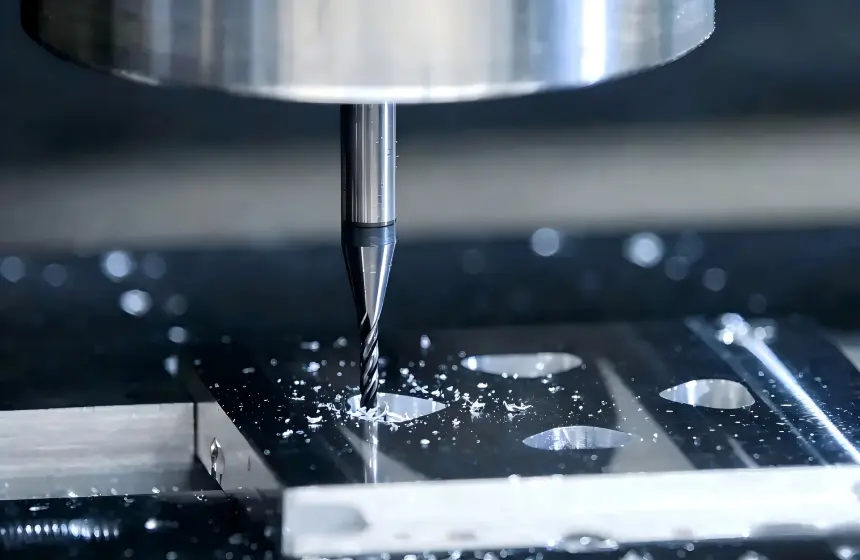
Smaller cutters are more sensitive to:
- Tool deflection and vibration
- Tool wear or breakage
- Slower cutting conditions
- Additional finishing passes
- Longer machining time
Therefore, a small radius can influence much more than the corner itself. It may affect the machining strategy for the entire part.
Small Radius and Deep PocketsThe problem becomes more noticeable when the radius is located inside a deep pocket or cavity.
The tool must reach the bottom of the feature, and a long, small-diameter cutter is less rigid than a larger, shorter tool. This increases the possibility of deflection and vibration and can make stable machining more difficult.
For example, when FlexiTurn manufactures a custom housing or complex mechanical component, the internal radius cannot be evaluated separately from the pocket depth, wall thickness, material, and tool accessibility.
This is why an experienced CNC supplier needs to look at the complete geometry, rather than simply checking whether a particular radius can theoretically be machined.
Does a Smaller Radius Make the Part Better?Not necessarily.
A very small radius does not automatically mean higher precision or better performance. If the radius does not provide a functional benefit, it may simply make the component more expensive to manufacture.
For example, if an internal corner is only used for clearance, increasing the radius may allow a larger and more rigid cutter to be used without changing the function of the part.
For customers working with FlexiTurn, this type of consideration can be addressed during drawing review or DFM before production begins.
A practical rule is:
Use the largest internal radius that meets the functional requirements of the part.
What If the Small Radius Is Necessary?Some small radii cannot simply be increased.
They may be required for:
- Mating with another component
- Mechanical clearance
- Moving components
- Functional geometry
- Space limitations
In these cases, FlexiTurn can evaluate the feature together with the rest of the component and select an appropriate machining approach.
Depending on the geometry, this may involve smaller cutters, different toolpaths, multiple machining passes, or different tool orientations.
For complex parts, 3-axis, 4-axis, or 5-axis CNC machining can provide different levels of tool access and flexibility. FlexiTurn can select the machining approach according to the actual geometry rather than applying the same process to every part.
If the design requires a genuinely sharp internal corner, however, conventional milling may not be the best option and another manufacturing process may need to be considered.
How Material and Part Geometry Affect the ResultInternal radius should also be considered together with material.
Aluminum alloys, stainless steels, alloy steels, titanium alloys, and engineering plastics can behave differently during machining. Cutting forces, tool wear, heat, and machining stability all influence how a small feature can be produced.
Part geometry matters just as much.
A small radius in a shallow aluminum pocket may be relatively straightforward. The same radius deep inside a stainless steel cavity can present a much greater machining challenge.
When FlexiTurn evaluates a custom CNC project, factors such as material, radius, feature depth, accessibility, wall thickness, and required finish are considered together.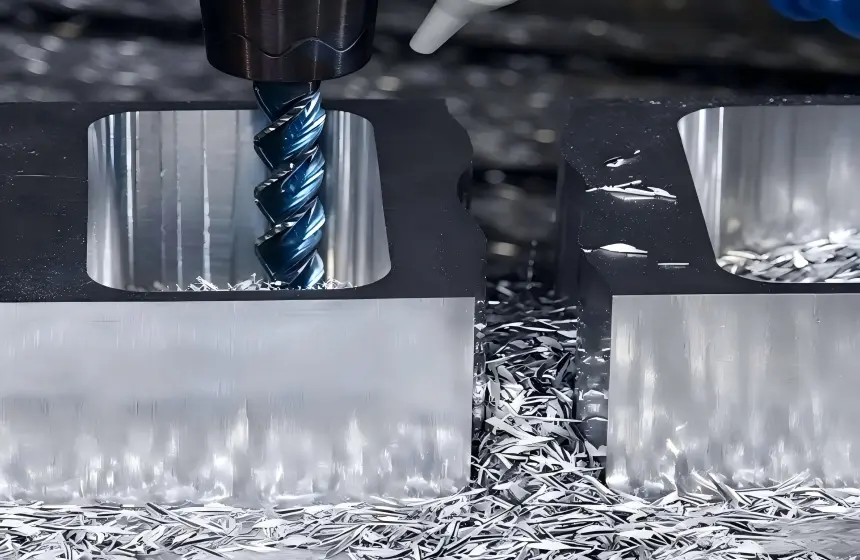
A few design decisions can make a significant difference before production starts.
Use a Practical Internal Radius
If there is no functional reason for an extremely small radius, increasing it can allow more efficient tooling.
Consider Radius and Depth Together
A small radius becomes more difficult when the tool also needs to reach deep into a cavity.
Avoid Unnecessary Sharp Corners
If a sharp internal corner is not functionally required, a practical radius is usually easier and more economical to machine.
Discuss Difficult Features Early
For custom parts, it is better to identify difficult geometry during the quotation or DFM stage than after machining has already started.
At FlexiTurn, customers can provide drawings, CAD files, or samples for review. This allows the manufacturing approach to be considered before production rather than discovering avoidable problems later.
How FlexiTurn Supports Custom CNC ProjectsFlexiTurn is a custom CNC machining manufacturer serving customers with non-standard component requirements.
Instead of supplying standard catalog parts, we manufacture components according to customer drawings, CAD files, or physical samples. Our capabilities include CNC milling, CNC turning, and 3-axis, 4-axis, and 5-axis machining.
For engineers developing a prototype, or purchasing teams sourcing small batches of custom components, we can consider the part geometry, material, tooling requirements, and machining process together.
This approach is particularly valuable for components with features such as small internal radii, deep cavities, thin walls, complex profiles, or difficult-to-access surfaces.
The goal is not simply to make a challenging feature possible. It is to find a practical way to manufacture the complete part while keeping the design requirements, quality, lead time, and machining cost in balance.
Need Help With a Difficult CNC Part?Small internal radii are only one example of how design details can affect CNC manufacturing.
If your component contains tight internal corners, deep pockets, complex cavities, or other difficult features, FlexiTurn can review the design from a manufacturing perspective.
Send us your drawing, CAD file, or sample requirements for a custom CNC machining project. Our team can evaluate the geometry and recommend a practical machining approach for prototyping or small-batch production.
Good CNC machining starts with good communication between design and manufacturing.
- Why Do CNC Machining Quotes Differ Between Suppliers?
- How to Prepare a CNC Machining Drawing for Manufacturing?
- How Does Part Geometry Affect CNC Machining Cost?
- Why Are Small Internal Radii Difficult to CNC Machine?
- How Do Deep Pockets Affect CNC Machining?
- Common CNC Machining Design Mistakes That Increase Cost
- How Can DFM Reduce CNC Machining Cost?
- What Is DFM in CNC Machining and Why Does It Matter?