
Phone: +86 15398058207
E-mail: sales@flexiturn.com
Add: Room 603 Building C, The Huixin Center, Zhangba One Road, Yanta Zone, Xi'an City, Shaanxi Province, China
What is CNC machining?
Numerical control machine tool machining is a high-precision manufacturing process based on computer numerical control (CNC) technology, which drives machine tools to complete metal and non-metal material cutting and forming through program instructions. It is widely used in aerospace, automotive manufacturing, precision instruments, electronic equipment and other fields. Its core advantages lie in high automation, stable machining accuracy, and strong flexibility (able to quickly switch between different workpiece processing), which can replace traditional manual operations to efficiently process complex shapes (such as surfaces and polyhedra).
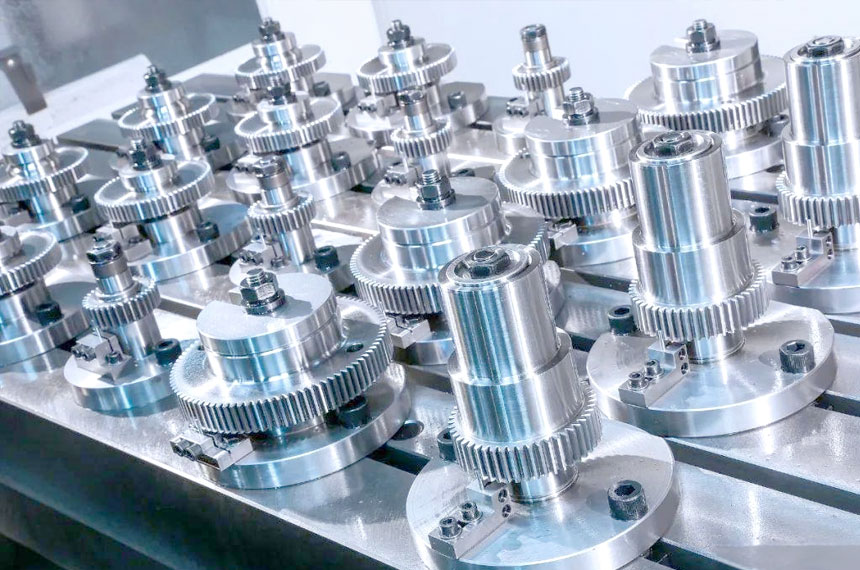
The core principles of CNC machining
The essence of CNC machining is "program controlled motion", which achieves precise machining through four core links:
Programming input: Engineers use G-code (motion control instructions, such as linear/arc interpolation), M-code (auxiliary function instructions, such as spindle start stop, coolant switch), etc. to write machining programs based on the workpiece drawings (size, shape, accuracy requirements), or automatically generate programs through CAD/CAM software (such as UG, Mastercam) and import them into machine tool CNC systems (such as Fanuc, Siemens, Huazhong CNC systems).
Data processing: The numerical control system parses the program and converts geometric coordinates (such as X/Y/Z axis positions) and process parameters (such as spindle speed, feed rate, cutting depth) into electrical signals.
Drive execution: The electrical signal drives the servo system (servo motor+ball screw/linear guide) to control the movement of various axes of the machine tool (such as spindle, tool holder, worktable) according to the program trajectory, while driving the relative movement between the cutting tools (such as milling cutters, cutting tools, drill bits) and the workpiece.
Real time feedback: Real time acquisition of motion axis position information through position detection devices (such as grating rulers, encoders), feedback to the CNC system for error compensation, ensuring machining accuracy (positioning accuracy can reach ± 0.001mm level).
Common types and applicable scenarios of CNC machine tool processing
According to the processing technology and machine tool structure, CNC machine tool processing can be divided into multiple sub types, and different types correspond to different workpiece shapes and processing requirements:
CNC lathe: The workpiece rotates around the spindle, and the tool moves along the axial/radial direction. It mainly processes rotating parts (circular, conical, threaded, etc.), shaft types (motor shaft, transmission shaft), disc types (flange, gear blank), and sleeve type parts
CNC milling: machine/machining center tool rotation, the workpiece moves along the X/Y/Z axis with the worktable, and can machine flat, groove, step, and curved surfaces. The machining center can automatically change the tool box (engine cylinder block), mold cavity, bracket, and complex polyhedral parts
CNC Grinding: CNC grinding machines use high-speed rotating grinding wheels to grind the surface of workpieces, with a focus on high-precision, low roughness (surface roughness Ra ≤ 0.8 μ m) precision bearings, guide rails, tool edges, and optical components (such as lens holders)
CNC drilling/boring: CNC drilling/boring machines mainly use drill bits and boring tools to accurately process hole features (through holes, blind holes, threaded holes), and boring hole series machining of mechanical parts with adjustable coaxiality (such as gearbox housing holes) and mold positioning holes
Five axis linkage machining: with five axis CNC machine tool simultaneously controls five motion axes (such as X/Y/Z+A/C axes), and the tool can cut from any angle without the need for multiple clamping of complex curved parts (aviation engine blades, turbine disks) and irregular molds (automotive cover mold)
Wire cutting CNC: wire cutting machine uses electrode wires such as molybdenum wire to discharge and corrode workpieces, which belongs to non-contact machining and is suitable for hard materials (quenched steel, hard alloys), mold cutting edges (punching dies, stretching dies), precision irregular holes, and thin-walled parts
Key process parameters for CNC machining
The selection of process parameters directly affects processing efficiency, workpiece accuracy, and tool life. It needs to be adjusted comprehensively according to the workpiece material (such as steel, aluminum, copper, plastic), tool material (high-speed steel, hard alloy, ceramic, CBN cubic boron nitride), and processing requirements:
Spindle speed (S): The rotational speed of the tool or workpiece (unit: r/min), which needs to be matched with the tool's line speed (usually 100-300m/min when machining steel parts with hard alloy tools), to avoid excessive cutting force caused by low speed or tool overheating and wear caused by high speed.
Feed rate (F): The speed at which the tool moves relative to the workpiece (unit: mm/min or mm/r). If the feed rate is too fast, it can lead to rough surface of the workpiece and tool breakage; Slow feed reduces efficiency.
Cutting depth (ap): The vertical depth (unit: mm) at which the tool cuts into the workpiece. For rough machining, a larger cutting depth (1-5mm) can be selected to quickly remove excess, while for precision machining, the depth (0.1-0.5mm) needs to be reduced to ensure accuracy.
Cutting fluid: Choose according to the machining scenario (emulsion, cutting oil, synthetic fluid), with functions including cooling (reducing tool and workpiece temperature), lubrication (reducing tool wear), and chip removal (washing away chips to avoid scratching the workpiece surface).
Typical process of CNC machine tool machining
Analysis of workpiece drawings: Clarify the requirements for workpiece materials, dimensional tolerances (such as ± 0.01mm), geometric tolerances (such as parallelism and coaxiality), surface roughness (such as Ra1.6), etc., and determine the machining process plan (such as "rough turning → fine turning → milling groove → drilling").
Preparation of fixtures: Select fixtures (such as three jaw chuck, four jaw chuck, vise, specialized fixture) according to the shape of the workpiece to ensure that the workpiece is firmly clamped and accurately positioned (avoiding clamping deformation or offset).
Tool selection and installation: select the tool according to the processing type (such as cylindrical turning tool for turning, end milling tool for milling, Fried Dough Twists drill for drilling), and set the tool after installation (determine the relative position of the tool and the workpiece coordinate system through tool setting instrument or manual tool setting, and input the numerical control system as the processing benchmark).
Program writing and debugging: Write or import machining programs, first perform "empty run" (without clamping the workpiece, let the machine run empty according to the program), and check whether the motion trajectory is correct; Perform a "trial cutting" (using waste or leftover workpiece materials for trial processing), measure the dimensions, and correct the program parameters.
Formal processing: Start the program and the machine tool will automatically complete the processing. During the process, the cutting status (such as chip shape and abnormal noise) needs to be monitored to avoid tool breakage or workpiece scrap.
Quality inspection: After processing is completed, use tools such as calipers, micrometers, dial indicators, and coordinate measuring instruments to check the size and accuracy of the workpiece. If it is qualified, it will be taken offline. If it is unqualified, the cause (such as program errors, tool wear) will be analyzed and adjusted.
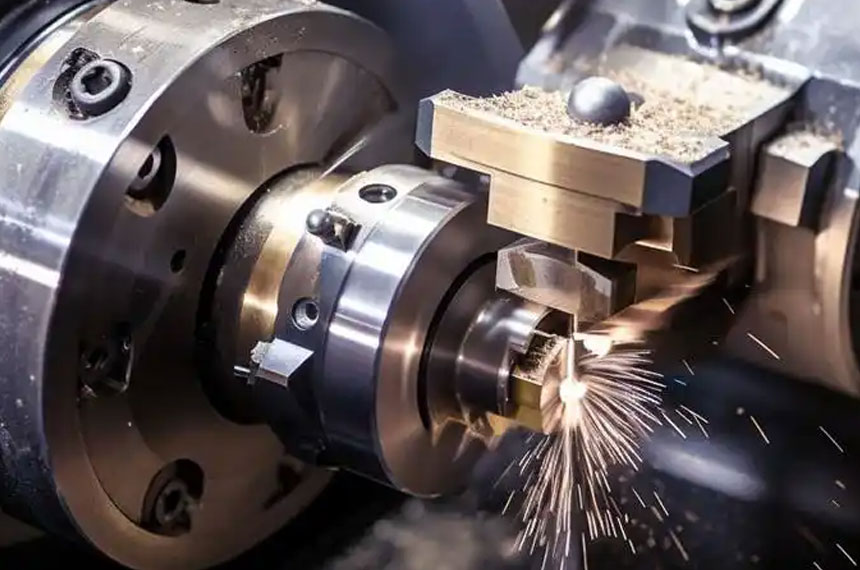
The core advantages and challenges of CNC machining
1. Core advantages
High precision and stability: relying on CNC systems and servo feedback, the machining accuracy is much higher than traditional machine tools, and the consistency of workpieces is good during mass production (the error can be controlled within ± 0.005mm).
Efficient automation: One clamping can complete multiple processes (such as automatic tool changing in machining centers), reducing manual intervention and suitable for mass production; Unmanned workshops can achieve 24-hour continuous processing.
Strong flexibility: When switching between different workpiece processing, only program modification and fixture/tool replacement are required, without adjusting the mechanical structure of the machine tool, suitable for multi variety and small batch production (such as customized parts).
Complex machining capability: Technologies such as five axis linkage can machine complex surfaces that traditional machine tools cannot complete (such as aircraft engine blades), breaking through geometric shape limitations.
2. Main challenges
High technical threshold: Professional personnel are required to master CAD/CAM programming, CNC system operation, and process parameter optimization (such as beginners who are prone to tool damage or workpiece scrap due to improper parameters).
High equipment cost: The unit price of mid to high end CNC machine tools (such as five axis machining centers) can reach several million yuan, and maintenance costs (such as servo system and detection device maintenance) are relatively high.
High tool consumption: When processing hard materials such as stainless steel and titanium alloys, the tools wear out quickly and need to be replaced regularly (the unit price of hard alloy tools is usually tens to hundreds of yuan), which increases production costs.
The Development Trend of Numerical Control Machine Tool Processing
With the advancement of Industry 4.0 and intelligent manufacturing, CNC machining is upgrading in the following directions:
Intelligent depth improvement: Combining AI technology to achieve "adaptive machining" (such as automatic recognition of workpiece materials, real-time optimization of cutting parameters), combined with machine vision to complete automatic workpiece positioning and defect detection, reducing manual intervention.
Green processing: adopting energy-saving spindles (reducing energy consumption by 15% -30%), biodegradable cutting fluids, promoting dry cutting technology (no cutting fluid processing), and reducing environmental pollution; The machine tool structure adopts lightweight materials (such as resin concrete) to reduce energy consumption.
Integration and Networking: A single machine tool is connected to MES (Manufacturing Execution System) and ERP (Enterprise Resource Planning System) to achieve real-time networked management of production planning, processing data, and equipment status, supporting the construction of flexible production lines and unmanned factories.
The coexistence of miniaturization and large-scale: on the one hand, micro CNC machine tools can process micrometer level parts (such as medical catheters, electronic chip pins); On the other hand, ultra large CNC machine tools (such as heavy-duty CNC vertical lathes) can process parts weighing tens of tons, such as wind turbine hubs and ship propellers.
In short, CNC machining is the cornerstone technology of modern manufacturing, and its level of development directly determines a country's ability to manufacture high-end equipment. From precision parts of daily necessities to core components of aerospace, they all rely on the support of CNC machining.
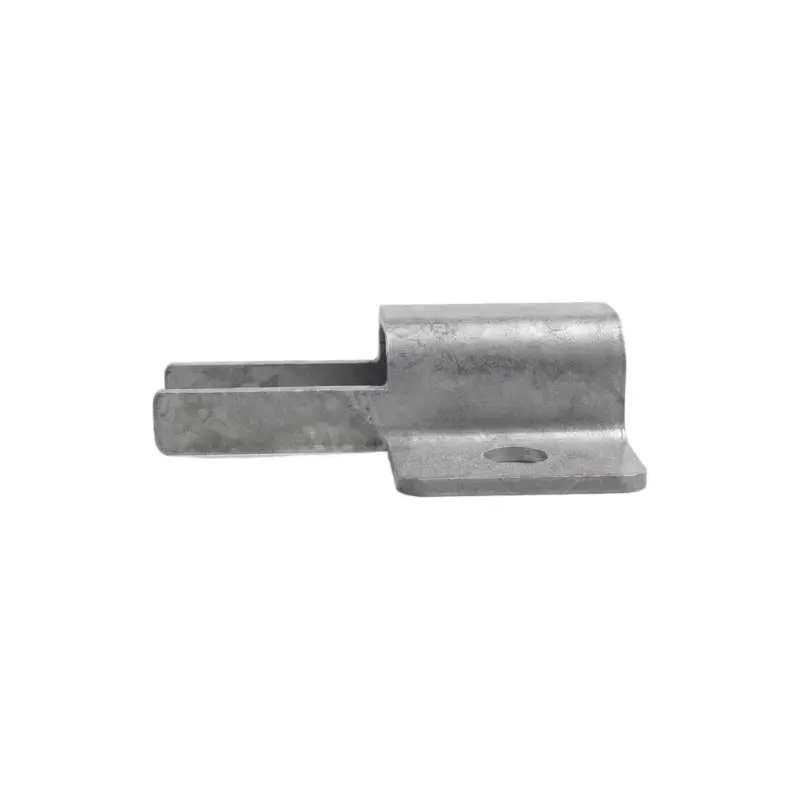
- Why Do CNC Machining Quotes Differ Between Suppliers?
- How to Prepare a CNC Machining Drawing for Manufacturing?
- How Does Part Geometry Affect CNC Machining Cost?
- Why Are Small Internal Radii Difficult to CNC Machine?
- How Do Deep Pockets Affect CNC Machining?
- Common CNC Machining Design Mistakes That Increase Cost
- How Can DFM Reduce CNC Machining Cost?
- What Is DFM in CNC Machining and Why Does It Matter?