
Phone: +86 15398058207
E-mail: sales@flexiturn.com
Add: Room 603 Building C, The Huixin Center, Zhangba One Road, Yanta Zone, Xi'an City, Shaanxi Province, China
What Is CNC Machining and How Does It Work?
What Is CNC Machining and How Does It Work?
Introduction
CNC machining is one of the most widely used manufacturing processes in modern industry. It plays an essential role in producing precision components for industries such as automotive, aerospace, medical devices, robotics, industrial equipment, and electronics.
From simple mechanical parts to complex components with tight tolerances, CNC machining provides manufacturers with an efficient and reliable way to transform raw materials into finished products.
But what exactly is CNC machining? How does a CNC machine work, and what makes this technology so important in modern manufacturing?
This article explains the basic principles of CNC machining, the machining process, common CNC operations, materials, and applications.
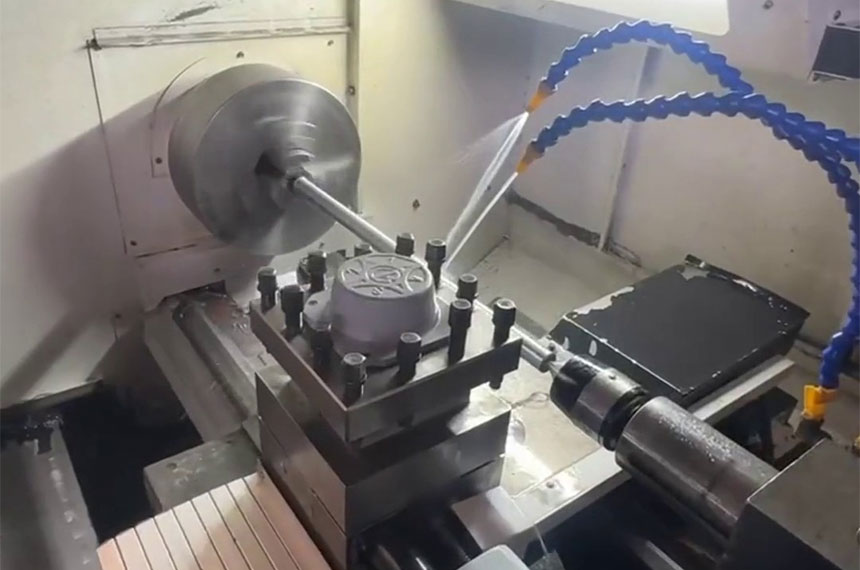
What Is CNC Machining?
CNC machining, short for Computer Numerical Control machining, is a computer-controlled manufacturing process that uses machine tools to remove material from a workpiece and create a finished part with a specific shape and dimension.
As a subtractive manufacturing process, CNC machining starts with a solid piece of material, such as metal, plastic, or other engineering materials. The machine removes unwanted material through controlled cutting operations until the desired geometry is achieved.
Unlike conventional machining, where operators manually control machine movements, CNC machining relies on programmed instructions to control tool movement, cutting parameters, and machining operations. This allows manufacturers to produce components with high accuracy, repeatability, and consistent quality.
Modern CNC machining combines computer technology, engineering design, and advanced machine tools to convert digital models into physical parts.
What Is a CNC Machine?
A CNC machine is an automated machine tool controlled by computer programs to perform machining operations such as cutting, drilling, milling, and turning.
The machine interprets programmed instructions, usually generated from CAD and CAM software, and converts them into precise movements of cutting tools and machine components.
Depending on the machine type, CNC equipment can control movement along multiple axes. Standard CNC machines commonly operate along three axes (X, Y, and Z), while advanced machines can include additional rotational axes to produce more complex parts.
By automating machine movements, CNC systems reduce human error and enable consistent production of components with complex geometries and precise specifications.
How Does CNC Machining Work?The CNC machining process involves several stages, starting from digital design and ending with a finished component.
Step 1: CAD Design
The process begins with creating a digital model of the part using CAD (Computer-Aided Design) software.
The CAD model defines the geometry, dimensions, tolerances, and technical requirements of the component. It provides the digital information required for planning and programming the machining process.
For complex parts, engineers may review the design to ensure the component can be manufactured effectively and that the selected machining method is suitable.
Step 2: CAM ProgrammingAfter the CAD model is completed, it is imported into CAM (Computer-Aided Manufacturing) software.
CAM software converts the digital design into machining instructions by generating toolpaths and defining machining parameters, including cutting tools, cutting speed, feed rate, and machining sequence.
The final program is converted into machine-readable code, commonly known as G-code and M-code.
G-code controls the movement of cutting tools along different axes, while M-code controls machine functions such as spindle operation, coolant, and other auxiliary operations.
Step 3: CNC Machine SetupBefore machining begins, the CNC machine must be prepared according to the requirements of the part.
The operator installs the appropriate cutting tools, secures the workpiece, sets the machine coordinates, and loads the machining program.
Proper machine setup is essential because tool selection, workholding methods, and machine calibration directly affect machining accuracy and surface quality.
Step 4: Material Removal ProcessOnce the machining program is activated, the CNC machine automatically follows the programmed instructions.
The cutting tool moves along programmed paths while removing material from the workpiece. The machine controls factors such as tool movement, cutting speed, and feed rate to achieve the required dimensions and surface finish.
Different CNC machines perform different types of machining operations depending on their design and capabilities.
Common Types of CNC Machining
CNC Milling
CNC milling is a machining process that uses rotating cutting tools to remove material from a stationary workpiece.
During milling operations, the cutting tool moves along different axes to create various features, including flat surfaces, slots, pockets, holes, and complex contours.
CNC milling is one of the most common machining methods and is widely used for manufacturing parts that require precise dimensions and complex geometries.
CNC TurningCNC turning is a machining process where the workpiece rotates around its axis while a cutting tool removes material from the surface of the part.
Unlike milling, where the cutting tool rotates, turning primarily relies on the rotation of the workpiece to perform cutting operations.
CNC turning is commonly used for producing cylindrical components, including shafts, bushings, pins, sleeves, and threaded parts.
CNC DrillingCNC drilling is a machining process used to create accurate holes in a workpiece.
The CNC system controls the position, depth, and diameter of the holes, making it suitable for applications requiring precise hole locations and repeatable results.
Multi-Axis CNC MachiningMulti-axis CNC machining refers to machining operations where the machine controls movement along additional axes beyond traditional 3-axis machining.
4-axis and 5-axis CNC machines provide greater flexibility in tool positioning and allow manufacturers to produce parts with complex shapes, curved surfaces, and difficult-to-access features.
Compared with conventional 3-axis machining, multi-axis machining can reduce the number of setups required and improve machining efficiency for complex components.
What Materials Can Be CNC Machined?One of the major advantages of CNC machining is its ability to process a wide variety of materials.
Metals such as aluminum, stainless steel, carbon steel, alloy steel, brass, copper, and titanium are commonly machined because they provide different combinations of strength, durability, corrosion resistance, and mechanical performance.
Engineering plastics, including POM, PEEK, nylon, PTFE, and ABS, can also be CNC machined for applications requiring lightweight properties, chemical resistance, or electrical insulation.
Material selection depends on the functional requirements of the part, including mechanical properties, operating conditions, and production needs.
Advantages of CNC MachiningCNC machining has become a fundamental manufacturing technology because of its accuracy, flexibility, and reliability.
Since machining operations are controlled by computer programs, CNC machines can produce highly consistent parts with repeatable results. This makes CNC machining suitable for both prototype development and production manufacturing.
Another important advantage is its ability to manufacture complex geometries. Advanced CNC machines can produce shapes and features that would be difficult to achieve through traditional machining methods.
In addition, CNC machining supports a wide range of materials and production requirements, making it suitable for many industries and applications.
Applications of CNC MachiningCNC machining is widely used in industries where precision, reliability, and consistent quality are required.
In the automotive and electric vehicle industries, CNC machining is used to produce mechanical components, structural parts, housings, and manufacturing fixtures.
In aerospace applications, CNC machining enables the production of lightweight and high-strength components with strict dimensional requirements.
Medical devices, robotics, automation equipment, and electronic products also rely on CNC machining to manufacture accurate and durable components.
How to Choose a CNC Machining Partner?Choosing the right CNC machining partner is an important decision for manufacturers. Factors such as machining capability, material experience, quality control processes, production capacity, and engineering support all influence the success of a manufacturing project.
A reliable CNC machining supplier should not only provide accurate machining but also support customers throughout the manufacturing process, from design review and production to finishing and inspection.
FlexiTurn CNC Machining CapabilitiesFlexiTurn is a China-based CNC machining company providing precision manufacturing services for customers worldwide.
With CNC milling, CNC turning, and multi-axis machining capabilities, FlexiTurn manufactures custom components using a wide range of metals and engineering plastics.
The company also supplies precision machining blanks, including pre-machined semi-finished blanks in various shapes and materials, helping customers improve manufacturing efficiency.
Through advanced equipment, engineering expertise, and quality control processes, FlexiTurn supports customers across industries including automotive, aerospace, medical devices, robotics, and industrial equipment.
Conclusion
CNC machining is a combination of computer-controlled automation, engineering design, and precision manufacturing technology.
By integrating CAD design, CAM programming, and advanced CNC equipment, manufacturers can produce complex components with high accuracy, repeatability, and reliability.
As industries continue to require more precise and sophisticated parts, CNC machining remains one of the most important manufacturing processes in modern production.
- Why Do CNC Machining Quotes Differ Between Suppliers?
- How to Prepare a CNC Machining Drawing for Manufacturing?
- How Does Part Geometry Affect CNC Machining Cost?
- Why Are Small Internal Radii Difficult to CNC Machine?
- How Do Deep Pockets Affect CNC Machining?
- Common CNC Machining Design Mistakes That Increase Cost
- How Can DFM Reduce CNC Machining Cost?
- What Is DFM in CNC Machining and Why Does It Matter?