
Phone: +86 15398058207
E-mail: sales@flexiturn.com
Add: Room 603 Building C, The Huixin Center, Zhangba One Road, Yanta Zone, Xi'an City, Shaanxi Province, China
CNC Milling vs CNC Turning: What Is The Difference?
CNC Milling vs CNC Turning: What Is The Difference?
Introduction
CNC milling and CNC turning are two of the most common machining processes used in modern manufacturing. Both rely on computer numerical control technology to produce precise components, but they use different machining methods and are suitable for different types of parts.
The main difference between CNC milling and CNC turning lies in how the cutting tool and workpiece move during machining. Understanding these differences helps engineers select the right process based on part geometry, design requirements, and production needs.
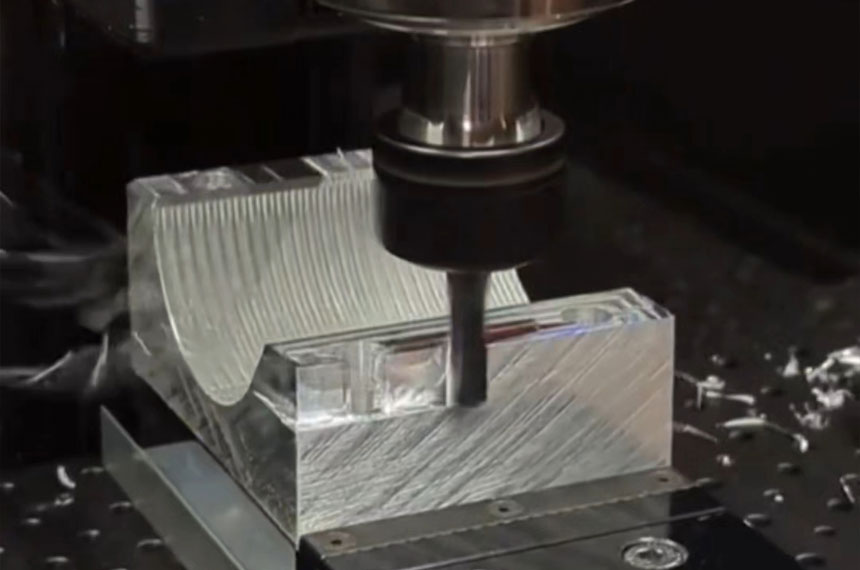
CNC milling is a machining process that uses rotating cutting tools to remove material from a stationary workpiece.
During milling operations, the cutting tool moves along different axes to machine the workpiece and create specific features such as flat surfaces, pockets, slots, holes, and complex contours.
Because the cutting tool can approach the workpiece from multiple directions, CNC milling is highly versatile and suitable for manufacturing parts with complex geometries and precise features.
Common CNC milling applications include housings, brackets, fixtures, plates, molds, and other mechanical components.
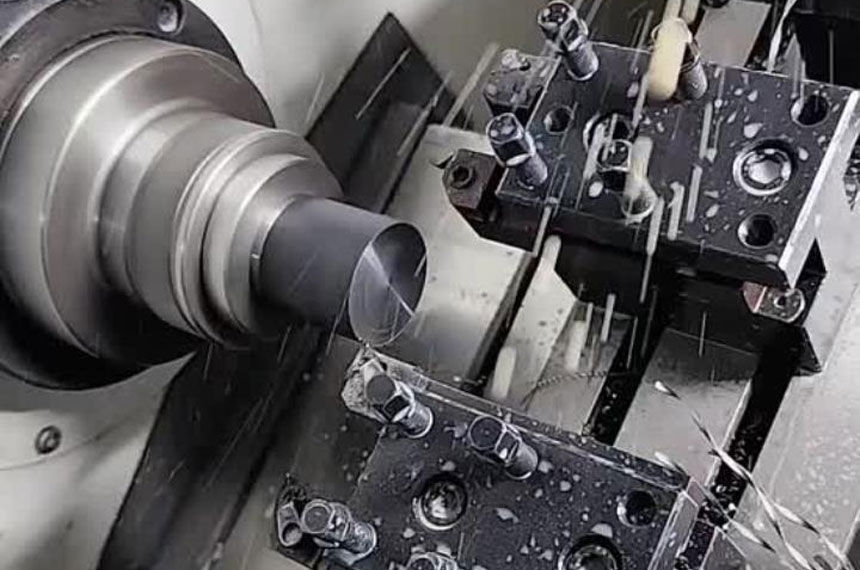
CNC turning is a machining process where the workpiece rotates around its axis while a cutting tool removes material from its surface.
Unlike CNC milling, where the cutting tool rotates, CNC turning relies on the rotation of the workpiece to perform cutting operations. The cutting tool moves along controlled paths to create the required dimensions and profiles.
CNC turning is mainly used for producing cylindrical or rotational components, including shafts, bushings, pins, sleeves, and threaded parts.
Key Differences Between CNC Milling and CNC Turning
Movement of the Cutting Tool and Workpiece
The biggest difference between CNC milling and CNC turning is the way movement is generated during machining.
In CNC milling, the workpiece remains fixed while the rotating cutting tool moves along multiple axes to remove material. This allows the machine to create complex shapes and features on different surfaces.
In CNC turning, the workpiece rotates while the cutting tool remains in contact with the rotating material. This makes turning especially effective for producing parts with rotational symmetry.
Part GeometryCNC milling and CNC turning are selected based on the shape and features of the component.
CNC milling is better suited for parts with complex geometries, irregular shapes, flat surfaces, pockets, slots, and multiple machining features.
CNC turning is more suitable for cylindrical parts that require precise outer diameters, inner diameters, threads, grooves, or other rotational features.
Machining CapabilitiesCNC milling provides greater flexibility when producing parts with multiple surfaces and complex designs. Advanced milling machines, including 4-axis and 5-axis CNC machines, can create intricate features with fewer setups.
CNC turning offers excellent efficiency when manufacturing round components. It is particularly effective for achieving consistent dimensions on cylindrical surfaces and producing parts with rotational features.
For some complex components, both processes may be combined through mill-turn machining, which integrates milling and turning operations in a single machine.
Advantages of CNC MillingCNC milling is widely used because of its ability to produce complex components with high precision.
It is an ideal choice for parts that require multiple features, detailed surfaces, or machining from different directions. With multi-axis capabilities, CNC milling can manufacture highly complex components used in industries such as aerospace, automotive, medical devices, and industrial equipment.
Advantages of CNC TurningCNC turning provides an efficient solution for manufacturing cylindrical components with accurate dimensions and repeatable results.
It is commonly used for parts that require precise diameter control, smooth surfaces, threads, or symmetrical designs. Industries such as automotive, machinery, and automation often rely on CNC turning for shafts, connectors, and mechanical components.
How to Choose Between CNC Milling and CNC Turning?The choice between CNC milling and CNC turning depends mainly on the design and geometry of the part.
If a component has complex shapes, multiple surfaces, pockets, or irregular features, CNC milling is usually the preferred option.
If the part has a cylindrical shape or requires rotational features such as shafts, holes, or threads, CNC turning is generally more suitable.
For components that combine complex geometries with rotational features, a combination of milling and turning may provide the most efficient manufacturing approach.
FlexiTurn CNC Milling and Turning ServicesFlexiTurn provides CNC machining services including CNC milling, CNC turning, and multi-axis machining for customers worldwide.
With experience in machining various metals and engineering plastics, FlexiTurn supports the production of custom components for industries including automotive, aerospace, medical devices, robotics, and industrial equipment.
By combining machining capabilities, engineering support, surface treatment, and quality control processes, FlexiTurn helps customers transform designs into reliable manufactured parts.
ConclusionCNC milling and CNC turning are both essential machining processes, but they serve different manufacturing purposes.
CNC milling uses rotating cutting tools to machine stationary workpieces and is suitable for complex shapes and detailed features. CNC turning rotates the workpiece against a cutting tool and is ideal for cylindrical components.
Understanding the differences between these two processes allows engineers and manufacturers to choose the most suitable machining method for their specific applications.
- Why Do CNC Machining Quotes Differ Between Suppliers?
- How to Prepare a CNC Machining Drawing for Manufacturing?
- How Does Part Geometry Affect CNC Machining Cost?
- Why Are Small Internal Radii Difficult to CNC Machine?
- How Do Deep Pockets Affect CNC Machining?
- Common CNC Machining Design Mistakes That Increase Cost
- How Can DFM Reduce CNC Machining Cost?
- What Is DFM in CNC Machining and Why Does It Matter?