
Phone: +86 15398058207
E-mail: sales@flexiturn.com
Add: Room 603 Building C, The Huixin Center, Zhangba One Road, Yanta Zone, Xi'an City, Shaanxi Province, China
How Much Does Custom CNC Machining Cost?
How Much Does Custom CNC Machining Cost?
If you have ever searched for a straightforward answer to this question, you have likely discovered that it is not as simple as a single number. Custom CNC machining costs vary dramatically – from as little as a few dollars per part to over a thousand dollars for a single complex prototype. The price depends on a carefully balanced combination of factors: material selection, part geometry, machining time, setup requirements, finishing operations, and order quantity.
This guide breaks down exactly what drives the cost of custom CNC machining, provides real‑world price ranges, and shows you how to get the best value for your project.
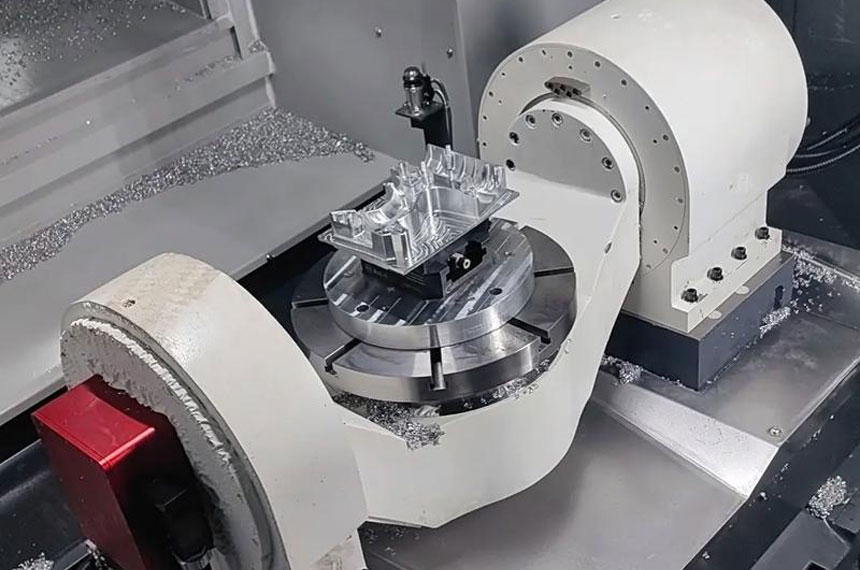
The Cost Formula – How CNC Machining Prices Are Calculated
Every CNC machining quote follows a predictable formula. Understanding this formula is the first step to controlling your costs.
Total Cost = Material Cost + (Machining Time × Machine Hourly Rate) + Setup Cost + Finishing Cost + Inspection Cost
Each component contributes differently depending on your part’s requirements. Let’s break down each element in detail.
1. Material Cost
Material selection is often the most visible cost factor, and it can vary dramatically. For a standard block of material measuring 6×6×1 inches, prices range widely. A block of ABS plastic might cost around $17, while aluminum 6061 typically runs about $25. Delrin (POM) is approximately $27, PA6 (Nylon) about $30, and aluminum 7075 can reach $80. Stainless steel 304 is often around $90 for the same size block.
In practice, aluminum 6061 typically costs between $3 and $5 per pound, while titanium can run from $15 to $40 per pound. Engineering plastics like PEEK can exceed $80 per pound.
What many buyers do not realise: You are paying for the raw block of material, not the final weight of your finished part. CNC machining is a subtractive process. If your final part weighs just a few ounces but requires a ten‑pound block of steel to machine, you pay for the ten‑pound block. The shop calculates the rectangular dimensions required to enclose your entire part, adds a small buffer for clamping, and charges you for that full block.
Material cost multipliers: Compared to baseline aluminum 6061, expect roughly:
- Plastics (POM/PEEK): 1.1× to 1.5×
- Carbon steel: approximately 1.3×
- Stainless steel: 1.6× to 2.0×
- Titanium alloys: 3.0× to 4.0×
2. Machining Time and Machine Hourly Rates
Machining time is typically the largest variable in your total cost. The hourly rate depends on the machine type and, significantly, where the shop is located.
For 3‑axis CNC milling, Chinese shops typically charge between $12 and $45 per hour, whereas US shops charge between $60 and $120 per hour, and European shops range from €40 to €100 per hour. For CNC turning (lathe work), Chinese rates are about $20–$40 per hour, US rates $50–$100, and European rates €35–€80. For 4‑axis milling, China charges $35–$110 per hour, while the US charges $50–$150 per hour. For 5‑axis or Swiss‑type machining, Chinese rates are $50–$90 per hour, US rates $120–$300, and European rates €100–€150.
China’s cost advantage: Chinese CNC machining typically runs 30% to 60% below Western equivalents for equivalent precision work. A Tier 1 factory in Guangdong may charge as little as $8–$18 per machine‑hour for 3‑axis work and $18–$40 for 5‑axis. This advantage comes not just from labor costs but from China’s vast manufacturing ecosystem – the country produces over 50% of the world’s crude steel, giving Chinese suppliers short, cost‑effective supply chains for standard materials.
What Affects Cycle Time?
Cycle time – the actual minutes the machine spends cutting – is influenced by several factors:
- Part complexity – complex geometries require slower feed rates.
- Material hardness – titanium and stainless steel require slower cutting speeds and more passes.
- Feature count – more holes, pockets, and contours mean longer machining.
- Tolerances – tighter tolerances require slower finishing passes.
A simple palm‑sized aluminum part might take 15 to 30 minutes to machine. A complex shoebox‑sized titanium part could take 2 to 4 hours.
3. Setup and Programming Costs (NRE)
Before any machine cuts metal, significant work must happen. This is called NRE (Non‑Recurring Engineering) or setup cost. Setup includes CAD file review and analysis, CAM programming to generate toolpaths and G‑code, machine preparation (cleaning, tool loading), fixturing (workholding setup), and machine zeroing and calibration.
Typical setup costs range from $50 to $150 for a simple part, and from $500 to $1,000 or more for a complex part.
The quantity effect: Setup costs are fixed per batch, not per part. This means that if you order only one part, the entire setup cost is borne by that single piece – for example, a $150 setup adds $150 to that one part. But if you order 10 parts, the setup adds only $15 per part. At 100 parts, it adds just $1.50 per part. At 1,000 parts, it is only $0.50 per part.
Pro tip: Ordering 3 to 5 prototypes instead of just 1 can drop the per‑unit cost by 20% to 30% because setup costs are spread across more parts. The sweet spot for value is often around 25 to 100 pieces, where setup costs have dropped significantly but you are not committing to massive inventory.
4. Finishing and Secondary Operations
The “as‑machined” finish is the baseline and adds no extra cost. Additional finishing operations add to your total. Bead blasting typically costs $5 to $15 per part; anodizing (Type II) costs $15 to $30; powder coating costs $20 to $35; plating costs vary widely depending on the type and thickness. Finishing generally adds 5% to 20% to the total part cost.
5. Tolerances and Inspection
Standard CNC tolerance is ISO 2768‑m, which is about ±0.1 mm (±0.004 inches). Requesting tighter tolerances drives costs up significantly. While standard tolerance is the baseline, precision tolerance (±0.001 inch or ±0.025 mm) costs substantially more, and high precision (±0.0005 inch or ±0.013 mm) costs much more again.
Tighter tolerances require slower cutting speeds, more finishing passes, specialised tooling, more frequent tool changes, and comprehensive CMM (coordinate measuring machine) inspection on every piece. Inspection cost is often a separate line item in quotes. Precision parts typically require CMM verification, adding to the total.
Real‑World Price Examples – What You Can Expect
For prototype parts (1 to 5 pieces), prices vary by material and complexity. A simple aluminum bracket in 6061 aluminum might cost between $65 and $150 per part. A complex stainless steel housing in 304 stainless could cost $120 to $400 per part. A titanium component (Ti‑6Al‑4V) may range from $250 to $800 or more. General CNC prototypes fall anywhere between $50 and $500+ per part.
For low‑volume production (10 to 500 pieces), the per‑part cost drops significantly. As an example, a simple aluminum bracket might cost about $53 each for 10 pieces, around $27.50 each for 50 pieces, about $23 each for 100 pieces, and roughly $19.10 each for 500 pieces. The trend is clear: higher quantities drive down the unit price.
For high‑volume production runs of 500 parts or more, per‑part costs can drop to as low as $1.80 to $5.00 for simple parts in standard materials.
Global price comparison – 10‑piece batches: For a simple bracket in 6061 aluminum, a Chinese shop might charge $3.20–$6.50 per part, while a US shop charges $18–$35 – a savings of roughly 75%. For a mild steel shaft, China charges $4.80–$9.00 versus US $22–$50 (about 72% savings). For an aluminum enclosure, China charges $12–$28 versus US $65–$140 (about 78% savings). For a gear in 4140 steel, China charges $18–$45 versus US $90–$220 (around 76% savings). For a medical component in 303 stainless, China charges $35–$80 versus US $160–$380 (about 78% savings). And for an aerospace rib using 5‑axis machining in 7075 aluminum, China charges $60–$150 versus US $280–$650 (about 77% savings).
How to Reduce Your CNC Machining Costs
There are several proven strategies to lower your total cost without compromising quality.
1. Optimise your design (Design for Manufacturability – DFM). This is the single most effective way to reduce costs. Avoid tight tolerances unless absolutely necessary – they drive up machining and inspection time. Use standard hole sizes – custom drills cost more and slow production. Minimise deep pockets and thin walls – they require specialised tooling and slower speeds. Add radii to internal corners – sharp internal corners require EDM or very slow machining. Reduce the number of setups – a part that needs 2 setups instead of 4 can cost 30% to 40% less. Keep critical features on the same side to minimise re‑fixturing.
2. Choose the right material. Aluminum 6061 is the most cost‑effective metal option. Avoid exotic materials unless your application truly demands them. Consider plastics like Delrin or ABS for non‑structural applications – they machine faster and cost less.
3. Optimise your order quantity. Order 3 to 5 prototypes instead of 1 to spread setup costs. The sweet spot is often 50 to 100 pieces, where setup costs have dropped but you are not holding excessive inventory. Always ask for pricing at 2 to 3 different quantities to find the optimal order size.
4. Simplify finishing. Use the as‑machined finish whenever possible – it is free. Consider bead blasting ($5–$15 per part) instead of anodizing ($15–$30) for cosmetic improvements.
5. Consider the machine type. 3‑axis machining is significantly cheaper than 4‑axis or 5‑axis. However, for complex parts, 5‑axis machining may actually reduce total cost by eliminating multiple setups. CNC turning is generally 20% to 30% cheaper than milling for rotational parts.
Why Choose FlexiTurn for Your Custom CNC Machining?
At FlexiTurn, we combine the cost advantages of Chinese manufacturing with world‑class precision, rigorous quality control, and transparent pricing. Here is what you get when you partner with us:
- Competitive Chinese pricing – 30% to 60% below Western equivalents for equivalent quality.
- Advanced multi‑axis capabilities – 3‑axis, 4‑axis, and 5‑axis machining for complex geometries.
- Wide material selection – from aluminum and stainless steel to engineering plastics and titanium.
- Rigorous quality control – full inspection with CMM verification and detailed reports.
- Strict confidentiality – your designs and intellectual property are protected at all times.
- Dedicated project management – clear communication from quote to delivery.
- Fast turnaround – standard lead times of 3 to 5 business days for prototypes.
Whether you need a single prototype or thousands of production parts, FlexiTurn delivers precision, reliability, and value.
Get Your Exact Quote
The numbers in this guide are benchmarks to help you budget and plan. The only way to know the exact cost of your part is to submit your design for a formal quote.
Ready to get started? Upload your CAD file or 2D drawing to FlexiTurn today for a detailed, transparent quote with a full cost breakdown.
FlexiTurn – Precision Machining, Delivered with Trust.
- Why Do CNC Machining Quotes Differ Between Suppliers?
- How to Prepare a CNC Machining Drawing for Manufacturing?
- How Does Part Geometry Affect CNC Machining Cost?
- Why Are Small Internal Radii Difficult to CNC Machine?
- How Do Deep Pockets Affect CNC Machining?
- Common CNC Machining Design Mistakes That Increase Cost
- How Can DFM Reduce CNC Machining Cost?
- What Is DFM in CNC Machining and Why Does It Matter?