
Phone: +86 15398058207
E-mail: sales@flexiturn.com
Add: Room 603 Building C, The Huixin Center, Zhangba One Road, Yanta Zone, Xi'an City, Shaanxi Province, China
What Is a Custom CNC Cut?
What Is a Custom CNC Cut?
In the world of modern manufacturing, precision is everything. Whether you are developing a new medical device, prototyping an automotive component, or creating a unique part for a specialised machine, the ability to transform a digital design into a physical object with exacting accuracy is critical. This is where custom CNC cutting comes into play.
Understanding the Basics
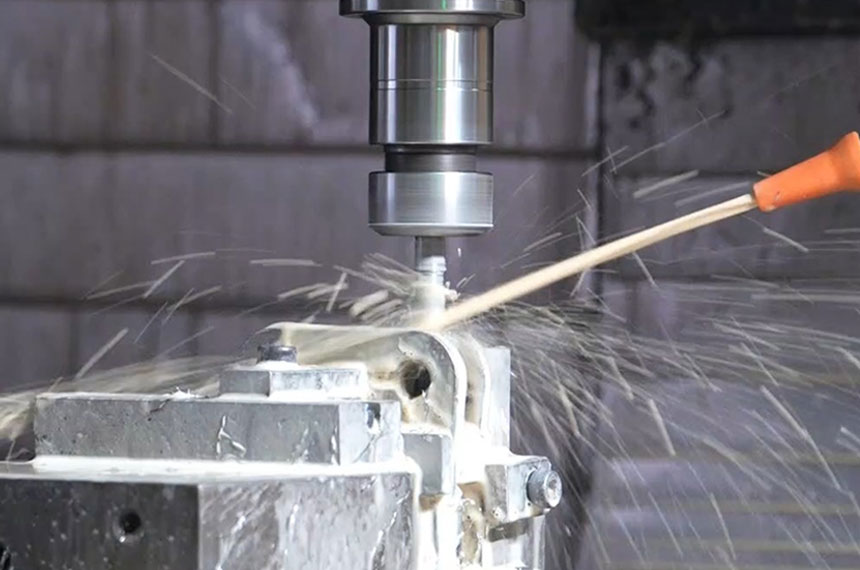
CNC stands for Computer Numerical Control. It is a manufacturing process in which pre‑programmed computer software dictates the movement of factory tools and machinery. In essence, a computer reads a digital design file and translates it into precise instructions that guide cutting tools to remove material from a solid block – a process known as subtractive manufacturing.
A custom CNC cut takes this technology a step further. While standard CNC machining produces parts based on general specifications, custom CNC cutting refers to tailoring the entire machining process to meet the unique requirements of a specific part or component – often one that cannot be easily manufactured through conventional methods or standard mass‑production tooling.
Instead of relying on moulds or dies – which require significant upfront investment and are best suited for high‑volume production – custom CNC cutting carves a part out of a solid block (or billet) of material. The computer code guides the tool’s movements with exceptional precision, ensuring consistent results even for the most complex geometries.
Custom CNC Cutting vs. Standard CNC Cutting – A Clear Distinction
It is helpful to distinguish between these two approaches. Standard CNC cutting is typically used to produce parts that are already well‑defined in general terms – often using existing designs, standard templates, or common tooling setups. It is efficient for higher‑volume runs where the specifications are fixed and do not require special adaptation. However, it offers limited flexibility; the process is optimised for repeatability rather than uniqueness.
In contrast, custom CNC cutting is driven by a client‑specific design. Every aspect – from toolpath planning and fixture design to cutting speeds and finishing strategies – is tailored to that particular project. The geometry may be intricate, the tolerances exceptionally tight, and the material selection uncommon. Custom cutting is ideal for prototyping, low‑volume production, and one‑off parts where no standard solution exists. It often requires custom fixtures and specialised tooling, and the programming effort is more intensive because the machine must follow a unique path.
To summarise in words: standard cutting is about producing known parts efficiently; custom cutting is about producing your part, exactly as you designed it, with no compromises.
How the Custom CNC Cutting Process Works
The journey from a digital idea to a finished part follows a structured workflow:
1. Design (CAD)
The process begins with a 3D CAD (Computer‑Aided Design) file – typically in formats like STEP, IGES, or SolidWorks. This digital model contains all the geometric information, dimensions, and tolerances required for the part.
2. Programming (CAM)
The CAD file is imported into CAM (Computer‑Aided Manufacturing) software, which converts the design into G‑code – a programming language that tells the CNC machine exactly where to move, how fast to cut, and how deep to go. For custom cuts, this step is particularly critical because the toolpaths must be optimised for the unique shape and material.
3. Material Selection and Preparation
The appropriate raw material – whether metal, plastic, or composite – is selected based on the part’s functional requirements. The material is then prepared and loaded into the machine.
4. Machining
The CNC machine follows the programmed instructions, cutting away material layer by layer to bring the digital design to life. Depending on the complexity, this may involve CNC milling (using rotating multi‑point cutting tools), CNC turning (rotating the workpiece while a single‑point tool removes material – ideal for cylindrical parts), or multi‑axis machining (4‑axis or 5‑axis systems that handle complex contours and undercuts in a single setup).
5. Quality Inspection
Throughout the process, automated quality checks and human oversight ensure that every part meets the required specifications. For custom cuts, inspection is usually more rigorous because every dimension is critical.
6. Finishing
Additional steps – such as deburring, anodising, polishing, or coating – are applied depending on the intended use of the part.
Key Advantages of Custom CNC Cutting
1. Precision and Accuracy
CNC machines can achieve extremely tight tolerances – often as fine as ±0.005 mm or better. This level of precision is critical in industries like aerospace, medical, and automotive, where even minor variations can impact performance and safety.
2. Complex Geometries
Custom CNC cutting can produce parts with intricate shapes, curves, and undercuts that would be challenging or impossible to manufacture using traditional methods.
3. Material Versatility
The process works with a wide range of materials, including various metals (aluminium, steel, brass, copper, titanium), plastics, and composites.
4. Reduced Lead Times
By automating many aspects of the manufacturing process, CNC cutting can significantly reduce production time compared to manual methods.
5. Cost‑Effective for Low Volumes
Unlike injection moulding or casting – which require expensive tooling and are only economical for large production runs – custom CNC cutting is ideal for prototyping and low‑volume production without the need for significant upfront investment.
6. Repeatability and Consistency
Once a CNC program is perfected, the machine can produce identical parts over and over again with minimal variation.
7. Design Flexibility and Iteration
Bespoke CNC machining supports iterative development. Clients can modify their designs between production stages without having to start over – saving both time and resources.
Industries That Rely on Custom CNC Cutting
Custom CNC cutting services are widely used across the global manufacturing industry, serving as a core support for precision parts processing. Key sectors include aerospace (turbine blades, structural components, engine parts, landing gear), automotive (engine components, transmission parts, chassis components, battery housings), medical devices (surgical instruments, implants, prosthetics, diagnostic equipment parts), industrial equipment (machinery components, tooling, fixtures, moulds and dies), robotics and automation (precision gears, housings, actuator components), and construction (custom panels, decorative elements, structural components).
Materials Commonly Used in Custom CNC Cutting
Custom CNC cutting can work with a broad spectrum of materials: aluminium (lightweight, corrosion‑resistant, ideal for aerospace and automotive), stainless steel (strong, durable, suitable for medical and food‑grade applications), brass and copper (excellent conductivity for electrical and plumbing components), carbon steel and alloy steels (high strength for heavy‑duty industrial parts), titanium (high strength‑to‑weight ratio, used in aerospace and medical implants), engineering plastics (lightweight, chemical‑resistant options for specialised applications), and composites (for advanced lightweighting requirements).
What to Look for in a Custom CNC Cutting Partner
Choosing the right service provider is essential to unlocking the full potential of custom CNC cutting. A reliable partner should offer design for manufacturability (DFM) support – reviewing designs to optimise them for machining; material selection guidance – helping you choose the right material for your application; tolerance and finish expertise – specifying appropriate tolerances and surface finishes; multi‑process capability – offering milling, turning, drilling, and finishing under one roof; rigorous quality control – implementing inspection protocols to ensure every part meets specifications; and confidentiality – protecting your intellectual property and design files.
Why Choose FlexiTurn for Your Custom CNC Cutting Needs?
At FlexiTurn, we specialise in delivering high‑precision custom CNC cutting solutions tailored to your exact requirements. With state‑of‑the‑art equipment, a skilled engineering team, and a relentless commitment to quality, we serve clients across aerospace, automotive, medical, robotics, and industrial equipment industries.
Our capabilities include 3‑axis, 4‑axis, and 5‑axis CNC machining for complex geometries; a wide material selection – from aluminium and stainless steel to engineering plastics; rapid prototyping and high‑volume production – flexible runs to match your demand; rigorous quality control with full inspection reporting; strict confidentiality – your designs are protected at all times; and dedicated project management – clear communication from quote to delivery.
Conclusion
A custom CNC cut is more than just a manufacturing process – it is a pathway to bringing unique, precise, and complex designs to life. Whether you need a single prototype or thousands of production parts, custom CNC cutting offers the precision, flexibility, and reliability that modern product development demands.
Ready to turn your design into reality? Contact FlexiTurn today to discuss your project and receive a competitive quote.
FlexiTurn – Precision Machining, Delivered with Trust.
- Why Do CNC Machining Quotes Differ Between Suppliers?
- How to Prepare a CNC Machining Drawing for Manufacturing?
- How Does Part Geometry Affect CNC Machining Cost?
- Why Are Small Internal Radii Difficult to CNC Machine?
- How Do Deep Pockets Affect CNC Machining?
- Common CNC Machining Design Mistakes That Increase Cost
- How Can DFM Reduce CNC Machining Cost?
- What Is DFM in CNC Machining and Why Does It Matter?