
Phone: +86 15398058207
E-mail: sales@flexiturn.com
Add: Room 603 Building C, The Huixin Center, Zhangba One Road, Yanta Zone, Xi'an City, Shaanxi Province, China
Is CNC Harder Than 3D Printing?
Is CNC Harder Than 3D Printing?
It is a question that surfaces frequently among engineers, hobbyists, and product developers: Is CNC machining harder to master than 3D printing? The short answer is yes – but the full picture is more nuanced. Both technologies demand a distinct set of skills, and what one person finds difficult, another may find straightforward. To give a fair assessment, we need to break down the challenges of each process across several dimensions: learning curve, setup complexity, material handling, and post‑processing.
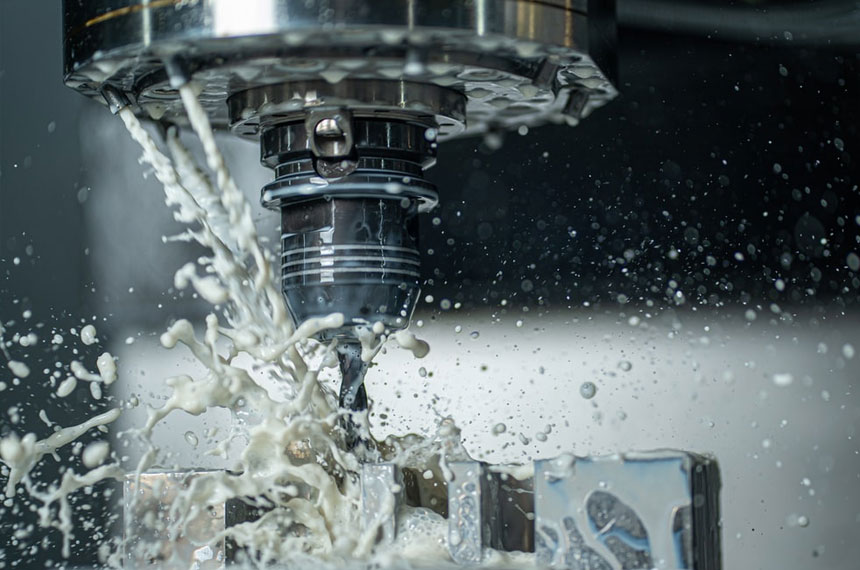
What Makes CNC Machining Challenging?
CNC (Computer Numerical Control) machining is a subtractive process – you start with a solid block of material and cut away everything that is not part of the final part. This approach, while powerful, introduces several layers of complexity.
1. Programming and Toolpath Generation
Unlike 3D printing, where slicing software does most of the work with a few clicks, CNC requires dedicated CAM (Computer‑Aided Manufacturing) programming. The operator must define toolpaths, choose appropriate cutting strategies, set feed rates, spindle speeds, and depth of cut. Even with modern CAM software, creating an efficient and error‑free program for a complex 3D part demands a solid understanding of machining principles. A wrong toolpath can break tools, ruin the workpiece, or damage the machine.
2. Workholding and Fixturing
The part must be rigidly clamped to the machine table. Designing and fabricating custom fixtures to hold irregular shapes is an art in itself. If the workpiece shifts during cutting, the entire part is scrapped. This is a challenge that simply does not exist in 3D printing, where the part is built layer‑by‑layer on a stationary bed.
3. Tool Selection and Wear Management
CNC uses a variety of cutting tools – end mills, drills, reamers, taps – each suitable for specific geometries and materials. Choosing the right tool, coating, and geometry is critical. Tools wear over time, and the operator must monitor wear, adjust offsets, and replace tools at the right moment to maintain dimensional accuracy. This requires experience and constant attention.
4. Material Behaviour
Metals and hard plastics do not behave predictably. Cutting forces, heat generation, chip evacuation, and thermal expansion all affect the final part. Running a tool too fast can cause melting or tool breakage; too slow can cause work‑hardening or poor surface finish. Machinists must understand the material they are cutting – its hardness, ductility, and thermal properties – to adjust parameters accordingly.
5. Multiple Setups and Coordinate Systems
Many complex parts require flipping or re‑orienting the workpiece to access different faces. Each new setup requires re‑zeroing the machine, re‑establishing work offsets, and ensuring that features align across different sides of the part. This adds significant complexity and room for human error.
6. Machine Maintenance and Calibration
CNC machines are precision instruments. They require regular maintenance – lubrication, coolant checks, spindle calibration, and geometric alignment. An uncalibrated machine will produce inaccurate parts, no matter how perfect the program is.
What Makes 3D Printing Challenging?
Additive manufacturing, commonly known as 3D printing, is often marketed as a plug‑and‑play solution. While it is generally more accessible, it is by no means trivial.
1. Slicing and Support Structures
Even though slicing software is user‑friendly, getting optimal results still requires careful parameter tuning – layer height, infill density, print speed, and temperature. For FDM (fused deposition modelling), printing overhangs and bridges often demands support structures, which must be designed to be removable without damaging the part. Poor support design leads to failed prints or ugly surfaces.
2. Warping and Adhesion
Plastic materials shrink as they cool, causing parts to curl or detach from the build plate. Managing bed adhesion, enclosure temperature, and print cooling is a constant battle, especially for large parts or high‑temperature materials like ABS or nylon. Even with resin printing, exposure times and support placement require careful tuning.
3. Material Limitations
While 3D printing offers a wide range of polymers, it is still far behind CNC in terms of material variety. Metals and ceramics in additive manufacturing require expensive and complex systems (SLM, SLS) that are not as accessible to most users. Additionally, printed parts often have anisotropic properties – they are weaker in the Z‑direction – which requires design compensation.
4. Post‑Processing
Almost every 3D print requires some form of finishing: removing supports, sanding, polishing, or curing (for resin). Achieving a smooth, engineering‑grade surface finish is often more labour‑intensive than the print itself. Some materials also require annealing or chemical smoothing.
5. Failure Diagnosis
When a print fails, the causes can be numerous – clogged nozzle, wet filament, incorrect bed level, loose belts, or electrical issues. Troubleshooting requires systematic thinking and experience, although the learning curve is generally gentler than for CNC.
Head‑to‑Head Comparison (Without Tables)
Learning Curve:
CNC has a significantly steeper learning curve. A complete beginner can produce a simple 3D print within an hour of unboxing a consumer printer, but that same beginner would struggle to program and operate a CNC mill safely for weeks. CNC requires understanding G‑code, tool geometry, feeds and speeds, and machine kinematics – all of which take time to internalise. In contrast, 3D printing’s entry barrier is low, thanks to user‑friendly slicers and extensive online communities.
Operational Complexity:
Operating a CNC machine is more demanding on a minute‑by‑minute basis. The operator must monitor tool wear, coolant levels, chip flow, and machine vibrations. A crash can be catastrophic – damaging tools, workpieces, and the machine itself. 3D printing is more “fire‑and‑forget”; once the print starts, you can often leave it unattended, with failures usually resulting in wasted filament and time, not broken equipment.
Material Handling:
CNC works with a vast range of engineering materials – from soft plastics to hardened steels, titanium, and Inconel. Each material demands different tooling, speeds, and coolants. 3D printing, especially at the hobbyist level, is mostly limited to a few thermoplastics. Even industrial metal 3D printers are far less material‑diverse than a typical CNC shop.
Post‑Processing and Inspection:
CNC parts often come off the machine ready to use, with excellent surface finish and tight tolerances. However, achieving that requires skilled inspection (using CMM, gauges) and possibly secondary operations like deburring, tapping, or anodising. 3D printed parts usually need extensive post‑processing – removing supports, sanding, and sometimes chemical treatment – to achieve comparable surface quality. But the inspection requirements are generally less strict unless the part is functional.
Equipment Cost and Maintenance:
Professional CNC machines are expensive (tens to hundreds of thousands of dollars) and require regular maintenance by trained technicians. Consumer 3D printers are relatively affordable and have simpler maintenance routines. However, industrial metal 3D printers are also costly and require controlled environments.
So, Is CNC Harder?
In almost every measurable aspect – programming, setup, tool management, and operational vigilance – CNC machining is undeniably harder than 3D printing. It demands a deeper understanding of materials, mechanics, and manufacturing science. It requires more physical skill, more experience, and a higher tolerance for risk (since mistakes can be costly). That is why CNC machinists typically undergo formal apprenticeships or years of on‑the‑job training, while many 3D printing enthusiasts are self‑taught through online tutorials.
However, “harder” does not mean “better” for every application. 3D printing excels at rapid prototyping, complex internal geometries, and low‑volume custom parts where CNC would be uneconomical or impossible. CNC machining remains the go‑to for functional prototypes, production parts, and components that require high strength, tight tolerances, and a broad material choice.
The Right Tool for the Right Job
Rather than asking which is harder, it is more productive to ask which is more suitable for your specific project. If you need a one‑off plastic figurine, a 3D printer is the obvious choice – and it is relatively easy to operate. If you need a precision metal bracket for an aerospace assembly, CNC machining is the only viable option, despite its complexity.
At FlexiTurn, we specialise in the hard stuff – custom CNC machining for demanding applications. We have the equipment, the engineering know‑how, and the quality systems to take on your most challenging parts. We take care of all the programming, tooling, fixturing, and inspection, so you do not have to struggle with the learning curve yourself. You simply provide your design, and we deliver precision‑machined parts that meet your exact specifications.
Conclusion
Yes, CNC is harder than 3D printing – by a significant margin. But that difficulty is what gives CNC its unmatched precision, material versatility, and reliability. For those who need manufacturing excellence, the extra effort is well worth it. And for those who prefer to outsource that effort, FlexiTurn is ready to help.
Ready to move from concept to reality? Contact FlexiTurn today and let our experienced team handle the hard part for you.
FlexiTurn – Precision Machining, Delivered with Trust.
- Why Do CNC Machining Quotes Differ Between Suppliers?
- How to Prepare a CNC Machining Drawing for Manufacturing?
- How Does Part Geometry Affect CNC Machining Cost?
- Why Are Small Internal Radii Difficult to CNC Machine?
- How Do Deep Pockets Affect CNC Machining?
- Common CNC Machining Design Mistakes That Increase Cost
- How Can DFM Reduce CNC Machining Cost?
- What Is DFM in CNC Machining and Why Does It Matter?