
Phone: +86 15398058207
E-mail: sales@flexiturn.com
Add: Room 603 Building C, The Huixin Center, Zhangba One Road, Yanta Zone, Xi'an City, Shaanxi Province, China
Where to Buy CNC-Grade Engineering Plastics?
Where to Buy CNC-Grade Engineering Plastics?
When sourcing engineering plastics for CNC machining, buying material is only part of the decision. For manufacturers, the more important questions are whether the material grade is suitable for machining, whether the supplied blanks match the required dimensions, and whether the supplier can provide consistent quality from prototype to production.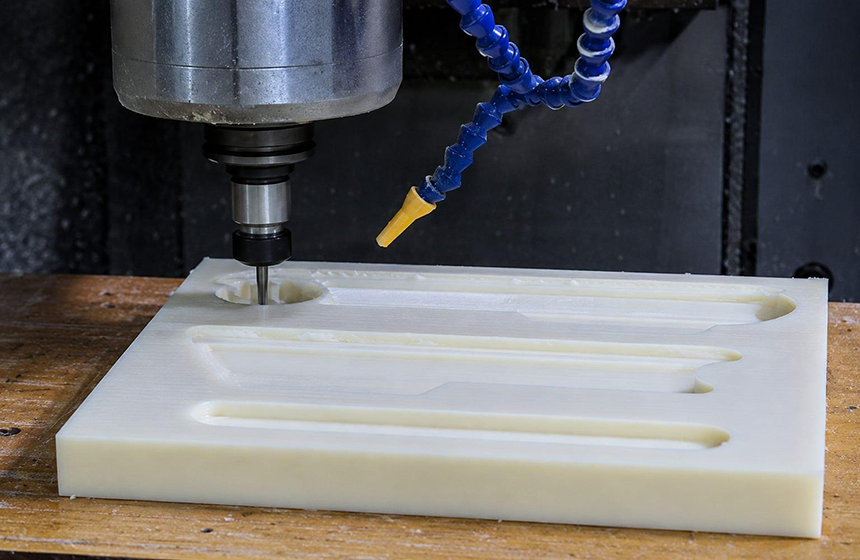
CNC-grade engineering plastics are commonly used in precision components that require low friction, dimensional stability, electrical insulation, chemical resistance, or lightweight construction. Common choices include POM, PEEK, Nylon, PTFE, ABS, Polycarbonate, and other engineering-grade polymers.
What Should You Look for in a CNC-Grade Plastic Supplier?
Not every plastic sheet, rod, or block is equally suitable for precision CNC machining. A reliable supplier should be able to provide material in forms and dimensions that fit the customer's manufacturing process.
Key considerations include:
Material Grade and Machining Performance
Different engineering plastics behave differently during CNC machining. Some materials are easy to machine but may have higher thermal expansion, while others offer excellent wear or chemical resistance but require greater control during cutting.
The material should therefore be selected according to the finished component's operating environment, not simply its price.
Machining-Ready Dimensions
For CNC manufacturers, oversized raw stock can mean unnecessary machining time and material waste. Precision blanks supplied closer to the required dimensions can reduce material removal and improve production efficiency.
Depending on the application, CNC-ready plastics may be supplied as round bars, square or rectangular bars, plates, sheets, and blocks.
Dimensional Consistency
Consistent blank dimensions are particularly important when the material will be used for precision CNC machining. Stable dimensions help manufacturers establish repeatable machining processes and reduce variation between batches.
Custom Blank Sizes
Standard stock sizes do not always match the requirements of a particular component. Custom-cut or pre-machined blanks can provide a more practical starting point for CNC production, especially when producing prototypes, small batches, or components with high material costs.
Where Can You Buy CNC-Grade Engineering Plastics?
There are several types of suppliers in the market, including general plastic distributors, industrial material suppliers, and CNC-focused manufacturers.
For companies purchasing plastics specifically for machining, a supplier specializing in CNC-ready engineering plastic blanks can be a better fit than a general-purpose plastic distributor.
Instead of purchasing large standard sheets, rods, or blocks and performing extensive preparation internally, manufacturers can source blanks according to their required material, shape, and dimensions.
Engineering Plastics Available from FlexiTurn
FlexiTurn supplies CNC-ready engineering plastic blanks for manufacturers that need reliable stock for precision machining.
Available materials include commonly machined engineering plastics such as POM, PEEK, Nylon, PTFE, ABS, Polycarbonate, and other engineering-grade plastics, depending on the application and specification.
Blanks can be supplied in different forms, including:
- Round bars
- Square and rectangular bars
- Plates and sheets
- Blocks
- Custom-cut or dimensioned blanks
Rather than selling only standard plastic stock, FlexiTurn focuses on supplying pre-machined and machining-ready blanks that can be used as the starting point for customers' CNC manufacturing processes.
Why Source CNC Plastic Blanks from FlexiTurn?
For CNC manufacturers, the value of a plastic supplier is not simply the availability of a particular polymer. It is the ability to provide material that fits the next manufacturing step.
FlexiTurn combines precision blank production with CNC machining experience, allowing us to understand how engineering plastics are actually used in manufacturing.
Customers can specify the required material, blank shape, dimensions, and other requirements based on their production needs. This makes FlexiTurn a practical sourcing option for companies looking to reduce material preparation and establish a more efficient CNC machining workflow.
Choose the Material According to the Part
The right engineering plastic depends on the component's actual working conditions.
POM is often considered when low friction, good dimensional stability, and machinability are important. PEEK is suitable for demanding applications requiring high temperature and chemical resistance. Nylon can be considered for wear-resistant and lightweight components, while PTFE is valued for its low friction and chemical resistance.
For electrical, structural, housing, and general-purpose components, materials such as ABS and Polycarbonate may also be appropriate depending on the design and operating environment.
The best purchasing decision therefore starts with the finished part—not simply the name of the plastic.
CNC-Ready Engineering Plastics from FlexiTurn
If you are looking for engineering plastics specifically intended for CNC machining, FlexiTurn can supply machining-ready blanks in customized materials, forms, and dimensions.
Whether you need material for CNC prototypes, small-batch components, or ongoing production, starting with the right blank can reduce preparation work, material waste, and unnecessary machining time.

- Why Do CNC Machining Quotes Differ Between Suppliers?
- How to Prepare a CNC Machining Drawing for Manufacturing?
- How Does Part Geometry Affect CNC Machining Cost?
- Why Are Small Internal Radii Difficult to CNC Machine?
- How Do Deep Pockets Affect CNC Machining?
- Common CNC Machining Design Mistakes That Increase Cost
- How Can DFM Reduce CNC Machining Cost?
- What Is DFM in CNC Machining and Why Does It Matter?