
Phone: +86 15398058207
E-mail: sales@flexiturn.com
Add: Room 603 Building C, The Huixin Center, Zhangba One Road, Yanta Zone, Xi'an City, Shaanxi Province, China
How to choose a carbon fiber CNC machining service manufacturer?
Carbon Fiber Is a Different World
Carbon fiber reinforced polymer (CFRP) is the material of high performance - used in aerospace, drones, motorsport, robotics, and premium sporting goods for its extraordinary strength-to-weight ratio and stiffness. But carbon fiber is not a metal, and it does not machine like one.
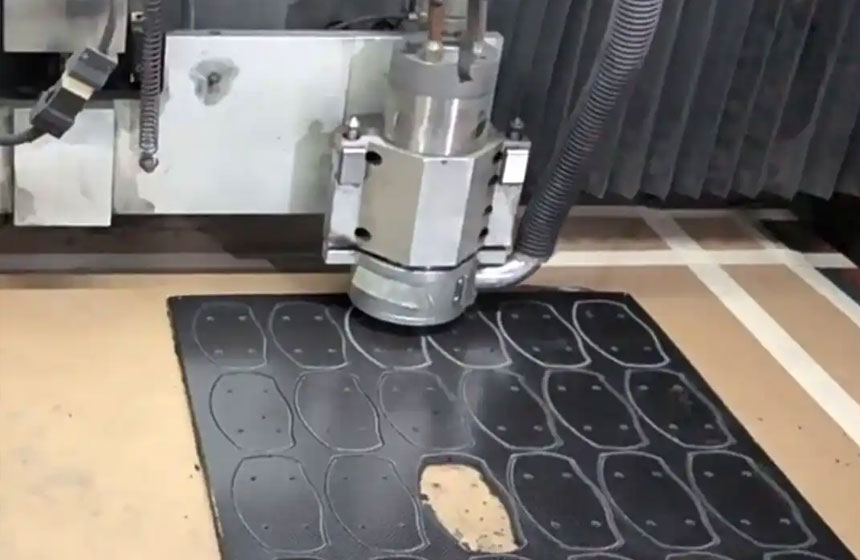
While a metal part is cut with heat management and chip control in mind, carbon fiber demands a completely different playbook: diamond tooling, dust extraction, delamination prevention, and edge sealing. Machining carbon fiber with metal-thinking is a fast route to ruined parts, destroyed tooling, and a shop floor coated in conductive dust. Choosing the right carbon fiber CNC machining service manufacturer is about finding a partner who treats this material with the respect it demands. Here is how.
Step 1: Understand the Material First
Carbon fiber parts are typically supplied as cured composite panels, tubes, or molded components, then machined to final dimensions. Key material characteristics to know:
| Material Form | Characteristics | Machining Notes |
| Unidirectional (UD) laminate | Fibers aligned in one direction; high stiffness in one axis | Prone to splitting along fiber direction |
| Twill / woven laminate | Balanced strength, nicer surface | Better resistance to edge tearing |
| Prepreg / autoclave-cured | Aerospace-grade, low void content | Requires careful trimming and sealing |
| Carbon fiber tube | High stiffness-to-weight, common in drones/robotics | Needs specialized clamping to avoid crush |
| CFRP + aluminum honeycomb | Sandwich panels for aerospace | Delamination risk at core-face interfaces |
Ask your shortlisted manufacturers about their experience with your specific material form. Carbon tube machining and carbon panel machining require different skills, tooling, and fixtures.
Step 2: The Machining Challenges of Carbon Fiber
Carbon fiber presents a unique set of problems that a specialist manufacturer knows how to solve:
1. Extreme abrasiveness. Carbon fibers are harder than most cutting tools. Standard steel or carbide tooling wears out in minutes. Diamond-coated or PCD (polycrystalline diamond) tooling is the standard for productive carbon machining.
2. Delamination. Poorly supported cuts cause the material to split and peel at the edges - a fatal defect for structural parts. Correct tool geometry, climb milling, and proper backing support are essential.
3. Hazardous dust. Carbon fiber dust is conductive, abrasive, and an irritant to lungs and skin. A professional shop operates with industrial dust extraction and appropriate PPE - and protects nearby electronics from conductive dust.
4. Fraying and fuzz. Cut edges can fray into fuzzy fibers, especially in woven laminates. Specialist finishing removes fuzz and seals edges.
5. Edge sealing. Exposed edges allow moisture ingress and fiber pullout. Sealing - with cyanoacrylate or specialized resin - protects the part and its finish.
When evaluating manufacturers, ask specifically about diamond tooling, dust extraction, and edge-sealing capability. These three answers reveal whether they are genuine carbon specialists or occasional dabblers.
Step 3: Tooling and Equipment That Carbon Fiber Requires
Carbon fiber machining is a dedicated discipline. Look for:
- Diamond-coated and PCD tooling - the defining technology for productive carbon machining;
- CNC routers and machining centers with high spindle speeds and rigid, low-vibration structures;
- Proper workholding - vacuum fixtures, custom clamps, and mandrels that support the part and prevent delamination at cut edges;
- Industrial dust extraction and filtration integrated into the process;
- 5-axis capability for complex tube and 3D component geometry.
Equipment alone isn't enough - but a shop without this equipment cannot machine carbon fiber to a professional standard, no matter how enthusiastic they are.
Step 4: Quality Control and Inspection
Carbon fiber parts are often structural - in aircraft, drones, or race cars - where a hidden defect is unacceptable. Your manufacturer should provide:
- ISO 9001:2015 quality management as a baseline, with AS9100 where aerospace demands it;
- Dimensional inspection with CMM or calibrated measurement tools - critical for composite parts that may distort after machining;
- Visual and ultrasonic inspection where required, to detect delamination or voids;
- First Article Inspection (FAI) on new parts;
- Edge quality verification - no delamination, fraying, or fuzz on finished edges;
- Complete documentation shipped with every order.
If a manufacturer cannot explain how they verify edge quality and detect delamination, keep looking.
Step 5: Finishing and Post-Processing Expertise
Machined carbon fiber rarely ships raw. A specialist partner offers:
- Edge sealing to prevent moisture ingress and fiber pullout;
- De-fuzzing and edge finishing for clean, professional surfaces;
- Clear coating or painting for cosmetic and protective purposes;
- Drilling and countersinking of precision holes without delamination;
- Assembly - bonding, riveting, or installing inserts into carbon components;
- Surface preparation for bonding or secondary lamination.
Confirm that finishing is in-house or via vetted partners, and clearly itemized in the quote.
Step 6: Assess DFM Support and Engineering Communication
Carbon fiber design is unforgiving of mistakes - you can't "weld" a bad cut. The right manufacturer is an engineering partner who:
- Reviews your design for machinability - fiber orientation, edge geometry, hole placement, and tolerance realism;
- Advises on manufacturing strategy - should the part be molded net-shape and trimmed, or machined from flat stock?
- Communicates engineer-to-engineer, confirming every specification in writing;
- Provides proactive progress updates and photographs during machining.
A partner who flags a delamination risk in your design before cutting is worth their weight in carbon.
Step 7: Compare Cost and Lead Time Realistically
- Lead time. Carbon fiber prototyping typically runs 3–7 days; production scales with volume. Diamond tooling and specialized processes are faster than you might expect - from a true specialist.
- Pricing. Itemized quotes covering material, machining, tooling, finishing, and setup. Carbon fiber raw material is expensive; a transparent manufacturer explains material costs rather than hiding them.
Value is not the lowest quote - it's a part that performs in service and arrives on time. Choose accordingly.
Why Choose FlexiTurn for Carbon Fiber Machining
FlexiTurn brings a precision mindset to this demanding material:
- Carbon fiber expertise. We machine CFRP panels, tubes, and molded components with process discipline developed over years of composite work;
- Diamond tooling and dust control. PCD and diamond-coated tooling, with industrial dust extraction protecting parts, people, and electronics;
- Delamination-free edges. Specialist tool paths, climb milling, and proper workholding prevent the defects that ruin composite parts;
- Edge sealing and finishing. We seal, de-fuzz, and finish edges so your parts perform and look professional;
- Documented quality. ISO 9001-compliant processes, FAI, dimensional inspection, and edge-quality verification;
- Engineer-to-engineer support. Talk directly with engineers who understand composites, not just metals;
- Instant quoting. Upload your model and get a realistic, itemized quote with DFM feedback in minutes.
From a single drone arm prototype to high-volume aerospace production, FlexiTurn machines carbon fiber right - clean edges, no delamination, on time.
Frequently Asked Questions
Can carbon fiber be machined with standard CNC tools?
Technically yes, but standard carbide tooling wears out almost immediately. Professional carbon machining requires diamond-coated or PCD tooling.
How do you prevent delamination when machining carbon fiber?
Through proper workholding and backing support, climb milling with the correct tool geometry, and controlled feed rates - the process discipline of a composite specialist.
Is carbon fiber dust dangerous?
Yes. Carbon fiber dust is conductive and an irritant. A professional shop uses industrial dust extraction and appropriate PPE. Ask your manufacturer about their dust-control practices.
Do you seal the edges of machined carbon fiber?
Yes. Edge sealing prevents moisture ingress and fiber pullout, protecting both performance and appearance.
Can you machine carbon fiber tubes?
Yes. We machine carbon tubes using mandrels and specialized clamping to prevent crushing and delamination.
What tolerances can you hold on carbon fiber?
Composite materials hold looser tolerances than metals due to their nature, but FlexiTurn holds ±0.1 mm on standard features and tighter where the design and material allow, validated by inspection.
What is the minimum order quantity?
There is no minimum - single prototypes and full production runs are both welcome.
Start Your Carbon Fiber Machining Project Today
Carbon fiber rewards a specialist and punishes a generalist. Upload your design to FlexiTurn today for an instant quote - or speak directly with our engineers about your carbon fiber project.
- Why Do CNC Machining Quotes Differ Between Suppliers?
- How to Prepare a CNC Machining Drawing for Manufacturing?
- How Does Part Geometry Affect CNC Machining Cost?
- Why Are Small Internal Radii Difficult to CNC Machine?
- How Do Deep Pockets Affect CNC Machining?
- Common CNC Machining Design Mistakes That Increase Cost
- How Can DFM Reduce CNC Machining Cost?
- What Is DFM in CNC Machining and Why Does It Matter?