
Phone: +86 15398058207
E-mail: sales@flexiturn.com
Add: Room 603 Building C, The Huixin Center, Zhangba One Road, Yanta Zone, Xi'an City, Shaanxi Province, China
How to choose a titanium CNC machining service manufacturer?
Titanium: Extraordinary Material, Extraordinary Challenges
Titanium is the material engineers specify when nothing else is good enough. Its exceptional strength-to-weight ratio, corrosion resistance, and biocompatibility make it indispensable in aerospace, medical implants, motorsport, and chemical processing. It is also one of the most difficult materials in the world to machine.
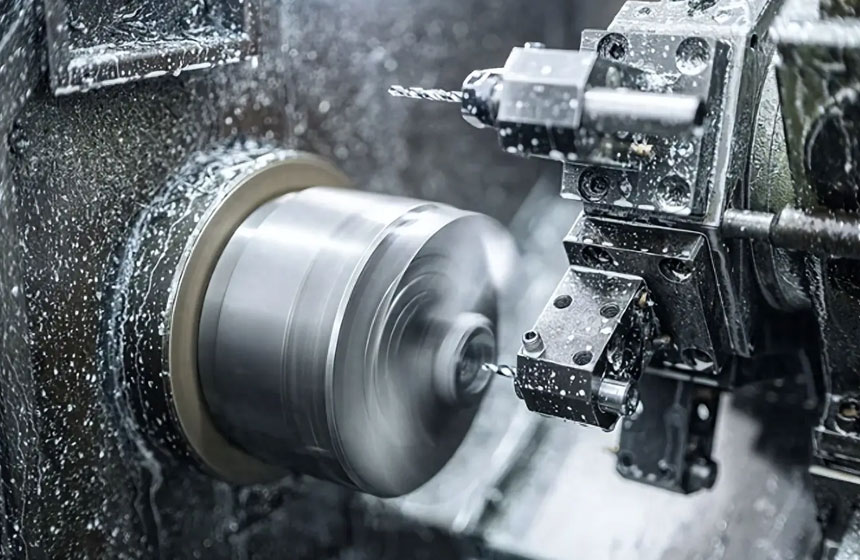
Titanium's low thermal conductivity means heat stays at the cutting edge instead of escaping into the chip. It work-hardens, galls, and wears tools aggressively. A mediocre shop will burn through tooling, struggle to hold tolerances, and deliver parts late - or not at all. The choice of a titanium CNC machining service manufacturer is, quite literally, the difference between a successful program and a costly failure. Here is how to choose the right one.
Step 1: Understand the Titanium Grades
Titanium comes in grades with very different machinability and applications. Know what your part requires:
| Grade | Key Characteristics | Typical Applications |
| Grade 2 (Commercially Pure) | Excellent corrosion resistance, good formability, moderate strength | Chemical processing, marine, heat exchangers |
| Grade 5 (Ti-6Al-4V) | The workhorse alloy - high strength, good toughness | Aerospace, medical, motorsport, industrial |
| Grade 5 ELI (Ti-6Al-4V ELI) | Extra-low interstitial - enhanced toughness | Medical implants, cryogenic applications |
| Grade 23 | ELI version of Grade 5 | Surgical implants, high-integrity aerospace |
| Grade 9 (Ti-3Al-2.5V) | Good strength and ductility | Hydraulic tubing, sporting goods |
Most parts you encounter will be Grade 2 or Grade 5. A manufacturer that routinely machines Ti-6Al-4V - and can prove it with references and case studies - has the process knowledge your project needs.
Step 2: Why Titanium Is So Hard to Machine
Before evaluating a manufacturer, understand why titanium defeats most shops:
1. Low thermal conductivity. Titanium conducts heat about 10–15% as well as steel. Heat concentrates at the cutting edge, softening the tool and accelerating wear. Effective, high-pressure coolant delivery is not optional - it is essential.
2. Work hardening. Titanium hardens rapidly under improper cutting conditions, making the next pass even harder and accelerating tool failure.
3. Galling and welding. Titanium tends to weld to the cutting tool under pressure, causing built-up edge, poor finish, and catastrophic tool failure.
4. Spring-back and deflection. Titanium's elasticity means parts deflect during cutting; a rigid setup and correct tool paths are critical to holding tolerance.
5. Chip control. Titanium chips are tough and can be hazardous; proper chip breakers and evacuation are mandatory.
Ask every candidate manufacturer how they manage these five factors. If they speak in confident, specific terms about feeds, speeds, coolant pressure, and tool geometry - you're in the right room.
Step 3: The Right Equipment Is Non-Negotiable
Machining titanium well requires rigid, powerful machines and a high-pressure coolant system. Signs of a capable titanium shop:
- Rigid CNC milling and turning centers with adequate spindle torque;
- High-pressure coolant systems (through-tool coolant at 40 bar or more is common in serious titanium work);
- 5-axis capability for complex aerospace geometries in minimal setups;
- Stable workholding and vibration damping to resist the chatter titanium loves to induce.
Ask for their equipment list and titanium case studies. A shop that treats titanium as "just another material" on a general-purpose machine is a risk you don't need to take.
Step 4: Tooling and Process Strategy
Titanium demands a disciplined, conservative approach:
- Specialized carbide or coated tooling designed for titanium, with correct lead angles and edge preparation;
- Low cutting speeds with high chip loads - counterintuitive but essential to cut under the work-hardened layer;
- Consistent, high-pressure coolant to control heat at the source;
- Shallow depths of cut in finishing passes to protect tool life and finish;
- Experienced machinists who read tool wear and adjust parameters proactively, not reactively.
The best titanium shops treat every job as a partnership between engineering and the machine floor. Ask about their titanium-specific process documentation.
Step 5: Quality Control and Material Traceability
In aerospace and medical - titanium's two biggest markets - quality is not optional. Your manufacturer must provide:
- ISO 9001:2015 certification, with AS9100 (aerospace) or ISO 13485 (medical) where your industry requires it;
- Full material traceability with mill certificates - critical for flight-critical and implant-grade parts;
- CMM inspection for tight tolerances and complex geometries;
- First Article Inspection (FAI) on every new titanium part;
- Surface finish verification for fatigue-critical applications;
- Complete documentation shipped with every order.
If a manufacturer cannot provide material traceability for titanium, do not proceed. For medical implants and aerospace components, it is a legal and safety requirement - not a nice-to-have.
Step 6: Evaluate Finishing and Secondary Operations
Titanium parts often require specialized finishing:
- Surface treatments such as anodizing (Type II and III) for corrosion resistance and cosmetic coloring;
- Passivation to restore the natural protective oxide layer;
- Bead blasting for uniform cosmetic finishes;
- Plasma spraying or coating for specific wear or biocompatibility requirements;
- Polishing for medical and cosmetic applications;
- Inspection and certification for medical-grade and aerospace-grade components.
Confirm that finishing is within the manufacturer's capability and clearly itemized in the quote.
Step 7: Assess DFM Support, Cost, and Lead Time Realities
- DFM feedback. Titanium is expensive - both as raw material and in machining time. A good manufacturer gives you DFM suggestions (loosening non-critical tolerances, simplifying geometry) that cut cost without compromising function.
- Engineer-to-engineer communication. You should talk to engineers who understand titanium, not just sales staff.
- Realistic lead times. Titanium machining is slower than aluminum or steel - that is physics, not incompetence. Beware of quotes that promise impossibly fast titanium lead times.
- Transparent pricing. Itemized quotes with clear machining-time estimates. Understand that titanium parts are priced for the machining time they genuinely require.
Why Choose FlexiTurn for Titanium Machining
FlexiTurn is a precision CNC machining services provider with demonstrated capability on difficult-to-machine materials - including the titanium family:
- Proven titanium expertise. We machine Grade 2, Grade 5 (Ti-6Al-4V), ELI, and more, with process parameters developed over years of titanium work;
- Rigid, powerful equipment. High-pressure coolant, rigid machining centers, and 5-axis capability for complex geometries;
- Documented quality. ISO 9001-compliant processes, FAI, CMM inspection, and full material traceability with mill certificates;
- Aerospace and medical readiness. Process discipline aligned with AS9100 and ISO 13485 requirements;
- Finishing expertise. Anodizing, passivation, bead blasting, and polishing to your specification;
- Engineer-to-engineer support. Talk directly with engineers who know how to get the best from titanium;
- Instant quoting. Upload your model and get a realistic, itemized quote - with DFM suggestions to control cost.
From a single implant-grade prototype to high-volume aerospace production, FlexiTurn machines titanium right - the first time.
Frequently Asked Questions
Why is titanium machining so expensive?
Titanium's low thermal conductivity and work-hardening force slower cutting speeds and rapid tool consumption, driving up machining time and tooling cost. That is physics - a realistic quote reflects it.
What is the most common titanium alloy?
Grade 5 (Ti-6Al-4V) is by far the most widely used, balancing high strength, good toughness, and reasonable machinability.
Can you hold tight tolerances on titanium?
Yes. FlexiTurn holds ±0.05 mm standard and ±0.01 mm on critical features, validated by CMM inspection - despite titanium's spring-back and deflection challenges.
Do you provide material traceability?
Yes. Every titanium order ships with mill certificates and full documentation, essential for aerospace and medical applications.
Can you machine titanium for medical implants?
We machine implant-grade and instrument components with Grade 5 ELI and Grade 23, under process discipline aligned with ISO 13485 requirements.
What is the minimum order quantity for titanium?
There is no minimum - from a single prototype to high-volume production runs.
Start Your Titanium Machining Project Today
Titanium rewards the right partner and punishes the wrong one. Upload your design to FlexiTurn today for an instant quote - or speak directly with our engineers about your titanium project.
- Why Do CNC Machining Quotes Differ Between Suppliers?
- How to Prepare a CNC Machining Drawing for Manufacturing?
- How Does Part Geometry Affect CNC Machining Cost?
- Why Are Small Internal Radii Difficult to CNC Machine?
- How Do Deep Pockets Affect CNC Machining?
- Common CNC Machining Design Mistakes That Increase Cost
- How Can DFM Reduce CNC Machining Cost?
- What Is DFM in CNC Machining and Why Does It Matter?