
Phone: +86 15398058207
E-mail: sales@flexiturn.com
Add: Room 603 Building C, The Huixin Center, Zhangba One Road, Yanta Zone, Xi'an City, Shaanxi Province, China
What are common applications for custom CNC machining of intricate geometries?
What Are Common Applications for Custom CNC Machining of Intricate Geometries?
Modern products increasingly require parts with curved surfaces, deep cavities, angled holes, internal channels, thin walls, and multiple machining faces. These intricate geometries are often difficult to produce with standard manufacturing methods, especially when the part must fit precisely into a larger assembly.
Custom CNC machining provides the flexibility to manufacture these non-standard components directly from engineering drawings, 3D CAD models, or samples. At FlexiTurn, this is a core part of our manufacturing service, supporting customers who need complex CNC parts for prototypes, small batches, and low-volume production.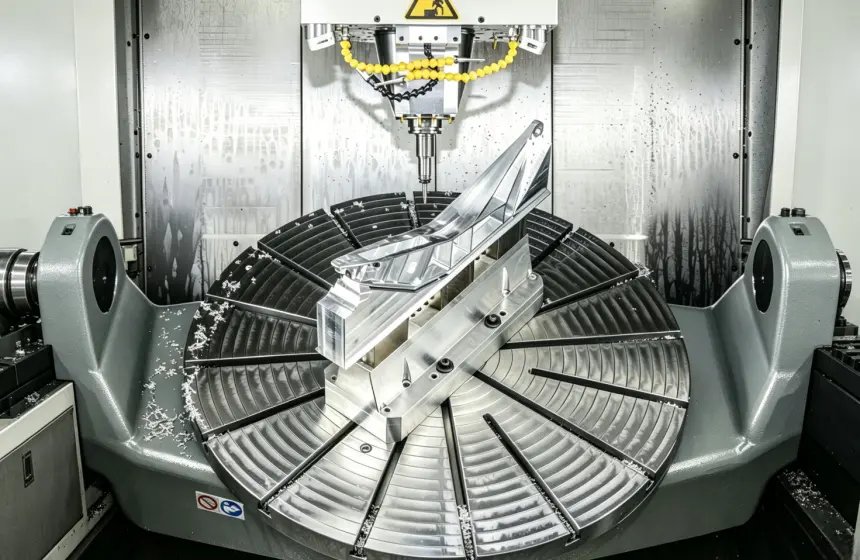
I. Aerospace and Lightweight Components
Aerospace components often combine complex geometry with lightweight structural requirements. CNC machining is commonly used to produce brackets, housings, fittings, structural supports, and other components with pockets, curved surfaces, and multiple mounting interfaces.
Aluminum is frequently selected for lightweight designs, while titanium and stainless steel may be used when higher strength or durability is required. Depending on the geometry, 3-axis, 4-axis, or 5-axis machining can provide the necessary access to different surfaces while reducing unnecessary setups.
For custom aerospace parts, the machining process needs to be considered together with the part design. Tool access, workholding, material behavior, and inspection all influence the final result.
II. Robotics and Automation
Robotic systems contain many components that have to fit within compact mechanical assemblies. Robot joint housings, arm components, gripper parts, sensor mounts, and custom fixtures may combine bearing seats, mounting holes, cable passages, and multiple reference surfaces in a single part.
Because these components are usually designed around a specific robot or automation system, standard parts may not be suitable. Custom CNC machining allows engineers to manufacture directly from the latest CAD design and make design changes without relying on dedicated tooling.
This also makes CNC machining useful during the transition from prototype development to small-batch production.
III. Automotive, EV, and Thermal Management Components
Automotive and EV applications increasingly use customized housings, brackets, motor components, battery-related parts, and thermal management components.
Liquid cooling is a particularly good example. A cooling plate or manifold may combine internal flow channels with mounting features, threaded ports, sealing surfaces, and other interfaces. The geometry is designed around the required coolant flow and the available installation space rather than around a standard shape.
CNC machining gives engineers the freedom to produce these customized structures from materials such as aluminum or copper. It is also practical when only a limited quantity is required during product development or testing.
IV. Telecom and RF Components
Telecommunications equipment relies on many precision-machined components with application-specific geometries. RF filter housings, shielding covers, amplifier housings, connector bodies, waveguide components, and other telecom parts may contain internal cavities, mounting features, conductive surfaces, and complex interfaces.
In these applications, geometry can directly affect the function of the component. The relationship between internal features and external interfaces therefore needs to be controlled during machining.
FlexiTurn supports custom CNC machining of non-standard telecom components, allowing customers to manufacture housings and other precision parts according to their own drawings and CAD designs rather than adapting their products to standard enclosure sizes.
V. Medical, Electronics, and Precision Equipment
Medical equipment, electronic devices, and precision instruments also require customized components with compact and intricate geometries.
Housings, instrument components, mounting structures, heat sinks, shielding parts, and precision mechanical interfaces may need a combination of curved surfaces, pockets, holes, and assembly features.
CNC machining is particularly suitable when the quantity is limited or the design is still evolving. Instead of investing in dedicated tooling at an early development stage, engineers can revise the CAD model and manufacture updated parts through the same custom machining process.
VI. Industrial Equipment and Custom Tooling
Intricate CNC parts are not limited to finished products. Manufacturing equipment itself often requires custom components.
Fixtures, assembly nests, inspection tooling, machine components, positioning parts, and custom manifolds are frequently designed around a particular production process. Their geometry may not exist as a standard commercial product, making custom machining a practical choice.
For these projects, the value of CNC machining is its ability to produce a specific geometry in relatively small quantities without forcing the design into a standard component format.
VII. Why Multi-Axis CNC Matters
Not every intricate part requires 5-axis machining. A complex component may still be efficiently produced with 3-axis machining when its important features are accessible from conventional directions.
4-axis machining becomes useful when features extend around multiple sides of a part, while 5-axis machining is more suitable for compound surfaces, angled features, and difficult tool-access areas.
The right machining method should therefore be determined by the actual geometry, material, critical features, and production requirements.
FlexiTurn provides 3-axis, 4-axis, and 5-axis CNC machining, allowing the process to be selected according to the part rather than applying the same machining method to every project.
VIII. From Customer Design to Finished CNC Part
For intricate components, the quality of the finished part depends on much more than the CNC machine itself. The drawing or CAD model needs to be understood correctly, critical features need to be identified, and the machining process needs to account for workholding, tool access, material, inspection, and finishing.
This is where FlexiTurn's custom manufacturing model becomes important.
Customers can provide engineering drawings, 3D CAD files, or existing samples. We evaluate the part requirements and manufacture the component using the appropriate CNC milling, turning, or multi-axis process. Inspection and selected surface treatment can also be incorporated when required.
This approach allows FlexiTurn to support projects from initial prototypes through small-batch and low-volume production without limiting customers to standard part designs.
Conclusion
Custom CNC machining of intricate geometries is widely used when a component must be designed around a specific mechanical, thermal, structural, or assembly requirement.
From aerospace and robotics to EV components, liquid cooling systems, telecom equipment, medical devices, electronics, and industrial tooling, the common requirement is the same: the part needs to be manufactured according to its actual design rather than a standard catalog specification.
FlexiTurn focuses on exactly this type of custom CNC manufacturing. With CNC milling, turning, 3-axis, 4-axis, and 5-axis machining, we provide a direct manufacturing route from customer drawings or CAD models to finished custom parts, supporting prototype development, small batches, and low-volume production.
If your component has an intricate geometry or non-standard structure, send us the drawing or CAD model. We can evaluate the design and determine a practical machining approach based on the part's actual requirements.
- Why Do CNC Machining Quotes Differ Between Suppliers?
- How to Prepare a CNC Machining Drawing for Manufacturing?
- How Does Part Geometry Affect CNC Machining Cost?
- Why Are Small Internal Radii Difficult to CNC Machine?
- How Do Deep Pockets Affect CNC Machining?
- Common CNC Machining Design Mistakes That Increase Cost
- How Can DFM Reduce CNC Machining Cost?
- What Is DFM in CNC Machining and Why Does It Matter?