
Phone: +86 15398058207
E-mail: sales@flexiturn.com
Add: Room 603 Building C, The Huixin Center, Zhangba One Road, Yanta Zone, Xi'an City, Shaanxi Province, China
How to choose a CNC service for special shaped parts production?
Special shaped parts often look simple in a CAD model but become much more complicated once they enter production. Irregular profiles, angled surfaces, deep cavities, and features distributed across several faces can all affect tooling, workholding, machining time, and inspection.
If you are sourcing these parts, the key question is not simply which CNC supplier has the most equipment. It is whether the supplier can turn your particular geometry into a stable and practical manufacturing process.
When the Part Doesn't Fit a Standard SetupOne of the first signs that a part needs careful CNC process planning is its geometry.
A component with accessible pockets and holes may be straightforward to machine. Another part may require several orientations because important features are located around different faces.
This is where the supplier's approach matters.
Instead of asking whether a company has 3-axis, 4-axis, or 5-axis machines, ask how they would approach your actual part. Depending on the geometry, the most suitable process may involve:
- 3-axis milling for accessible features
- 4-axis machining for additional side or radial features
- 5-axis machining for complex surfaces and difficult tool access
- CNC turning combined with milling for parts containing both rotational and milled features
The machine should follow the geometry, not the other way around.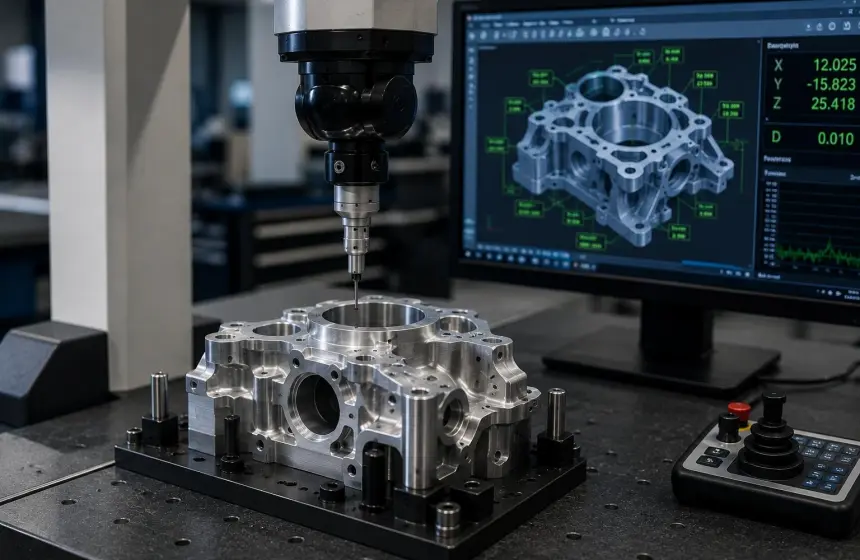
A special shaped part may contain dozens of dimensions, but they rarely have equal importance.
A mounting hole, bearing seat, sealing surface, or alignment feature may directly affect assembly, while an external surface may have much more relaxed requirements.
When discussing the part with a supplier, identify these functional features clearly on the drawing.
This gives the manufacturer a better basis for deciding machining sequence, workholding, and inspection. It also prevents the project from becoming unnecessarily expensive because every dimension is treated as a high-precision requirement.
A Material Change Can Change the ProcessGeometry is only part of the manufacturing equation.
The same component may behave differently when machined from aluminum, stainless steel, steel, brass, copper, titanium, or engineering plastic.
Material properties can affect cutting conditions, tool wear, heat generation, deformation, and surface finish. Thin walls and small features can become particularly sensitive.
For this reason, material should be discussed at the quotation stage rather than treated as a detail after the machining process has already been decided.
What Happens Between the Drawing and the Finished Part?A useful way to compare CNC services is to look at what happens after you submit your design.
A reliable process should generally include:
CAD / Drawing Review
The supplier checks geometry, dimensions, tolerances, and manufacturing risks.
Process Planning
The machining method, setups, tooling, and workholding are considered.
CNC Machining
The selected process is used to produce the part according to the drawing.
Inspection
Critical dimensions and features are verified using suitable measurement methods.
Finishing
Required treatments such as anodizing, polishing, sandblasting, or powder coating are completed when specified.
This complete workflow is more useful to evaluate than a machine list on a supplier's website.
The Quote Can Tell You More Than the PriceWhen several suppliers receive the same drawing, don't compare only their final numbers.
Read the quotation and technical response carefully.
Does the supplier ask about unclear dimensions?
Do they identify difficult features?
Do they explain the proposed machining method?
Do they mention inspection or finishing requirements?
Do they recognize that the part may need several setups?
A supplier that asks the right questions before production is often demonstrating more useful manufacturing knowledge than one that simply provides the fastest price.
Special Shaped Parts Rarely Stop at Version OneMany custom components change after the first batch is tested.
A hole may need to move. A clearance may need to increase. A wall may become thicker. An interface may need to be adjusted after assembly.
This is normal in product development.
For this reason, production flexibility matters. A CNC provider should be able to work with revised drawings and maintain clear communication between different design versions.
It is also worth considering what happens if the part passes testing. The next requirement may be 20, 50, or several hundred pieces rather than just a prototype.
Having one supplier capable of supporting both initial prototypes and low-volume production can simplify that transition.
A Simple Supplier TestIf you are still comparing CNC machining companies, give them the same real part and compare their responses.
Rather than asking only:
“What's your price?”
ask:
“How would you manufacture this part?”
The answers can reveal:
- Whether they understand the geometry
- How they plan to hold and orient the part
- Whether they can select an appropriate machining method
- Which dimensions they consider critical
- How they intend to inspect the finished component
- Whether they can support future revisions and repeat orders
This gives you a much clearer picture of the supplier's actual capability.
FlexiTurn and Special Shaped CNC PartsFlexiTurn provides custom CNC machining based on customer drawings, CAD files, and samples. Depending on the part, our manufacturing process can include CNC milling, CNC turning, and 3-axis, 4-axis, or 5-axis machining.
We work with materials such as aluminum, stainless steel, steel, brass, copper, bronze, titanium, and engineering plastics, with machining and finishing requirements determined by the individual project.
For special shaped parts, the objective is to build the manufacturing process around the actual component rather than force the design into a standard production method. This approach supports custom prototypes, small batches, and low-volume production.
Choose the Process That Fits the PartThere is no universal CNC process for special shaped parts.
The right service depends on the geometry, functional features, material, quantity, and inspection requirements of the component.
Instead of choosing a supplier based only on equipment or price, send them a real drawing and evaluate how they think about the part. The quality of that first technical discussion can tell you a great deal about what the finished production process will look like.
- Why Do CNC Machining Quotes Differ Between Suppliers?
- How to Prepare a CNC Machining Drawing for Manufacturing?
- How Does Part Geometry Affect CNC Machining Cost?
- Why Are Small Internal Radii Difficult to CNC Machine?
- How Do Deep Pockets Affect CNC Machining?
- Common CNC Machining Design Mistakes That Increase Cost
- How Can DFM Reduce CNC Machining Cost?
- What Is DFM in CNC Machining and Why Does It Matter?