
Phone: +86 15398058207
E-mail: sales@flexiturn.com
Add: Room 603 Building C, The Huixin Center, Zhangba One Road, Yanta Zone, Xi'an City, Shaanxi Province, China
How to find a service provider specializing in unique CNC prototypes?
Finding a CNC machining provider is easy. Finding one that can reliably produce a unique prototype is more difficult.
When a part has unusual geometry, multiple angled features, tight functional requirements, or only a few pieces are needed, the supplier needs more than basic machining equipment. They need to understand your design, select a suitable process, and communicate effectively when the design changes.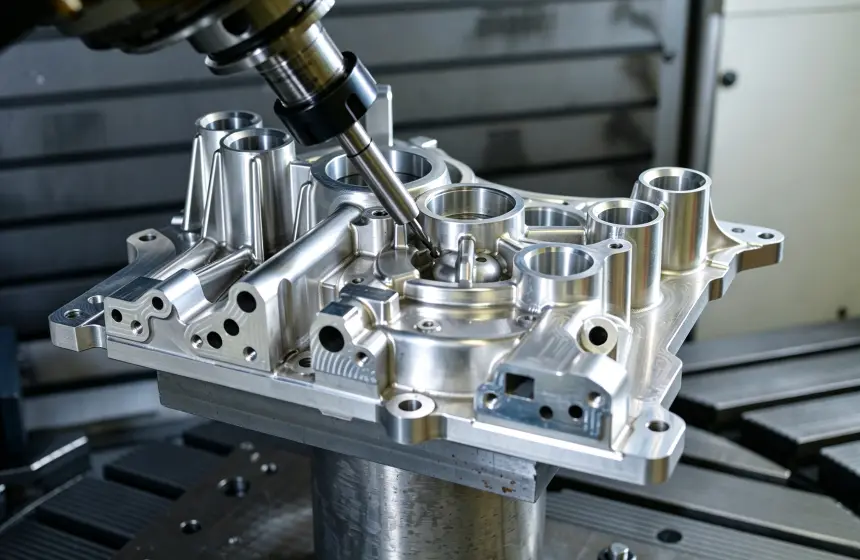
Here are the main points to consider when choosing a CNC prototype machining provider.
1. See How They Review Your PartA capable supplier should look at your drawing or CAD model before quoting, rather than simply giving you a price.
Pay attention to whether they consider:
- Complex surfaces and difficult-to-reach features
- Machining orientation and workholding
- Critical dimensions and tolerances
- Tool access and deep cavities
- The most suitable machining method
For some parts, 3-axis machining is sufficient. Others may benefit from 4-axis or 5-axis machining. The important thing is that the supplier chooses the process according to the geometry instead of automatically recommending the most advanced equipment.
A useful engineering review can also identify small design changes that make the prototype easier or more economical to manufacture.
2. Look Beyond the Machine ListA long list of CNC machines does not necessarily mean a supplier is good at prototype work.
For unique parts, you should also consider how they handle:
Materials
Can they machine the material your prototype actually requires, such as aluminum, stainless steel, steel, brass, copper, titanium, or engineering plastics?
Inspection
Can critical dimensions be checked using appropriate measuring equipment, including CMM inspection when necessary?
Surface finishing
If the prototype requires anodizing, polishing, sandblasting, powder coating, or another finish, can the supplier coordinate the required post-processing?
These factors can have a greater impact on the final prototype than the number of machines listed on a website.
3. Pay Attention to CommunicationPrototype development often involves changes.
After testing the first part, you may need to move a hole, increase clearance, change a wall thickness, or modify an interface. A good supplier should be able to work with updated drawings and CAD files without creating confusion between different revisions.
Before placing an order, notice how the supplier responds to your technical questions. Do they ask about the purpose of important features? Do they point out potential machining difficulties? Do they explain why a particular process is recommended?
Good communication is often a strong indicator of how the project will be handled after production begins.
4. Think About What Comes After PrototypingA successful prototype may be only the beginning.
If the design passes testing, you may need another iteration, a small batch, or low-volume production. Changing suppliers at this stage can create unnecessary delays because a new manufacturer has to learn the part from the beginning.
For this reason, it can be useful to choose a supplier capable of supporting the project through:
Prototype → Design Revision → Functional Testing → Small Batch
This is particularly valuable when the part is custom and no standard component can be used.
What Should You Compare?When requesting quotes from several CNC prototype suppliers, do not compare price alone.
Consider five practical questions:
Can they understand the drawing?
A supplier should be able to identify important features and manufacturing risks.
Can they choose the right machining process?
3-axis, 4-axis, 5-axis, or turning should depend on the actual part.
Can they control the important dimensions?
Ask how critical features will be inspected.
Can they handle design changes?
Prototype development rarely ends with the first revision.
Can they support the next production stage?
A supplier who can continue from prototypes into low-volume production may save time later.
FlexiTurn provides custom CNC machining based on customer drawings, CAD files, and samples. The machining approach can be selected according to the part's geometry, material, and production requirements, including CNC milling, turning, and 3-axis, 4-axis, or 5-axis machining.
We support prototype and low-volume projects involving aluminum, stainless steel, steel, copper, brass, bronze, titanium, engineering plastics, and other requested materials.
For unique CNC prototypes, the goal is not simply to reproduce a CAD model. The finished part needs to work as an engineering prototype and provide useful feedback for the next stage of development.
Final ChecklistBefore choosing a CNC prototype service provider, make sure you understand:
- How they review your design
- Which machining process they recommend and why
- How critical dimensions are inspected
- Whether they can handle material and finishing requirements
- How they manage drawing revisions
- Whether they can support small-batch production later
For unique prototypes, the right supplier is not necessarily the one offering the lowest initial price. It is the one that can understand your part, manufacture it reliably, and continue supporting the project as the design develops.
- Why Do CNC Machining Quotes Differ Between Suppliers?
- How to Prepare a CNC Machining Drawing for Manufacturing?
- How Does Part Geometry Affect CNC Machining Cost?
- Why Are Small Internal Radii Difficult to CNC Machine?
- How Do Deep Pockets Affect CNC Machining?
- Common CNC Machining Design Mistakes That Increase Cost
- How Can DFM Reduce CNC Machining Cost?
- What Is DFM in CNC Machining and Why Does It Matter?