
Phone: +86 15398058207
E-mail: sales@flexiturn.com
Add: Room 603 Building C, The Huixin Center, Zhangba One Road, Yanta Zone, Xi'an City, Shaanxi Province, China
How to choose a bronze CNC machining service manufacturer?
Why Bronze Requires a Specialist Manufacturer
Bronze is one of humanity's oldest engineering materials - and still one of the most valuable. Copper-tin alloys offer outstanding wear resistance, low friction, excellent corrosion resistance in seawater, and a timeless appearance. From heavy-duty bearings and marine propellers to precision worm gears and architectural hardware, bronze earns its place in demanding applications.
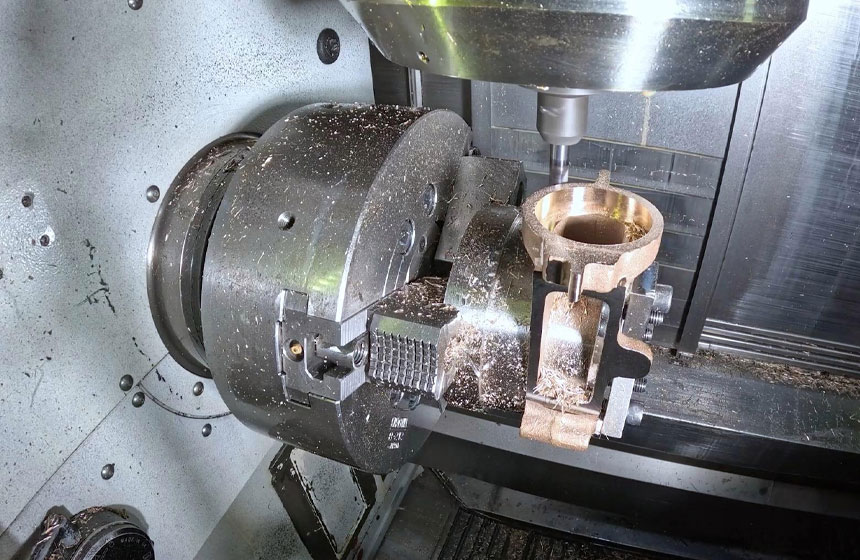
But bronze is not a single material, and it does not machine like steel or aluminum. It is soft, gummy, and prone to chip entanglement, and different bronze alloys behave completely differently on a machine. The choice of a bronze CNC machining service manufacturer directly affects dimensional accuracy, surface finish, and whether your parts survive their first week of service. Here is how to choose one you can rely on.
Step 1: Know Your Bronze Alloy
Bronze is an umbrella term covering many copper-based alloys. Each has different machinability and purpose. Understand what your part requires before evaluating manufacturers:
| Alloy | Key Characteristics | Typical Applications |
| C93200 (Bearing Bronze) | Excellent wear resistance, good machinability | Bearings, bushings, thrust washers |
| C95400 (Aluminum Bronze) | High strength, corrosion resistance, wear-resistant | Gears, heavy-duty bushings, marine hardware |
| C90700 (Tin Bronze) | High hardness, good casting qualities | Gears, heavy-load bearings, pump components |
| C51000 (Phosphor Bronze) | Spring properties, fatigue resistance | Springs, electrical contacts, fasteners |
| C65500 (Silicon Bronze) | Corrosion resistance, weldability | Marine fittings, architectural hardware, fasteners |
Each grade requires different feeds, speeds, and tooling. A shop that has machined bearing bronze, aluminum bronze, and phosphor bronze will give you confident, accurate advice on material selection and process.
Step 2: Look for Machining Expertise - Bronze Is Not "Easy"
Paradoxically, bronze is both easy and hard to machine. It is soft and cuts readily, but that softness creates its own problems:
1. Chip control. Bronze produces stringy or powdery chips depending on the alloy. Poor chip evacuation leads to surface marring, tool damage, and dimensional errors. Experienced shops use the right chip breakers, coolant, and tool paths.
2. Tool sharpness. Soft material demands sharp, positive-rake tooling. Dull tools push rather than cut, causing burrs and poor finish.
3. Heat management. While bronze doesn't work-harden like stainless, excessive heat can soften the material at the cut zone and affect finish. Controlled feeds and speeds are essential.
4. Burr formation. Burrs are the enemy of precision bronze parts. A specialist shop designs tool paths and finishing passes to minimize and remove burrs - especially in bearing surfaces where a single burr can cause premature wear.
Ask your shortlisted manufacturers how they handle these four challenges. Their answers reveal whether they truly machine bronze daily or only occasionally.
Step 3: Verify Machine Capability and Tooling
Bronze machining benefits from the same modern equipment as any precision work:
- CNC milling (3-axis to 5-axis) for complex geometry;
- CNC turning with live tooling for bearings, bushings, and threaded parts in one setup;
- Precision boring and reaming for tight bore tolerances typical of bearing applications;
- Sharp, dedicated tooling maintained per material, not shared across jobs.
A manufacturer with dedicated bronze processes - rather than treating it as "one more material" - will produce parts with consistent bores, clean threads, and a smooth finish you can inspect by eye.
Step 4: Check Quality Control and Inspection
For bronze parts, dimensional precision is critical - especially for bearing bores, mating surfaces, and press-fit diameters. Your manufacturer should provide:
- ISO 9001:2015 quality management as a baseline;
- CMM inspection for bores, concentricity, and critical dimensions;
- First Article Inspection (FAI) on new parts;
- Material certificates confirming alloy and grade from certified mills;
- Full dimensional reports shipped with every order.
If you're machining marine or aerospace-grade bronze, traceability and documented inspection are non-negotiable. Verify the manufacturer can provide them before you commit.
Step 5: Evaluate Finishing and Secondary Operations
Bronze is often chosen for its appearance as much as its function - think architectural hardware, plaques, and decorative marine fittings. A capable manufacturer offers:
- Polishing to a high luster - from satin to mirror finishes;
- Bead blasting for a uniform matte texture;
- Clear coating or lacquering to preserve the natural bronze color and prevent tarnishing;
- Plating (nickel, chrome) for specific functional or cosmetic requirements;
- Assembly - press-fitting bronze bushings into housings is a common requirement.
Ask whether finishing is included in the quote and performed in-house or by trusted partners. Clarity up front prevents surprises at invoice time.
Step 6: Assess DFM Support and Engineering Communication
A great bronze manufacturer is an engineering partner, not just a machine shop. Look for:
- DFM feedback on wall thickness, bore tolerances, and press-fit allowances;
- Material selection advice - which bronze grade best balances cost, wear, and corrosion for your application;
- Engineer-to-engineer communication, with written confirmation of all specifications;
- Proactive updates on progress, inspection results, and shipping.
The right partner flags a potential fit problem in your design before you pay for it - not after your part fails in service.
Step 7: Compare Pricing and Lead Time
- Lead time: Standard bronze prototypes typically run 3–7 days; production scales with volume. Confirm realistic timelines up front.
- Pricing: Itemized quotes - material, machining, finishing, setup - with no hidden charges. Beware of quotes that are oddly low and then grow.
Remember: bronze is a premium material. The goal is not the cheapest quote, but the best value - a part that fits, functions, and lasts.
Why Choose FlexiTurn for Bronze Machining
FlexiTurn combines engineering depth with full in-house capability to deliver bronze parts you can trust:
- Alloy expertise. Daily experience across bearing bronze, aluminum bronze, phosphor bronze, and silicon bronze;
- Precision equipment. 3-axis to 5-axis milling and turning with live tooling, plus precision boring for bearing bores;
- Documented quality. ISO 9001-compliant processes, CMM inspection, FAI, and full material traceability;
- Beautiful finishes. Polishing, bead blasting, lacquering, and plating to your specification;
- Instant quoting with DFM feedback. Upload your model and see an itemized quote with manufacturability suggestions in minutes;
- Engineer-to-engineer support. Talk directly with engineers who understand bronze's quirks and possibilities.
From a single bearing prototype to high-volume production runs, FlexiTurn machines bronze right - and delivers it on time.
Frequently Asked Questions
What is the difference between bronze and brass?
Bronze is primarily copper alloyed with tin (and often aluminum, silicon, or phosphorus). Brass is copper alloyed with zinc. Bronze generally offers superior wear resistance and corrosion resistance.
What is the best bronze for bearings?
C93200 bearing bronze is the classic choice for general bearings and bushings, offering excellent wear resistance and machinability. For heavier loads, C95400 aluminum bronze provides higher strength.
Can bronze be machined to tight tolerances?
Yes. FlexiTurn holds ±0.05 mm standard and tighter on critical bores and mating surfaces, verified by CMM inspection.
Will my bronze parts tarnish?
Natural bronze tarnishes over time. We can apply clear coating or lacquer to preserve the finish, or you can choose to let it develop a natural patina.
Do you machine bronze for marine applications?
Yes. Bronze's seawater corrosion resistance makes it ideal for marine hardware, and we regularly machine marine-grade components.
What is the minimum order quantity for bronze parts?
There is no minimum - we machine single prototypes and full production runs alike.
Start Your Bronze Machining Project Today
Choosing the right bronze CNC machining service manufacturer means parts that fit, last, and look right. Upload your design to FlexiTurn today for an instant quote - or speak directly with our engineers about your bronze project.
- Why Do CNC Machining Quotes Differ Between Suppliers?
- How to Prepare a CNC Machining Drawing for Manufacturing?
- How Does Part Geometry Affect CNC Machining Cost?
- Why Are Small Internal Radii Difficult to CNC Machine?
- How Do Deep Pockets Affect CNC Machining?
- Common CNC Machining Design Mistakes That Increase Cost
- How Can DFM Reduce CNC Machining Cost?
- What Is DFM in CNC Machining and Why Does It Matter?