
Phone: +86 15398058207
E-mail: sales@flexiturn.com
Add: Room 603 Building C, The Huixin Center, Zhangba One Road, Yanta Zone, Xi'an City, Shaanxi Province, China
How to choose an aluminum CNC machining service manufacturer
Aluminum is the most-machined metal in the world of CNC - and for good reason. It is lightweight, strong, corrosion-resistant, thermally conductive, and a pleasure to machine. From aerospace brackets to electronics housings, robot arms to automotive prototypes, aluminum parts sit at the heart of modern product development.
But here is the truth: not every CNC machining service manufacturer is equally good at aluminum. The difference between a part that passes inspection on the first try and a batch that arrives late, warped, or with poor surface finish usually comes down to the manufacturer you choose. So how do you pick the right one?
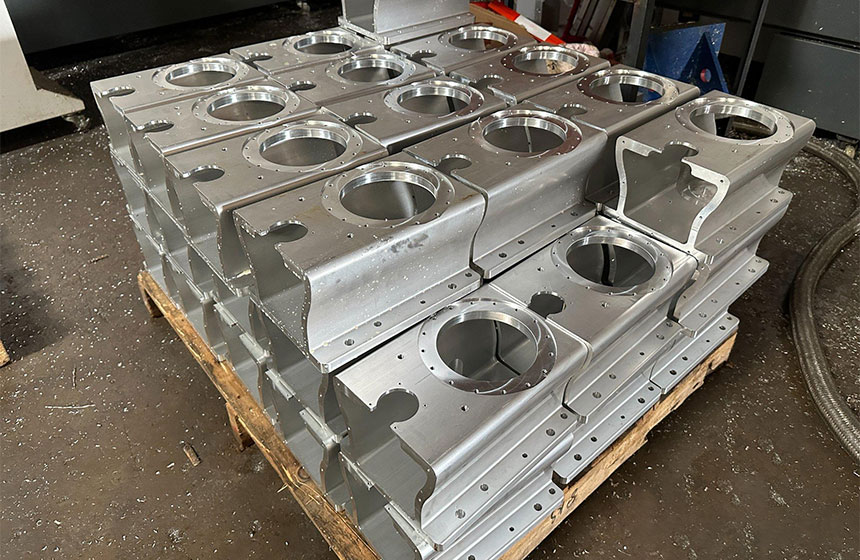
This guide walks you through the seven criteria that separate great aluminum machining partners from the rest - and shows how FlexiTurn measures up on every single one.
Why Aluminum Is the Star of CNC Machining
Before choosing a manufacturer, it helps to understand why aluminum behaves the way it does. Aluminum alloys offer an unmatched combination of properties:
- Low density - roughly one-third the weight of steel, ideal for weight-sensitive industries like aerospace, automotive, and drones;
- High strength-to-weight ratio - 7075-T6, for example, approaches the strength of many steels;
- Natural corrosion resistance - a thin oxide layer protects the surface, further enhanced by anodizing;
- Excellent machinability - high cutting speeds, good chip control, and excellent surface finishes at tight tolerances;
- Great thermal and electrical conductivity - perfect for heat sinks and electronic enclosures;
- Fully recyclable - increasingly important for sustainability-minded companies.
The catch? Aluminum is also soft enough to gall, distort under thin walls, and produce stringy chips that need proper chip-breaking strategies. Machining it *well* requires experience, the right tooling, and disciplined process control - which brings us to the manufacturer's capabilities.
Common Aluminum Alloys You Should Know
| Alloy | Key Properties | Typical Applications |
| 6061-T6 | Best all-rounder: good strength, weldability, corrosion resistance, low cost | General parts, housings, brackets, prototypes |
| 7075-T6 | Very high strength (near steel), fatigue-resistant | Aerospace, racing, high-stress structural parts |
| 6063 | Excellent extrudability and finish quality | Extruded profiles, architectural, electronics frames |
| 6082 | Higher strength than 6061, good machining | Structural components, heavy-duty frames |
| 5052 | Superior corrosion resistance, good formability | Marine, fuel tanks, sheet-metal parts |
| 2024 | High strength, aerospace-grade | Aircraft structures, defense |
A manufacturer that knows its alloys - and can advise on the right grade for your application - adds real value. A manufacturer that just "machines whatever you send" is a commodity; a partner that guides your material choice is an asset.
The 7 Criteria for Choosing an Aluminum CNC Machining Manufacturer
1. Aluminum Material Expertise
Depth of material knowledge matters more than you might think. The right manufacturer will not only machine 6061 and 7075 confidently, but will also ask the smart questions: Is this part structural? Will it be anodized? Does it need to be hard-anodized for wear? What temper do you need - T6, T651, T3?
This expertise directly affects your part's performance and your project's cost. An experienced shop recommends the cheapest alloy that still meets your requirements - saving you money without compromising quality.
2. Precision Machining Capability
Aluminum parts often need tight tolerances - press-fits, bearing seats, precision bores, and mating surfaces. Evaluate the manufacturer's equipment:
- 3-axis milling for standard geometries at economical rates;
- 4-axis and 5-axis milling for complex features, undercuts, and freeform surfaces in a single setup (which also improves accuracy);
- CNC turning for shafts, bushings, and rotational components;
- In-house inspection with CMM (Coordinate Measuring Machine) to verify tolerances down to ±0.01 mm.
Ask for their achievable tolerance range and their inspection method. A shop that can quote precision but cannot prove it with dimensional reports is a risk.
3. Quality Control and Certifications
Quality is a system, not a promise. Look for:
- ISO 9001:2015 certification as a baseline quality-management system;
- First Article Inspection (FAI) on new parts, with full dimensional reports;
- In-process inspection at critical machining steps;
- Material certificates (MTCs) from certified mills for traceability;
- Final inspection with documented results shipped with every order.
Never accept a manufacturer that cannot show you inspection data. If they hesitate to share an FAI report on a sample part, walk away.
4. Surface Finishing: Anodizing and Beyond
For aluminum, surface finishing is not cosmetic - it is functional. Anodizing creates a hard, corrosion-resistant, and scratch-resistant surface layer, and it can be dyed in any color. The full range a serious manufacturer should offer includes:
- Type II anodizing (decorative, ~5–10 µm);
- Type III hard anodizing (wear-resistant, ~25–75 µm);
- Bead blasting before anodizing for a uniform matte finish;
- Powder coating and painting for color and protection;
- Chemical conversion coating (Alodine/Chem film) for electrical grounding and corrosion protection.
Ideally, these finishes are handled in-house or through tightly vetted partners - not passed to an anonymous subcontractor you'll never meet. In-house control means consistent color, consistent thickness, and consistent lead times.
5. Engineering and DFM Support
The best manufacturers don't just accept your file and quote it - they improve it. Ask whether they offer Design for Manufacturability (DFM) feedback:
- Suggesting a larger internal corner radius to avoid EDM costs;
- Flagging tight tolerances that add cost without adding function;
- Recommending standard hole sizes to avoid custom tooling;
- Catching wall-thickness or depth-to-diameter issues before they become scrap.
Instant, engineer-to-engineer DFM feedback - like the kind FlexiTurn gives on every upload - can cut your part cost by 20–40% while keeping function intact. That's real value no price list can show.
6. Communication and Transparency
Most failed sourcing projects fail on communication, not machining. Evaluate:
- Who you actually talk to - a knowledgeable engineer, or a salesperson reading from a script?
- Response time - can you reach someone within one business day?
- Written confirmations - are tolerances, materials, and finishes confirmed in writing before production?
- Proactive updates - do they tell you about progress, or only contact you when there's a problem?
A manufacturer that keeps you informed at every milestone - material arrival, first article, in-process inspection, shipment - is a partner you can rely on. A manufacturer that goes silent is a liability.
7. Lead Time and Supply-Chain Reliability
Aluminum is readily available, but lead times still vary wildly. Consider:
- Material stock - does the shop keep common alloys (6061, 7075) in stock to compress lead times?
- Prototype speed - 3–7 days is a strong benchmark for standard parts;
- Capacity - can they scale from 1 prototype to 10,000 production parts without re-qualifying a new supplier?
- Reliability - do they deliver on the quoted date, every time?
A single partner that handles prototype, pilot, and production gives you continuity of process, fixtures, and quality data - saving months of re-qualification later.
Common Mistakes When Choosing an Aluminum Machining Partner
- Choosing on price alone. The cheapest quote often comes with hidden costs: rework, late delivery, or parts that fail inspection. Compare value, not just price.
- Ignoring DFM feedback. If a manufacturer suggests design changes, listen. These suggestions usually save you far more than they cost.
- Skipping the finishing discussion. Anodizing and surface treatment should be specified before quoting - not discovered at invoice time.
- Not asking for inspection data. If they can't show you quality evidence, they probably don't have it.
- Overlooking communication. A cheap shop that doesn't answer emails will cost you more in stress than you saved in money.
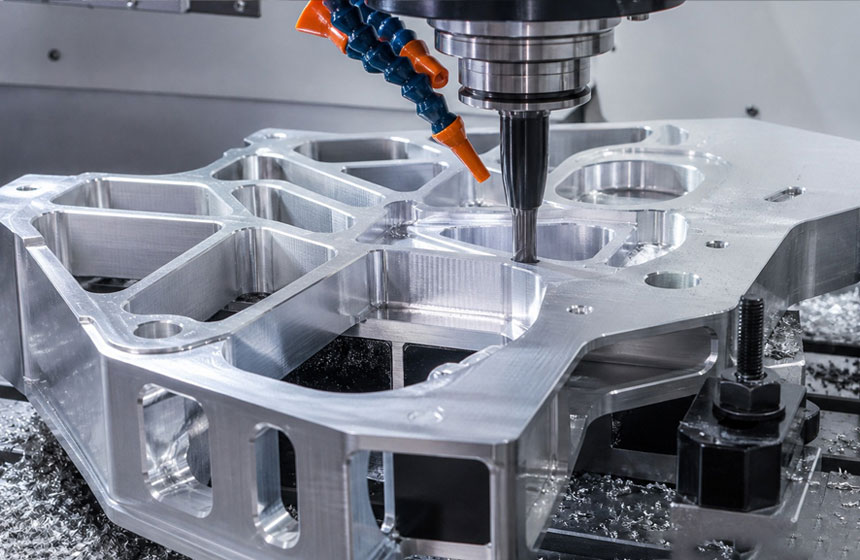
Why FlexiTurn Is the Aluminum CNC Machining Partner You Can Trust
We built FlexiTurn around one belief: the best aluminum parts come from a partner that combines real engineering depth with factory-floor honesty. Here is what you get when you work with us:
- Aluminum-first expertise. We machine 6061, 7075, 6063, 6082, and aerospace grades daily, and our engineers help you pick the right alloy and temper for your application - not the most expensive one.
- Full precision range. 3-axis, 4-axis, and 5-axis milling plus CNC turning, holding tolerances to ±0.01 mm on critical features.
- Documented quality. ISO 9001-compliant processes, FAI on every new part, in-process inspection, CMM verification, and material certificates with every order. You get parts *and* the evidence they meet spec.
- In-house finishing. Type II and Type III anodizing, bead blasting, powder coating, and chem film - controlled in-house for consistent color and quality.
- Instant quotes with DFM feedback. Upload your CAD file and receive an itemized quote plus manufacturability suggestions in minutes, free.
- Engineer-to-engineer communication. You talk directly with machining engineers, with written confirmation of every specification and proactive milestone updates.
- From prototype to production. Single prototypes in as little as 3–7 days, scaling seamlessly to 10,000+ parts - one partner, one standard, one point of contact.
Frequently Asked Questions
What is the best aluminum alloy for CNC machining?
For most parts, 6061-T6 is the best all-rounder - good strength, machinability, corrosion resistance, and low cost. Choose 7075-T6 when you need maximum strength-to-weight, and 6063 for extruded profiles or decorative finishes.
What tolerances can aluminum CNC parts hold?
Standard machining tolerance is ±0.05 mm; precision features can be held to ±0.01 mm with CMM verification. Aluminum's machinability actually makes tight tolerances more achievable than with harder metals.
Is anodizing necessary for aluminum parts?
Not always, but usually recommended. Anodizing improves corrosion resistance, surface hardness, and appearance. Type II is decorative; Type III hard anodizing is for wear-prone surfaces.
How fast can I get aluminum prototypes?
At FlexiTurn, standard aluminum prototype lead times are 3–7 days, with express shipping to the US and Europe in 3–5 days after production.
Do you provide DFM feedback before production?
Yes - every upload receives automatic Design for Manufacturability feedback with actionable suggestions to reduce cost and lead time, free of charge.
Can you handle both prototyping and volume production in aluminum?
Absolutely. We support volumes from 1 to 100,000+ parts, with material stock on common alloys to keep lead times short at any scale.
Choose Smart. Machine with FlexiTurn.
The right aluminum CNC machining service manufacturer can cut your costs, compress your timeline, and deliver parts that pass inspection the first time. FlexiTurn combines the cost advantages of Chinese manufacturing with Western-quality QC, transparent communication, and genuine engineering support.
Upload your aluminum part design today and get an instant quote - or talk directly with our engineers to start your project. From your first prototype to your millionth production part, FlexiTurn is the partner you can count on.
- Why Do CNC Machining Quotes Differ Between Suppliers?
- How to Prepare a CNC Machining Drawing for Manufacturing?
- How Does Part Geometry Affect CNC Machining Cost?
- Why Are Small Internal Radii Difficult to CNC Machine?
- How Do Deep Pockets Affect CNC Machining?
- Common CNC Machining Design Mistakes That Increase Cost
- How Can DFM Reduce CNC Machining Cost?
- What Is DFM in CNC Machining and Why Does It Matter?