
Phone: +86 15398058207
E-mail: sales@flexiturn.com
Add: Room 603 Building C, The Huixin Center, Zhangba One Road, Yanta Zone, Xi'an City, Shaanxi Province, China
How to Get a Precision CNC Machining Quote?
Getting a CNC machining quote is more than sending a CAD file and asking for a price. For custom parts, the quotation depends on the part geometry, material, quantity, tolerances, finishing, and production requirements.
At FlexiTurn, custom CNC projects can start from customer drawings, CAD files, or samples. Providing clear information helps our engineering team understand the part, evaluate the machining process, and prepare a more accurate quotation.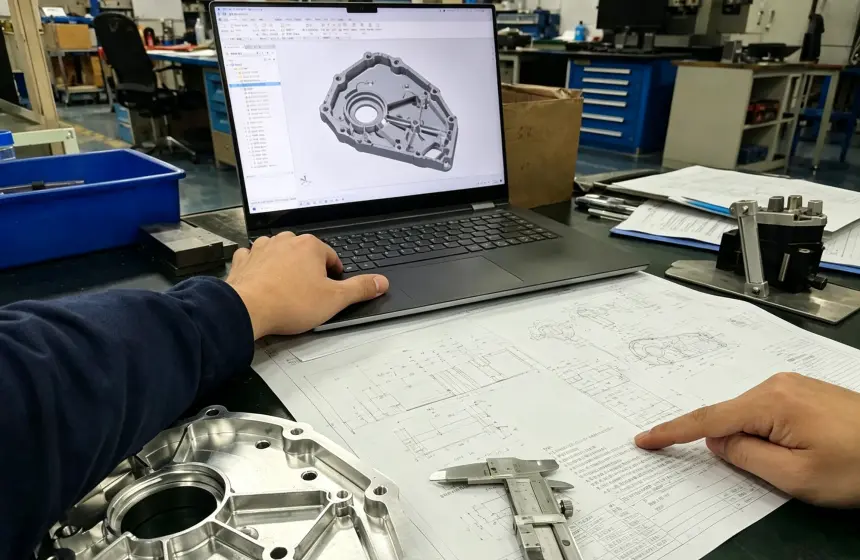
A complete RFQ does not need to be complicated, but it should include the information that affects manufacturing.
For most custom CNC parts, provide:
- 3D CAD model
- 2D drawing, when available
- Material and grade
- Required quantity
- Critical dimensions and tolerances
- Threads and special features
- Surface finish or treatment
- Inspection requirements
- Target delivery date, if important
A 3D model defines the overall geometry, while a 2D drawing can communicate tolerances, threads, surface requirements, and other details that may not be clear from the model alone. Incomplete information often leads to assumptions, additional questions, or quotation changes later.
Material and Quantity Affect the PriceThe exact material grade matters because different materials have different material costs and machining characteristics. Aluminum, stainless steel, steel, copper, brass, titanium, and engineering plastics can require different cutting approaches and tooling considerations.
Quantity is equally important. A prototype, a small batch, and a larger production order may use different production strategies because setup, programming, tooling, and inspection costs are distributed differently across the order.
FlexiTurn supports custom CNC machining from prototypes to small-batch and low-volume production. If you know both your initial quantity and possible future volume, including them in the RFQ can help the manufacturer evaluate a suitable production approach.
Part Geometry Determines the Machining ApproachThe shape and features of a part have a direct impact on its machining requirements.
A simple component with accessible surfaces may be suitable for 3-axis machining. Parts with features on multiple sides may benefit from 4-axis machining, while complex surfaces or difficult tool access may require 5-axis machining.
FlexiTurn provides CNC milling, CNC turning, and 3-axis, 4-axis, and 5-axis machining. The process is selected according to the actual part geometry rather than automatically choosing the most advanced machining method.
For custom components, engineering review is important because machining strategy, workholding, setups, and tool access can all affect the final quotation.
Tolerances Should Match the FunctionNot every dimension needs the tightest possible tolerance.
Critical features such as bearing seats, mounting interfaces, sealing surfaces, holes, and mating dimensions may require tighter control. Other non-critical features may be suitable for standard tolerances.
Unnecessarily tight tolerances can increase machining and inspection requirements without improving the function of the part. Clearly identifying critical dimensions helps the manufacturer understand where precision matters most.
Surface Finish and Inspection Should Be Defined EarlySurface treatment and inspection can also affect the quotation.
Depending on the part and application, requirements may include anodizing, polishing, electroplating, powder coating, or other finishing processes. Inspection may range from standard dimensional checks to more detailed measurement or CMM inspection.
Including these requirements in the original RFQ gives the manufacturer a clearer picture of the complete production scope instead of adding them after the initial quotation.
FlexiTurn can coordinate applicable surface treatment and inspection requirements together with the CNC machining process.
What If You Only Have a Sample?A complete CAD model is not always available.
For replacement parts, existing components, or modified mechanical parts, a physical sample may be the starting point. FlexiTurn accepts drawings, CAD files, or samples for non-standard CNC machining, allowing the manufacturing process to be developed around the available information and required part specifications.
This is especially useful when a customer needs a custom replacement or wants to reproduce an existing component.
How Does a CNC Quote Usually Work?A CNC quotation connects the customer's requirements with the manufacturing process.
Drawing, CAD file, or sample → Engineering review → Process planning → Cost evaluation → Quotation
The manufacturer evaluates factors such as geometry, material, machining method, quantity, tolerances, finishing, and inspection before calculating the expected production cost.
This is why two suppliers can sometimes quote different prices for the same part. Their assumptions about machining methods, setups, material, finishing, or inspection may not be exactly the same. Using the same complete RFQ package makes quotations easier to compare.
Why Factory-Direct CNC Manufacturing MattersFor custom CNC parts, the relationship between the customer and the actual manufacturer can also affect the quoting process.
FlexiTurn operates its own CNC manufacturing factory and provides custom machining directly. This gives customers a more direct connection with the manufacturing team when discussing drawings, machining requirements, production quantities, and quality expectations.
Factory-direct manufacturing can also reduce unnecessary intermediary costs and help provide competitive pricing while keeping the machining process under direct production control.
A Simple CNC Quote ChecklistBefore submitting an RFQ, check that you have:
- 3D CAD file
- 2D drawing, if available
- Exact material and grade
- Quantity
- Critical tolerances
- Threads or special features
- Surface finish requirements
- Inspection requirements
- Delivery requirements, if applicable
The more complete the information, the fewer assumptions the manufacturer needs to make.
Get a Precision CNC Machining Quote from FlexiTurnFlexiTurn provides custom CNC machining for non-standard components based on customer drawings, CAD files, or samples.
Our CNC machining capabilities include milling, turning, 3-axis, 4-axis, and 5-axis machining, with support for different materials, applicable surface treatments, and inspection requirements. We work with projects ranging from prototypes to small-batch and low-volume production.
If you are ready to request a quote, send your part drawing, CAD model, or sample information together with the material, quantity, and key requirements. FlexiTurn can review the project and develop a machining approach based on the actual part.
A clear RFQ helps both sides start with the same requirements, making it easier to provide a practical CNC machining quotation.
- Why Do CNC Machining Quotes Differ Between Suppliers?
- How to Prepare a CNC Machining Drawing for Manufacturing?
- How Does Part Geometry Affect CNC Machining Cost?
- Why Are Small Internal Radii Difficult to CNC Machine?
- How Do Deep Pockets Affect CNC Machining?
- Common CNC Machining Design Mistakes That Increase Cost
- How Can DFM Reduce CNC Machining Cost?
- What Is DFM in CNC Machining and Why Does It Matter?