
Phone: +86 15398058207
E-mail: sales@flexiturn.com
Add: Room 603 Building C, The Huixin Center, Zhangba One Road, Yanta Zone, Xi'an City, Shaanxi Province, China
CNC Machining Service Quotes for Custom Metal Parts
When sourcing custom metal parts, the CNC machining quote is often the first point where engineering requirements meet purchasing decisions. The same type of part can receive very different prices depending on its material, geometry, quantity, tolerances, machining process, finishing, and inspection requirements.
For FlexiTurn, a CNC machining quote is not simply a price calculated from the size of a metal block. Our engineering team reviews the actual drawing, CAD model, or sample to understand how the part needs to be manufactured. This helps us develop a practical machining route before pricing the project.
What Does a CNC Machining Quote Include?A CNC machining service quote normally reflects much more than machine time. For a custom metal part, the supplier needs to consider the complete manufacturing process from material preparation to finished-part inspection.
The quotation may be affected by:
- Part geometry and overall size
- Material and material grade
- Machining method
- Number of setups
- Required quantity
- Dimensional tolerances
- Threads, holes, pockets, and other features
- Surface treatment
- Inspection requirements
- Packaging and delivery requirements
This is why a simple-looking part can sometimes cost more than expected, while a larger part with straightforward geometry may be relatively economical to produce.
Material Is One of the First Cost FactorsDifferent metals behave differently during CNC machining, and the material itself also affects the cost of the starting stock.
Aluminum is commonly selected when low weight and good machinability are important. Stainless steel and alloy steels may be preferred when strength, wear resistance, or corrosion resistance is more important. Copper and brass are often used where electrical, thermal, or mechanical properties are required, while titanium is chosen for demanding applications where its strength-to-weight ratio and corrosion resistance are valuable.
FlexiTurn supports custom CNC machining in a wide range of metals, including aluminum, stainless steel, steel, brass, copper, bronze, titanium, and other specialty materials.
The exact grade should be included in the RFQ whenever possible. For example, 6061 aluminum and 7075 aluminum should not simply be treated as “aluminum” when preparing a manufacturing quote.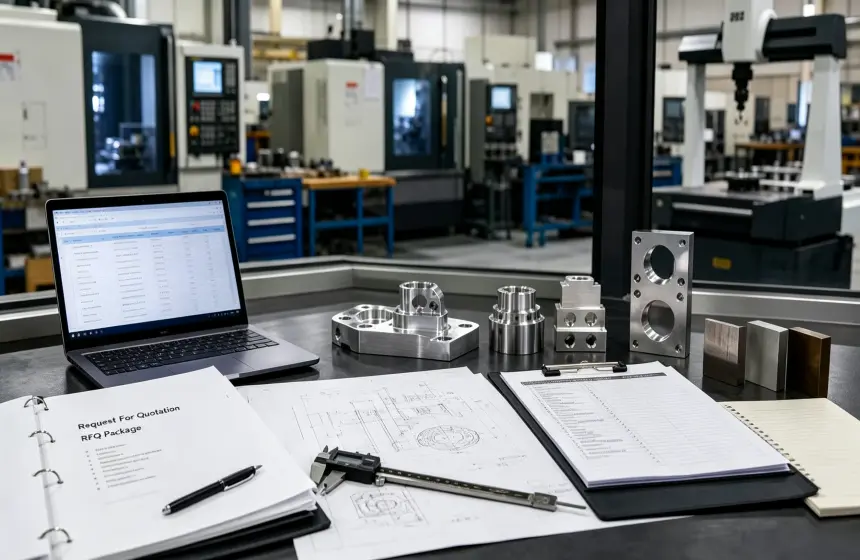
The shape of the part has a direct effect on how it can be machined.
A relatively simple bracket may be produced efficiently with 3-axis CNC machining. A component with features distributed around several sides may benefit from 4-axis machining, while complex curved surfaces, angled features, or difficult tool access may require 5-axis machining.
However, using more axes does not automatically mean a better or cheaper process. The practical choice depends on the geometry, workholding, tool access, number of setups, and required accuracy.
At FlexiTurn, we evaluate the actual part rather than automatically assigning every complex component to 5-axis machining. Our CNC milling, turning, and 3-axis, 4-axis, and 5-axis capabilities allow the process to be selected according to the part requirements.
Quantity Has a Major Effect on the Unit PriceA quote for one prototype is not the same as a quote for 10, 100, or 1,000 pieces.
Programming, workholding preparation, setup, tooling, and inspection take time regardless of whether a small number or a larger batch is produced. As quantity increases, these initial costs can be distributed across more parts, which can reduce the unit cost.
This is particularly important when comparing CNC machining quotes. Instead of requesting only one quantity, buyers can sometimes provide several volume levels, such as:
Prototype: 1–5 pcs
Small batch: 20–50 pcs
Production: 100+ pcs
FlexiTurn supports projects from CNC prototypes and sample parts to small-batch and low-volume production. If you expect demand to increase after prototype validation, sharing the expected production quantity can also help the manufacturer consider a more suitable machining approach.
Tolerances Should Be Specified Where They MatterNot every dimension on a custom metal part needs the same level of precision.
A bearing seat, mounting hole, sealing surface, or mating interface may have functional tolerance requirements, while other non-critical dimensions may not need the same level of control.
Over-specifying tolerances can increase machining and inspection requirements without improving the actual function of the component. On the other hand, failing to identify important dimensions can create problems during manufacturing or assembly.
For a better CNC machining quote, clearly identify the dimensions that are critical to the part's function. FlexiTurn can review these requirements during the quotation stage and consider them when planning machining and inspection.
Surface Treatment Is Part of the QuoteThe machining process may not end when the part comes off the CNC machine.
Depending on the application, custom metal parts may require anodizing, polishing, electroplating, powder coating, sandblasting, brushing, or other finishing processes.
For example, an aluminum enclosure may require anodizing for its final appearance and surface properties, while a steel component may require a different treatment based on its application.
If finishing is required, it should be included in the RFQ rather than added after the machining price has already been confirmed. This gives the supplier a clearer understanding of the complete part requirements.
FlexiTurn can coordinate applicable surface treatment together with custom CNC machining, allowing customers to source a more complete finished component instead of arranging every manufacturing step separately.
Why Can Two CNC Quotes Be So Different?When several suppliers quote the same custom metal part, a large price difference does not necessarily mean that one supplier is overcharging.
Suppliers may be making different assumptions about:
- Material grade and stock size
- Machining process
- Number of setups
- Tolerance requirements
- Surface treatment
- Inspection scope
- Production quantity
- Lead time
For this reason, the lowest CNC machining quote is not always the most useful quote to choose.
A better comparison is to check whether each supplier is quoting the same material, quantity, tolerances, finish, inspection requirements, and delivery scope.
At FlexiTurn, our quotation process starts with the actual manufacturing requirements. When a drawing or CAD file leaves room for interpretation, our engineering team can review the relevant features before the final machining route is determined.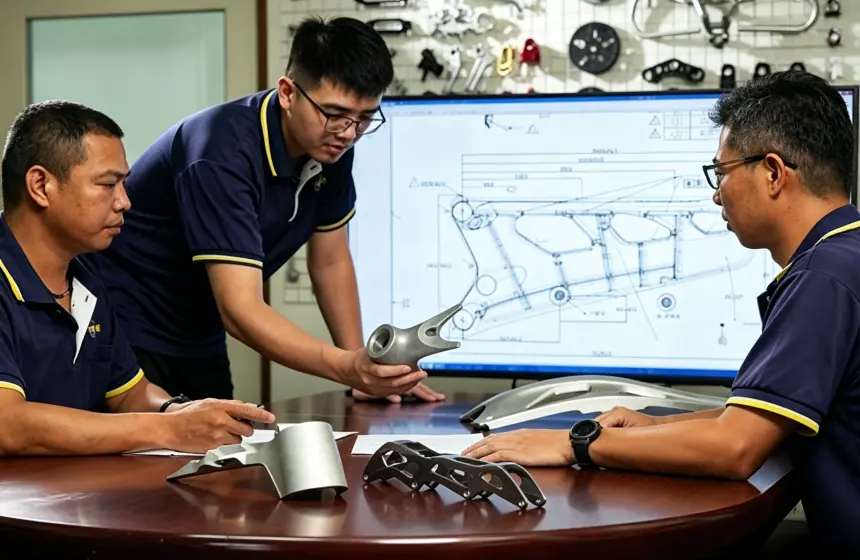
For procurement teams, a CNC quote should also provide some indication of how well the supplier understands the part.
A useful supplier should be able to look at a custom component and recognize potential manufacturing issues before production starts. These may include difficult tool access, unnecessary setups, thin walls, deep cavities, critical holes, complex surfaces, or material-specific machining challenges.
This engineering perspective can be particularly valuable for non-standard parts. Instead of simply asking, “How much does this part cost?”, the better question is:
How does the supplier plan to manufacture it, and does that approach make sense for the application?
FlexiTurn works directly from customer drawings, CAD files, or physical samples. This allows our team to connect the quotation with the actual manufacturing process instead of treating custom metal parts as standard catalog products.
A good RFQ does not have to be complicated. For most custom metal parts, start with the information that directly defines the manufacturing scope:
- 3D CAD model
- 2D drawing when available
- Exact material and grade
- Required quantity
- Critical dimensions and tolerances
- Threads or special features
- Surface treatment requirements
- Inspection requirements
- Target delivery schedule
If the part is still being developed, it is also useful to tell the supplier whether the project is a prototype, small batch, or expected production program.
The clearer the scope, the easier it becomes for different CNC machining suppliers to provide comparable quotations.
Get a Custom Metal Parts Quote from FlexiTurnFlexiTurn provides factory-direct CNC machining services for custom and non-standard metal parts. Customers can send drawings, CAD models, or samples, and our engineering team evaluates the part requirements before preparing the machining approach and quotation.
Our CNC machining capabilities include milling, turning, and 3-axis, 4-axis, and 5-axis machining. We support different metal materials, applicable surface treatments, inspection requirements, prototypes, small batches, and low-volume production.
Whether you need a simple aluminum bracket, a stainless steel housing, a precision copper component, or a more complex multi-axis machined part, the quotation should begin with the actual requirements of the component.
Final Thoughts
For buyers, the best way to control cost is not simply to search for the cheapest quote. It is to provide clear requirements, compare equivalent manufacturing scopes, and work with a supplier that understands how the part will actually be made.
With factory-direct custom CNC machining and engineering support, FlexiTurn helps customers move from drawings, CAD files, or samples to practical quotations and finished custom metal parts.
- Why Do CNC Machining Quotes Differ Between Suppliers?
- How to Prepare a CNC Machining Drawing for Manufacturing?
- How Does Part Geometry Affect CNC Machining Cost?
- Why Are Small Internal Radii Difficult to CNC Machine?
- How Do Deep Pockets Affect CNC Machining?
- Common CNC Machining Design Mistakes That Increase Cost
- How Can DFM Reduce CNC Machining Cost?
- What Is DFM in CNC Machining and Why Does It Matter?