
Phone: +86 15398058207
E-mail: sales@flexiturn.com
Add: Room 603 Building C, The Huixin Center, Zhangba One Road, Yanta Zone, Xi'an City, Shaanxi Province, China
How Can DFM Reduce CNC Machining Cost?
CNC machining cost is not determined by material price alone. Machining time, tooling, setups, tolerances, inspection, and production volume can all affect the final price of a part.
Design for Manufacturing (DFM) helps reduce these costs by identifying manufacturing difficulties before production starts. Instead of changing the manufacturing process after a problem occurs, engineers can adjust the design or choose a more suitable machining method at an earlier stage.
Reduce Unnecessary Machining TimeMachining time is one of the most direct factors affecting CNC cost.
A part with deep pockets, numerous small features, complex internal geometry, or large amounts of material to remove may require significantly more cutting time than a simpler design.
For example, if a pocket does not need to be particularly deep, reducing its depth can decrease material removal and make the feature easier to machine. Similarly, removing unnecessary grooves, pockets, or cosmetic features can shorten the machining process without changing the function of the component.
DFM focuses on keeping the geometry that the part actually needs while avoiding unnecessary machining work.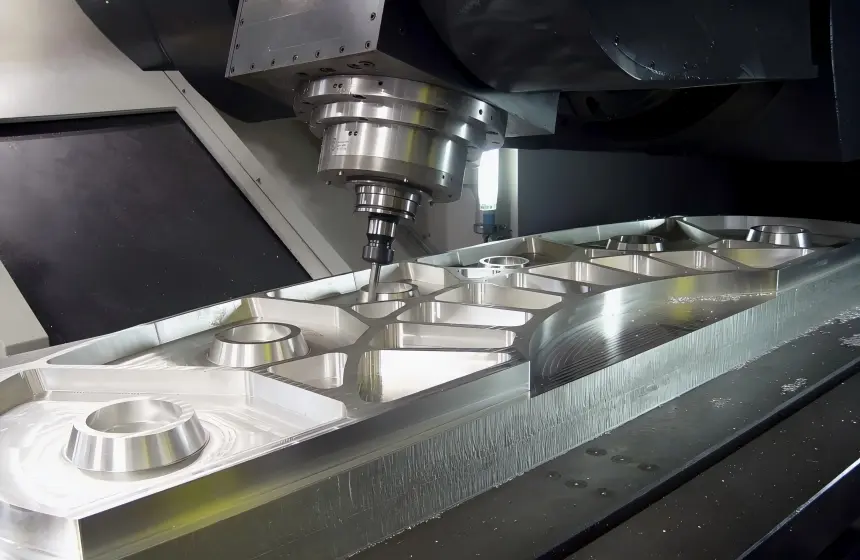
Tighter tolerances generally require more attention during machining and inspection.
If a dimension does not affect assembly or function, specifying an unnecessarily tight tolerance can add cost without providing meaningful value. Critical dimensions should receive the required tolerance, while non-critical dimensions can use appropriate general tolerances.
This approach helps the manufacturer plan machining and inspection around the features that actually matter.
For custom CNC projects, FlexiTurn can review customer drawings and CAD files to identify potentially difficult requirements before machining begins. This is particularly useful for non-standard components where different features may have very different functional requirements.
Make Tool Access EasierTool accessibility is another important cost factor.
Deep pockets, narrow slots, small internal radii, and difficult-to-reach surfaces may require smaller or longer-reach tools. These tools can increase machining time and may require more careful cutting conditions.
A practical internal radius, for example, can allow a more suitable milling cutter to be used instead of forcing the manufacturer to use a very small tool.
The same principle applies to the overall orientation of the part. If important features can be accessed efficiently, fewer complicated operations may be required.
Reduce the Number of SetupsWorkholding and setup time can become significant when a part needs to be repeatedly repositioned.
A design that can be machined efficiently from one direction may be less expensive than a similar part that requires several setups to access different faces.
However, reducing setups does not mean forcing every component onto a 3-axis machine.
FlexiTurn provides 3-axis, 4-axis, and 5-axis CNC machining. For a relatively simple component, 3-axis milling may be the most economical choice. When features are distributed around multiple faces, 4-axis machining can provide additional access. More complex geometries may benefit from 5-axis machining.
The goal is to select the machining approach that fits the actual geometry rather than automatically choosing the highest number of axes.
Select the Right CNC ProcessDFM also helps determine whether milling, turning, or a combination of processes is appropriate.
CNC turning is generally efficient for rotational components such as shafts, bushings, pins, and other cylindrical parts. CNC milling is more suitable for many prismatic components, pockets, slots, holes, and complex surfaces.
For a component containing both turned and milled features, using the appropriate machining sequence can avoid unnecessary operations.
FlexiTurn supports both CNC milling and CNC turning for custom non-standard parts. Reviewing the geometry before production helps determine a practical manufacturing route instead of treating every part with the same process.
Consider Material and Machinability TogetherMaterial selection has a direct relationship with machining cost.
Aluminum is generally easier to machine than many harder metals, while stainless steel, titanium, and some specialty materials may require different tooling and cutting strategies.
That does not mean choosing the easiest material regardless of the application. The material still needs to meet the part's mechanical, thermal, electrical, corrosion, or other functional requirements.
DFM means considering these requirements together with machinability.
FlexiTurn supports CNC machining in materials including aluminum, stainless steel, steel, brass, copper, titanium, and engineering plastics. For drawing-based projects, material selection can be considered alongside the actual geometry and manufacturing process.
Reduce Material WasteMaterial utilization can also affect total part cost, especially for components machined from larger blocks or plates.
A design that requires removing a large amount of material may take longer to machine and generate more scrap. Where the application allows it, reducing unnecessary stock removal or selecting a more suitable starting form can improve manufacturing efficiency.
This is also where the relationship between FlexiTurn's CNC machining service and precision blanks can be useful. For suitable projects, using an appropriately prepared machining blank instead of starting from an unnecessarily oversized piece of stock can reduce preparation work, material waste, and machining time.
Make Inspection More EfficientCNC cost does not stop when the cutting tool leaves the part.
Critical dimensions may need inspection, especially when the component has tight functional requirements. Difficult-to-access features or unclear drawing references can make measurement more complicated.
A well-designed part should therefore be easy to manufacture and reasonably easy to verify.
FlexiTurn provides CMM inspection for applicable custom CNC machining projects, helping verify critical dimensions after machining. Clear drawings and sensible tolerance requirements make this inspection process more practical.
Design for the Production QuantityThe best DFM approach can also change depending on production volume.
For a prototype, the priority may be producing the part quickly so the design can be tested and improved. For small-batch production, machining time, tooling, setups, and repeatability become increasingly important.
A design that is acceptable for one prototype may therefore benefit from further optimization before moving into repeated production.
FlexiTurn supports rapid prototyping and small-batch CNC production, allowing the manufacturing approach to evolve as the project moves from an initial design to repeat orders.
DFM Can Reduce Cost Without Redesigning the Whole PartCost reduction does not always require a major redesign.
Sometimes a few small changes can make a noticeable difference:
- Increase an unnecessarily small internal radius
- Reduce an excessive pocket depth
- Remove non-functional features
- Relax tolerances that are tighter than necessary
- Improve tool access
- Reduce unnecessary setups
- Select a more appropriate material or starting blank
- Choose a suitable machining process
The important point is that these changes should never compromise the function of the component.
When Should DFM Be Considered?The earlier DFM is considered, the more opportunities there are to control manufacturing cost.
Reviewing a design after the part has already been machined leaves very few options. Reviewing the drawing or CAD model before quotation allows the manufacturing process, tooling, workholding, material, and inspection requirements to be considered together.
At FlexiTurn, customers can provide drawings, CAD files, or samples for custom CNC machining. Our engineering team can review the actual component and recommend a practical manufacturing approach based on its geometry and requirements.
This may involve CNC milling, CNC turning, 3-axis, 4-axis, or 5-axis machining, followed by applicable surface treatment and dimensional inspection.
The Real Value of DFMDFM is not simply about making a part cheaper to machine.
Its real purpose is to create a better connection between product design and manufacturing. A well-considered design can reduce unnecessary machining operations, simplify tooling and workholding, improve production consistency, and make inspection more straightforward.
For procurement teams, this can mean a more predictable quotation and production process. For engineers, it means fewer manufacturing problems after the design is released.
By considering manufacturability before production, FlexiTurn helps customers turn drawing-based and sample-based designs into practical CNC-machined components while keeping manufacturing efficiency and cost in mind.
- Why Do CNC Machining Quotes Differ Between Suppliers?
- How to Prepare a CNC Machining Drawing for Manufacturing?
- How Does Part Geometry Affect CNC Machining Cost?
- Why Are Small Internal Radii Difficult to CNC Machine?
- How Do Deep Pockets Affect CNC Machining?
- Common CNC Machining Design Mistakes That Increase Cost
- How Can DFM Reduce CNC Machining Cost?
- What Is DFM in CNC Machining and Why Does It Matter?