
Phone: +86 15398058207
E-mail: sales@flexiturn.com
Add: Room 603 Building C, The Huixin Center, Zhangba One Road, Yanta Zone, Xi'an City, Shaanxi Province, China
Common CNC Machining Design Mistakes That Increase Cost
A CNC part can look simple in a CAD model but still be expensive to manufacture. In many cases, the main cost drivers are created during the design stage through unnecessary tolerances, difficult tool access, deep cavities, or features that require extra setups.
Understanding these common CNC machining design mistakes before sending a drawing for quotation can help reduce machining time, tooling requirements, and unnecessary production costs.
1. Using Tight Tolerances EverywhereOne of the most common mistakes is applying tight tolerances to dimensions that do not actually require them.
Tight tolerances can require slower machining, additional finishing operations, more careful fixturing, and more inspection. If every dimension on a drawing is treated as critical, the manufacturer has to plan the machining process around the most demanding requirements.
A better approach is to identify the dimensions that affect assembly, fit, sealing, or functional performance and apply tighter tolerances only where they are necessary. Other dimensions can often use appropriate general machining tolerances.
For custom CNC parts, FlexiTurn can review customer drawings and CAD files during the engineering stage to identify manufacturing concerns before machining begins.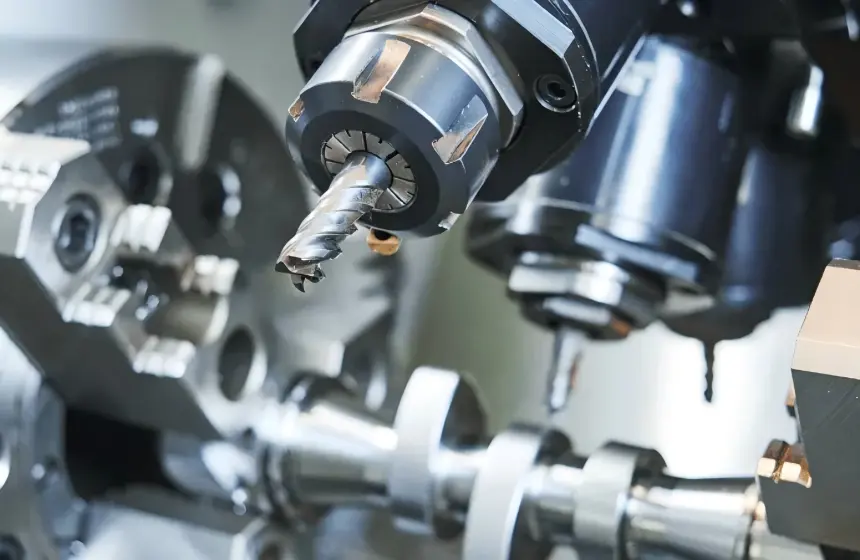
A standard CNC end mill is round, so it cannot naturally create a perfectly sharp internal 90-degree corner.
When a design requires a very small internal radius, the manufacturer may need to use a smaller cutting tool. Smaller tools are generally less rigid and can require slower cutting conditions, increasing machining time.
Where the function of the part allows it, adding a practical internal radius can make the feature much easier and faster to machine.
If a sharp corner is genuinely required for assembly or another functional reason, alternative features such as corner reliefs may sometimes provide a more practical solution.
3. Making Pockets Too Deep or NarrowDeep and narrow pockets are another common source of machining difficulty.
A narrow pocket may require a small-diameter, long-reach tool to reach the bottom. As tool length increases relative to its diameter, the tool becomes more susceptible to deflection and vibration. This can affect surface finish, dimensional consistency, tool life, and machining time.
If the pocket does not need to be extremely deep, reducing its depth or increasing its width can make a significant difference.
When the geometry is functionally necessary, FlexiTurn can use 3-axis, 4-axis, or 5-axis CNC machining depending on the part structure and required tool access.
4. Designing Walls and Features That Are Too ThinThin walls, ribs, and tall features can move or vibrate under cutting forces, especially when there is limited structural support.
This does not mean every CNC part needs thick walls. The better approach is to consider the relationship between wall thickness, wall height, material, cutting direction, and the overall structure of the component.
For example, a thin aluminum wall may behave very differently from a similarly sized stainless steel feature. Material selection and geometry should therefore be considered together rather than independently.
5. Creating Too Many SetupsEvery additional setup can add fixturing, alignment, programming, inspection, and handling work.
A design that requires machining from several directions may therefore cost more than a part that can be completed with fewer setups, even when both parts have a similar overall size.
When reviewing a custom component, it is worth asking:
Can the important features be accessed from the same direction?
Can several operations be completed in one setup?
Would a different orientation make the part easier to hold and machine?
For more complex components, FlexiTurn's 3-axis, 4-axis, and 5-axis machining capabilities can provide more options for accessing multiple faces and reducing unnecessary repositioning.
6. Using Unnecessarily Complicated FeaturesMore features do not always mean a better part.
Multiple small pockets, unusual radii, complicated undercuts, difficult-to-access holes, and other non-functional details can increase programming and machining time without improving the actual performance of the component.
Before finalizing a design, separate features into two categories:
Functional features that the part actually needs.
Manufacturing details that may have been added without a clear functional reason.
Removing unnecessary geometry can make the part easier to machine without changing its intended function.
7. Choosing the Material Without Considering MachiningMaterial selection should not be based only on mechanical or environmental requirements.
Different materials behave differently during CNC machining. Aluminum is generally easier to machine than many stainless steels, while harder or more difficult-to-machine materials can require different tooling, cutting conditions, and machining strategies.
The same geometry may therefore have very different machining costs depending on the selected material.
FlexiTurn supports custom CNC machining in materials such as aluminum, stainless steel, steel, brass, copper, titanium, engineering plastics, and other specialty materials. Material selection can be considered together with the actual part geometry and machining requirements rather than treated as a separate decision.
8. Specifying Surface Finishes That the Part Does Not NeedSurface finishing can improve appearance, corrosion resistance, wear performance, or other functional properties, but not every surface needs the same treatment.
Applying demanding finish requirements to every surface can add unnecessary processing and cost.
A more practical drawing should identify which surfaces are functional and which are primarily cosmetic. This allows the manufacturer to focus additional finishing work where it actually provides value.
Depending on the part and application, FlexiTurn can coordinate applicable surface treatment after CNC machining.
9. Forgetting How the Part Will Be InspectedA part is not finished simply because the CNC machine has completed its toolpath.
Critical dimensions, holes, positions, and mating features may require inspection. If a design contains difficult-to-access features or unclear measurement references, inspection can become more complicated.
Clear drawings, appropriate datums, and realistic inspection requirements make it easier to verify whether the finished component meets the intended design.
For applicable custom CNC projects, FlexiTurn provides CMM inspection to verify critical dimensional requirements after machining.
Design for Manufacturing Should Start Before QuotationThe most effective time to reduce CNC machining cost is before production begins.
A drawing that is easier to machine can often reduce tool changes, machining time, setups, special tooling, and inspection effort without changing the function of the part. DFM guidance from machining manufacturers consistently identifies excessive tolerances, sharp internal corners, deep pockets, thin walls, and difficult setups as recurring cost drivers.
This is particularly important for prototypes and small-batch production, where inefficient machining decisions can have a noticeable effect on the unit cost.
At FlexiTurn, customers can provide drawings, CAD files, or samples for non-standard CNC machining. Our engineering team can review the actual part structure and determine an appropriate machining approach before production, including whether 3-axis, 4-axis, or 5-axis machining is more suitable.
A Better CNC Design Can Mean a Better Manufacturing ProcessReducing CNC machining cost does not simply mean choosing the cheapest material or asking the machine shop to cut faster.
The biggest improvements often come from making the part easier to access, easier to hold, easier to cut, and easier to inspect.
If a feature is functionally necessary, it should be manufactured correctly. But if a feature only makes the machining process more difficult without adding value, redesigning it before production can be the smarter choice.
For custom CNC machining projects, FlexiTurn works from customer drawings, CAD files, or samples and supports the process from engineering review and rapid prototyping to small-batch production and dimensional inspection.
- Why Do CNC Machining Quotes Differ Between Suppliers?
- How to Prepare a CNC Machining Drawing for Manufacturing?
- How Does Part Geometry Affect CNC Machining Cost?
- Why Are Small Internal Radii Difficult to CNC Machine?
- How Do Deep Pockets Affect CNC Machining?
- Common CNC Machining Design Mistakes That Increase Cost
- How Can DFM Reduce CNC Machining Cost?
- What Is DFM in CNC Machining and Why Does It Matter?