
Phone: +86 15398058207
E-mail: sales@flexiturn.com
Add: Room 603 Building C, The Huixin Center, Zhangba One Road, Yanta Zone, Xi'an City, Shaanxi Province, China
How to Choose a CNC Machining Company in China?
Choosing a CNC machining company in China is not simply about finding the lowest price. For custom and non-standard parts, the right supplier should understand your design, match the required machining process, and support your material, quantity, and production needs.
FlexiTurn is a factory-direct CNC machining manufacturer focused on custom and non-standard parts. We work from customer drawings, CAD files, or samples and support projects from prototypes to small-batch and low-volume production.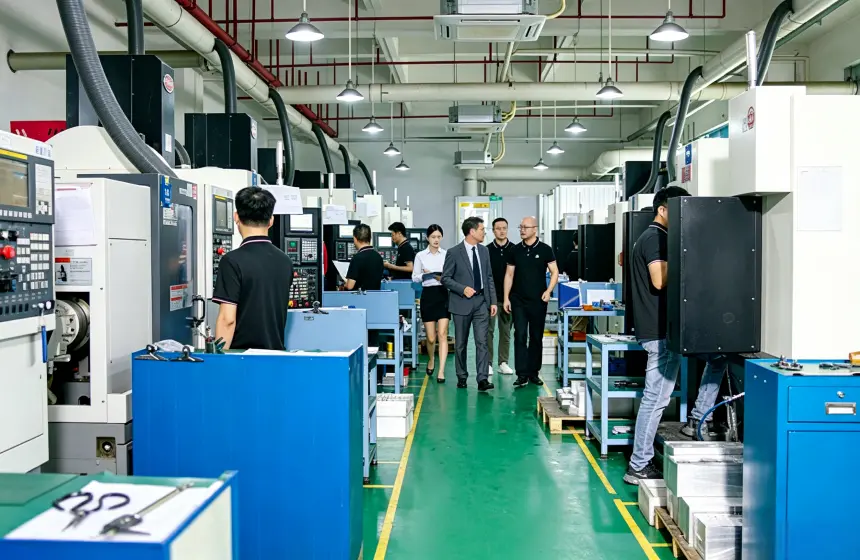
Before comparing suppliers, define the basic requirements of the part.
Consider its geometry, material, quantity, critical dimensions, surface treatment, and inspection requirements. A simple turned shaft may require a very different process from a complex housing with multiple angled features.
The part itself should be the starting point when evaluating a CNC manufacturer.
Check the CNC Machining CapabilitiesLook beyond the number of machines listed on a supplier's website. The important question is whether its machining capabilities match your part.
3-axis machining may be suitable for relatively straightforward geometries, while 4-axis or 5-axis machining can help with multiple faces, angled features, deep cavities, and difficult tool access. CNC turning is commonly used for shafts, bushings, flanges, and other rotational components.
FlexiTurn provides CNC milling, CNC turning, and 3-axis, 4-axis, and 5-axis machining, with the process selected according to the geometry and requirements of the actual component.
Make Sure They Handle Custom PartsIf you need a non-standard component, check whether the manufacturer regularly works from customer designs rather than mainly supplying standard products.
A suitable supplier should be able to review 3D CAD models, 2D drawings, or physical samples and understand the important manufacturing requirements.
The way a supplier responds to your actual design can be more useful than a long capability list. Good questions about material, critical dimensions, difficult features, quantity, or finishing can show that the manufacturer is evaluating the part rather than simply sending a standard quote.
Consider Material and Production QuantityMaterial choice and order quantity both affect the manufacturing process and cost.
Aluminum, stainless steel, brass, copper, titanium, and engineering plastics each have different machining characteristics. Providing the exact material grade helps the supplier evaluate the project more accurately.
Quantity is equally important. A prototype project may need only a few parts, while a production program may require recurring small batches or larger volumes.
It is useful to choose a supplier that matches your current production stage and can continue supporting the project as demand changes.
Check Inspection and FinishingFor many custom parts, CNC machining is only part of the manufacturing process.
Depending on the application, you may need dimensional inspection, CMM measurement, anodizing, polishing, plating, powder coating, or other finishing.
Ask the supplier whether these requirements can be included in the manufacturing process and quotation. This gives you a clearer understanding of the actual cost and finished product.
Evaluate the Engineering SupportA capable CNC manufacturer should do more than manufacture exactly what is shown on a drawing.
During the quotation stage, pay attention to whether the supplier identifies difficult tool access, unnecessary machining complexity, critical dimensions, or other potential production issues.
You do not need to determine the complete machining process yourself. A good manufacturing partner should be able to discuss practical production options with you.
Compare CNC Quotes CarefullyOnce several suitable suppliers have been identified, compare their quotations on the same basis.
Check whether each quotation includes the same:
- Material and grade
- Quantity
- Machining scope
- Surface treatment
- Inspection
- Packaging
- Delivery requirements
The lowest quotation is not always the lowest overall cost. A cheaper price may result from different assumptions or excluded requirements.
For international buyers, clear communication during quotation is also an important part of supplier evaluation.
Why Consider FlexiTurn?FlexiTurn focuses on factory-direct custom CNC machining rather than standard catalog components.
Customers can provide drawings, CAD files, or samples, and our manufacturing team evaluates the component according to its geometry, material, quantity, and production requirements. CNC milling, turning, and 3-axis, 4-axis, and 5-axis machining are available for different custom part applications.
Our production model also supports prototypes, small batches, and low-volume orders, making FlexiTurn suitable for projects at different stages of development and production.
Choosing the Right CNC Machining Company in ChinaThe best CNC machining company is not necessarily the largest factory or the supplier with the lowest quotation.
The right choice is the manufacturer that can make your specific part, use an appropriate process, meet the required quality, and communicate clearly throughout the project.
For buyers looking for custom and non-standard CNC parts, FlexiTurn provides a direct manufacturing route from customer drawings, CAD files, or samples to finished components, supporting projects from prototypes to small-batch and low-volume production.
- Why Do CNC Machining Quotes Differ Between Suppliers?
- How to Prepare a CNC Machining Drawing for Manufacturing?
- How Does Part Geometry Affect CNC Machining Cost?
- Why Are Small Internal Radii Difficult to CNC Machine?
- How Do Deep Pockets Affect CNC Machining?
- Common CNC Machining Design Mistakes That Increase Cost
- How Can DFM Reduce CNC Machining Cost?
- What Is DFM in CNC Machining and Why Does It Matter?