
Phone: +86 15398058207
E-mail: sales@flexiturn.com
Add: Room 603 Building C, The Huixin Center, Zhangba One Road, Yanta Zone, Xi'an City, Shaanxi Province, China
Find Providers for Custom Metal Parts: What Should You Look For?
Finding a supplier for custom metal parts is different from buying standard components. When a part has unique dimensions, special interfaces, complex geometry, or application-specific material requirements, the supplier needs to understand the drawing and manufacturing process rather than simply match a catalog number.
For procurement teams, engineers, and small manufacturers, the challenge is finding a CNC machining provider that can produce the required part, communicate clearly, and handle the actual production quantity. A good supplier should fit the part and the project, not just offer a low initial price.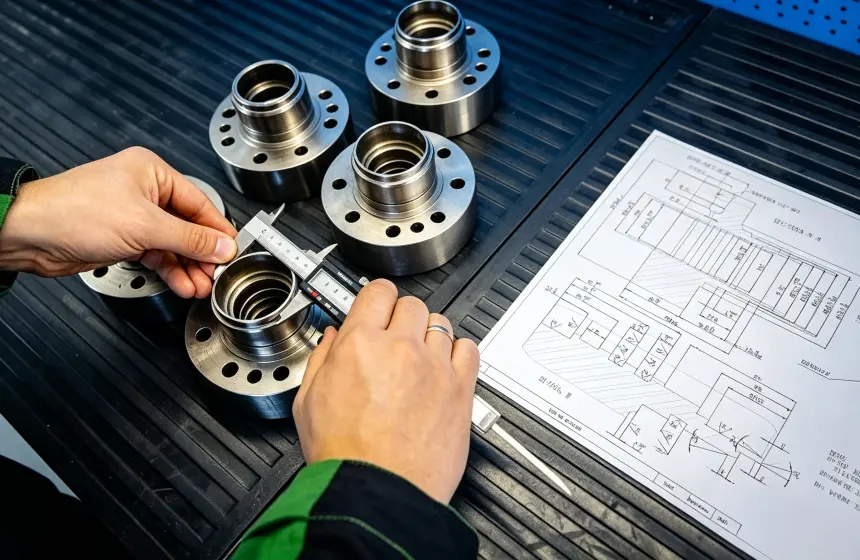
Before searching for a supplier, define what you are actually trying to manufacture.
Custom metal parts can include brackets, housings, shafts, plates, blocks, flanges, connectors, heat sinks, tooling components, and many other non-standard components.
The geometry and application can narrow down the type of manufacturer you need. A simple turned shaft may require a different process from a complex 5-axis housing, while a thin aluminum enclosure may have very different requirements from a stainless steel industrial component.
This makes the part itself a useful starting point when searching for potential suppliers.
Where Can You Find Custom Metal Parts Providers?There are several common ways to find CNC machining suppliers.
Online searches are useful for identifying manufacturers by capability, material, location, or application. Industrial directories and B2B platforms can provide additional supplier options, while referrals from engineering or purchasing teams can help identify manufacturers with relevant experience.
However, a supplier appearing in search results does not automatically mean it is suitable for your project.
Once you have a shortlist, move from general company information to the manufacturer's actual machining capabilities, production model, materials, inspection methods, and experience with custom parts.
Look at What the Manufacturer Actually ProducesA supplier's website can tell you a lot before you send an RFQ.
Look for evidence that the company manufactures custom components rather than mainly reselling standard products. Product examples, machining capabilities, material information, inspection services, and descriptions of prototype or low-volume production can help show whether the supplier is relevant.
For example, if your project involves a complex aluminum housing, a supplier with experience in CNC milling and multi-axis machining may be more appropriate than a company focused mainly on simple turned parts.
FlexiTurn focuses on custom and non-standard CNC machining rather than standard catalog components. Our manufacturing capabilities include CNC milling, CNC turning, and 3-axis, 4-axis, and 5-axis machining for different custom part requirements.
Can They Work From Your Actual Design?One of the simplest ways to evaluate a CNC supplier is to see how they respond to your real part.
A reliable manufacturer should be able to work with a 3D CAD model, 2D drawing, or physical sample and understand the important manufacturing requirements.
Pay attention to the questions they ask.
Do they identify critical dimensions? Do they notice difficult tool access or unusual geometry? Do they ask about material grade, quantity, surface treatment, or inspection? Do they suggest a practical machining approach?
These details can tell you more about a supplier's engineering capability than a long list of machines on its website.
FlexiTurn accepts customer drawings, CAD files, and samples for custom CNC machining. Our engineering team reviews the actual component and considers geometry, material, machining method, and production requirements when preparing the project.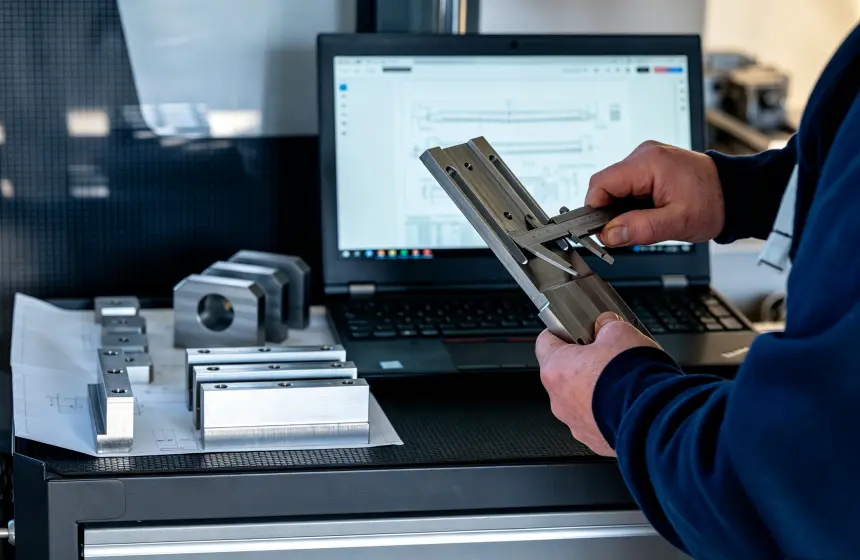
Once you receive several quotations, it can be tempting to choose the lowest number.
But custom metal parts are rarely identical from a manufacturing perspective. Different suppliers may make different assumptions about material, tolerances, machining processes, finishing, inspection, packaging, or delivery.
Before comparing prices, make sure the quotations cover the same requirements.
A slightly higher quotation may include a more appropriate process or more complete inspection, while an unusually low quotation may exclude requirements that you expected to be included.
For custom parts, understanding what is included in the price is often more useful than comparing unit prices alone.
Production Quantity Should Match the SupplierNot every CNC manufacturer is equally suitable for small orders.
Some suppliers are structured around large production runs, while others are more comfortable with prototypes, small batches, and low-volume production.
This matters if your project is still in development or if the final demand is uncertain.
FlexiTurn supports projects ranging from prototype quantities to small-batch and low-volume production. This allows customers to start with a limited number of custom parts and increase the quantity when the product or application is ready.
Consider the Complete Manufacturing ScopeA custom metal part may require more than CNC machining.
Depending on the component, you may also need surface treatment, dimensional inspection, CMM measurement, or other finishing and quality-control steps.
These requirements should be discussed with the supplier early. Otherwise, a machining quote may look competitive until additional processes are added later.
FlexiTurn can combine CNC machining with applicable surface treatment and inspection requirements, helping customers coordinate the finished component through a more direct manufacturing process.
Communication Is Part of Supplier QualityA CNC supplier may have good equipment and competitive pricing but still be difficult to work with.
For custom manufacturing, communication matters because drawings can change, quantities may be revised, and technical questions can appear during production.
A useful supplier should respond clearly to questions about:
- Material and grade
- Machining method
- Critical dimensions
- Production quantity
- Surface treatment
- Inspection
- Lead time
- Design revisions
For international customers in particular, clear communication can reduce misunderstandings before production begins.
Because FlexiTurn works directly with customers on custom CNC projects, technical requirements and design information can be discussed with the manufacturing team rather than passing through a standard-parts sales channel.
A Practical Way to Shortlist SuppliersInstead of contacting dozens of companies with the same generic inquiry, start with a small group of manufacturers that appear suitable for your part.
Send them the same drawing or CAD file and compare:
How they understand the part
Do they recognize the important features and potential machining difficulties?
How they plan the process
Does the proposed machining method make sense for the geometry and material?
How complete is the quotation?
Are material, finishing, inspection, quantity, and delivery clearly defined?
How flexible is the production model?
Can they support your current quantity as well as possible future orders?
This approach gives you a more useful comparison than simply collecting the lowest prices from as many suppliers as possible.
Why FlexiTurn May Be a Good FitFlexiTurn is a factory-direct manufacturer focused on custom CNC machining and non-standard components.
We work from customer drawings, CAD models, or samples and manufacture parts according to their specific requirements. CNC milling, turning, and 3-axis, 4-axis, and 5-axis machining can be selected according to the geometry of the component.
Our production model also supports prototypes, small batches, and low-volume production, which makes it suitable for businesses developing new products, producing specialized equipment, or purchasing custom components in limited quantities.
Rather than starting with a standard product catalog, the process starts with the part the customer actually needs.
Before You Contact a CNC SupplierHaving the right information ready can make the supplier search much more efficient.
Prepare:
- 3D CAD files
- 2D drawings when available
- Material and grade
- Required quantity
- Critical tolerances
- Surface treatment
- Inspection requirements
- Target delivery date
You do not need to know the complete machining process yourself. A capable CNC manufacturer should be able to review the information and discuss the practical manufacturing approach with you.
Finding the Right Provider Is About FitThere is no single CNC machining supplier that is ideal for every custom metal part.
The right choice depends on the component's geometry, material, quantity, precision requirements, finishing, and production stage. A supplier that is excellent for high-volume production may not be the best option for a five-piece prototype, just as a prototype-focused shop may not be suitable for recurring production.
For this reason, supplier selection should begin with the actual part and project requirements.
FlexiTurn provides factory-direct custom CNC machining for customers who need non-standard metal components, from initial prototypes and samples to small-batch and low-volume production. By combining engineering review with CNC milling, turning, multi-axis machining, inspection, and applicable finishing, we provide a direct path from the customer's design to the finished part.
- Why Do CNC Machining Quotes Differ Between Suppliers?
- How to Prepare a CNC Machining Drawing for Manufacturing?
- How Does Part Geometry Affect CNC Machining Cost?
- Why Are Small Internal Radii Difficult to CNC Machine?
- How Do Deep Pockets Affect CNC Machining?
- Common CNC Machining Design Mistakes That Increase Cost
- How Can DFM Reduce CNC Machining Cost?
- What Is DFM in CNC Machining and Why Does It Matter?