
Phone: +86 15398058207
E-mail: sales@flexiturn.com
Add: Room 603 Building C, The Huixin Center, Zhangba One Road, Yanta Zone, Xi'an City, Shaanxi Province, China
What is the best aluminum for CNC machining?
What Is the Best Aluminum for CNC Machining?
If you ask ten machining engineers which aluminum alloy is best for CNC machining, nine of them will give you the same answer: 6061. But the more complete answer is that the "best" alloy depends entirely on what you are trying to build. A bicycle frame, an aircraft wing spar, and a marine enclosure each demand different properties. Understanding the trade-offs between machinability, strength, corrosion resistance, fatigue life, and cost is the key to making the right choice.
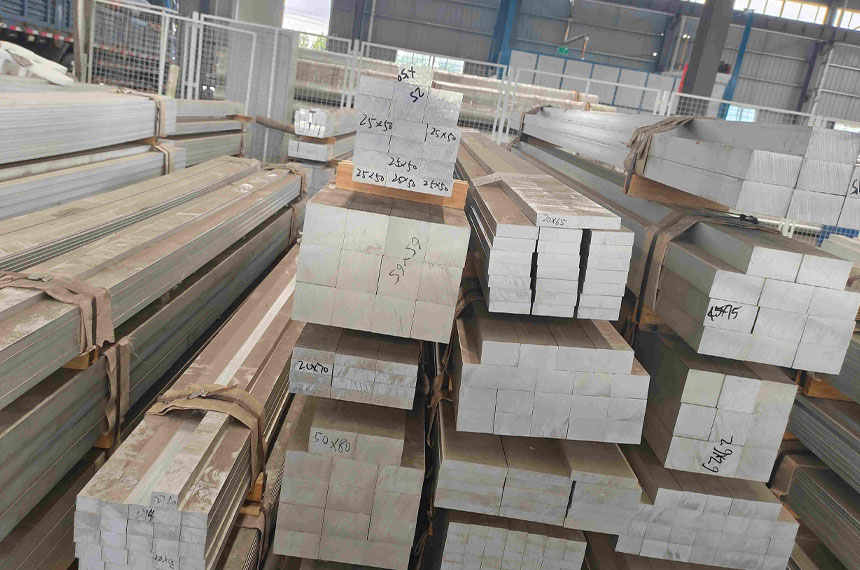
This guide breaks down the most common aluminum alloys for CNC machining, explains their strengths and weaknesses, and helps you select the right material for your specific application.
Why Aluminum Is Ideal for CNC Machining
Before diving into specific alloys, it is worth understanding why aluminum is the most popular material for CNC machining worldwide. Aluminum offers an exceptional combination of properties that make it a machinist's dream.
It cuts fast. Aluminum allows for higher spindle speeds, faster feed rates, and smoother chip evacuation than most other metals, all without instantly destroying expensive tooling. Compared to steel or titanium, aluminum machines five to ten times faster, which translates directly into shorter lead times and lower per-part machining costs.
It is lightweight yet strong. Aluminum has an excellent strength-to-weight ratio, making it ideal for applications where weight reduction is critical — from aerospace components to automotive parts.
It is versatile. Aluminum can be milled, turned, drilled, and machined into precise parts without the difficulty that appears in tougher or "gummier" materials. It also anodizes well, takes various surface finishes, and is naturally corrosion-resistant.
It is cost-effective. Aluminum is widely available and relatively inexpensive compared to other engineering metals.
The Industry Standard: 6061 Aluminum
If there is a single "best" aluminum for CNC machining, it is 6061. This alloy is overwhelmingly the most common aluminum alloy for machining, and this popularity is no accident — it is the result of a near-perfect balance of properties.
Key Properties
6061-T6 aluminum offers a balanced package of strength, corrosion resistance, machinability, and cost. It is the default choice for approximately 70% of CNC aluminum applications. In real production, 6061 covers the majority of CNC parts.
The T6 temper (solution heat-treated and artificially aged) is the most common form for machining. In this condition, 6061 has a tensile strength of approximately 45 ksi and a yield strength of around 40 ksi. Its hardness is about 95 on the Brinell scale.
Machinability
6061 is renowned for its excellent machinability. It cuts cleanly with minimal friction and tool wear, allowing for high feed rates and fast cycle times. The chips produced are spiral-shaped and break easily, which aids in chip evacuation and prevents buildup on cutting tools.
The material is forgiving. It works well with standard tooling and standard machining parameters. Even with a wide cutting parameter window, it is easy to balance tool life and surface quality.
Additional Advantages
Weldability: 6061 offers excellent weldability, making it suitable for assemblies that require joining.
Anodizing: It anodizes beautifully, producing a clean, uniform finish that is ideal for cosmetic parts. This makes it a favorite for consumer products and visible components.
Corrosion Resistance: 6061 has excellent corrosion resistance, performing well in most environments without additional protection.
Cost: It is the most cost-effective of the common machining alloys, with material prices significantly lower than 7075.
Typical Applications
6061 is used everywhere. Common applications include brackets, housings, prototypes, structural components, industrial fixtures, automation equipment, motor housings, bicycle frames, and automotive parts.
When to choose 6061: If you are not sure which aluminum to pick, start with 6061. It works for most parts. Choose 6061 for general-purpose machined components, cost-sensitive projects, and parts that will be anodized for appearance.
The High-Strength Champion: 7075 Aluminum
When strength becomes the overriding priority, 7075 takes the stage. Known as the "super-aluminum," 7075 is one of the strongest aluminum alloys available for CNC machining. Its tensile strength rivals that of many structural steels.
Key Properties
7075-T6 aluminum has a tensile strength of approximately 83 ksi — about twice as strong as 6061-T6. Its yield strength is around 73 ksi, and its hardness is approximately 150 on the Brinell scale.
This alloy is a zinc-copper alloy, and it delivers exceptional strength while maintaining a relatively low weight. It is the go-to material for aerospace and defense parts.
Machinability
Despite its hardness, 7075 produces clean, crisp chips and can be machined to an incredibly smooth surface finish, reducing the need for intensive post-processing. Its machinability is rated as very good, though not quite as excellent as 6061.
However, machining 7075 comes with challenges. The material is slightly more abrasive than 6061 and tends to produce "gummy" chips that demand highly specific tooling geometries and strict coolant management to prevent material buildup and maintain tool longevity. Higher strength means higher cutting forces. Tool wear is approximately 20% to 30% higher than with 6061.
Thin-wall parts made from 7075 are more prone to deformation due to residual stress and clamping methods. Burr control and heat accumulation in toolpaths require more attention. Successful machining of 7075 demands higher standards in fixturing strategy, roughing and finishing sequences, and stress-relief planning.
Trade-Offs
Cost: 7075 costs significantly more than 6061 — approximately 50% to 100% more for the raw material. The material itself is not significantly harder to machine in the T6 temper — machinability ratings are comparable — but the cost premium comes from the material price.
Corrosion Resistance: 7075 has only moderate corrosion resistance. It is more sensitive in corrosive environments and is often coated or protected to prevent stress corrosion cracking, especially under transverse loading.
Anodizing: While 7075 can be anodized, the finish is not as clean or consistent as 6061. It may show color variation or a slight yellow tint.
Weldability: 7075 has poor weldability. If your design requires welding, 6061 is a far better choice.
Typical Applications
7075 is used when strength becomes critical. Common applications include aerospace fittings, military hardware, high-load machined parts, aircraft structural components, and any application where maximum strength and minimal weight are required.
When to choose 7075: Choose 7075 for maximum strength, high-load applications, and aerospace or defense parts where performance justifies the higher cost.
The Fatigue-Resistant Specialist: 2024 Aluminum
2024 aluminum is the alloy of choice when fatigue resistance and repeated loading are the primary concerns. It offers an exceptional strength-to-weight ratio and excellent fatigue resistance.
Key Properties
2024-T3 aluminum has a tensile strength of approximately 68–70 ksi and a yield strength of around 47–50 ksi. It is significantly stronger than 6061. Its hardness is about 120 on the Brinell scale.
This alloy is copper-alloyed (2xxx series). The copper content gives it high strength and fatigue resistance but comes with trade-offs.
Machinability
2024 offers good machinability and surface quality. However, its machinability is rated as only "good" compared to 6061's "excellent". The copper content makes the chips harder and more abrasive.
Trade-Offs
Corrosion Resistance: 2024 has only fair corrosion resistance. It requires corrosion protection, coatings, or galvanic isolation in most applications. In aerospace applications, it is often protected with cladding (a thin layer of pure aluminum) or specialized coatings.
Weldability: Like 7075, 2024 has poor weldability. Welding is generally not recommended.
Anodizing: 2024 is not ideal for anodizing. When cosmetic appearance is important, it is often protected with cladding or coating instead.
Cost: 2024 falls between 6061 and 7075 in cost, though prices vary depending on specifications, certifications, and market conditions.
Typical Applications
2024 is widely used in aerospace applications where fatigue resistance is critical. Common applications include aircraft structures, wing components, fuselage frames, and other fatigue-critical parts that experience repeated loading.
When to choose 2024: Choose 2024 for fatigue-critical parts exposed to repeated loading and aerospace structural components where the material's fatigue resistance is essential.
Other Notable Alloys
5052 and 5083 (Marine Grade)
These magnesium-alloyed (5xxx series) aluminum alloys offer excellent corrosion resistance, making them ideal for marine environments and outdoor applications.
However, they are not as machinable as 6061. Their machinability is rated lower, at approximately 50% of 6061's rating. They are better suited for forming and welding applications than for complex machining.
When to choose 5052/5083: Choose these alloys for marine parts, outdoor equipment, and applications where corrosion resistance is the primary requirement.
6063
Often used for extrusions, 6063 offers good machinability (about 80% of 6061) and excellent surface finish. It is commonly used for decorative and architectural parts.
When to choose 6063: Choose 6063 for decorative parts, extrusions, and applications where surface appearance is critical.
2011
This is the benchmark grade for aluminum machinability, rated at 100%. It is a free-machining alloy designed specifically for high-speed automatic screw machines. However, its corrosion resistance and anodizing quality are inferior to 6061.
When to choose 2011: Choose 2011 for high-volume, simple parts where maximum machining speed is the priority and corrosion resistance is not critical.
Selection Guide: Which Alloy Should You Choose?
The choice comes down to your specific requirements.
Choose 6061 if:
- You need a general-purpose alloy
- Cost is a significant factor
- The part will be anodized for appearance
- Weldability is required
- You are unsure which alloy to pick — 6061 is the safe default
Choose 7075 if:
- Maximum strength is critical
- The part will see high loads
- Weight reduction is a priority
- You can accept higher cost and more challenging machining
Choose 2024 if:
- Fatigue resistance is the primary concern
- The part will experience repeated loading
- The application is aerospace or high-performance
Choose 5052/5083 if:
- Corrosion resistance is paramount
- The part will be used in marine or outdoor environments
Choose 6063 if:
- Surface appearance is critical
- The part is extruded or decorative
A Note on Anodizing and Surface Finish
Not all aluminum alloys behave the same way during anodizing. This is an important consideration if your part will be visible or require a specific cosmetic finish.
6061 produces a clean, uniform anodized finish and is generally the safest choice for cosmetic parts.
7075 may show color variation or a slight yellow tint after anodizing. While it can be anodized, the results are not as consistent as with 6061.
2024 is often protected with cladding or coating instead of anodizing due to its copper content.
For visible or cosmetic parts, 6061 is usually the safer choice.
Cost Considerations
Material selection has a direct impact on your project budget.
Machining cost: 6061 machines faster, reducing cycle time and lowering cost. 7075 requires slower cutting and more careful toolpath planning.
Tool wear: 7075 causes 20% to 30% higher tool wear than 6061. This increases tooling costs and may require more frequent tool changes.
Lead time: Harder materials generally require longer production times.
Material price: 6061 is the least expensive. 2024 is mid-range. 7075 is the most expensive, typically costing 50% to 100% more than 6061.
As one engineer put it: "Choosing a stronger alloy than necessary is one of the most common ways to increase CNC cost".
Partner with FlexiTurn for Your Aluminum CNC Machining
At FlexiTurn, we specialize in precision CNC machining of all aluminum alloys. Whether you need 6061 for a general-purpose component, 7075 for a high-strength aerospace part, or 2024 for a fatigue-critical application, we have the equipment, expertise, and quality systems to deliver.
Our capabilities include 3-axis, 4-axis, and 5-axis CNC machining, with rigorous quality control and full inspection reporting. We work with a wide range of aluminum grades and can help you select the optimal material for your specific application.
Ready to start your project? Contact FlexiTurn today for a competitive quote and expert material guidance.
FlexiTurn – Precision Machining, Delivered with Trust.
- Why Do CNC Machining Quotes Differ Between Suppliers?
- How to Prepare a CNC Machining Drawing for Manufacturing?
- How Does Part Geometry Affect CNC Machining Cost?
- Why Are Small Internal Radii Difficult to CNC Machine?
- How Do Deep Pockets Affect CNC Machining?
- Common CNC Machining Design Mistakes That Increase Cost
- How Can DFM Reduce CNC Machining Cost?
- What Is DFM in CNC Machining and Why Does It Matter?