
Phone: +86 15398058207
E-mail: sales@flexiturn.com
Add: Room 603 Building C, The Huixin Center, Zhangba One Road, Yanta Zone, Xi'an City, Shaanxi Province, China
What aluminum material is used in CNC?
What Aluminum Material Is Used in CNC Machining?
CNC machining works with a broad family of aluminum alloys, but not every aluminum grade is equally suitable for cutting, milling, or turning. The choice of alloy directly affects machining speed, tool life, surface finish, and the final part's mechanical properties. While dozens of aluminum grades exist, only a handful are used regularly in CNC shops. Understanding which alloys are actually used - and why - helps you select the right material for your project.
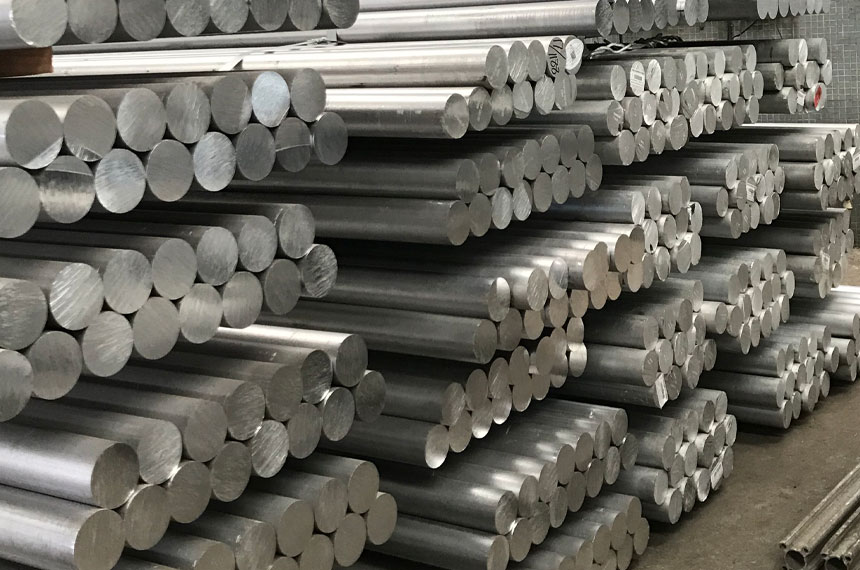
This article provides a comprehensive overview of the aluminum alloys most commonly employed in CNC machining, grouped by their series and key characteristics.
The Aluminum Alloy Classification System
Aluminum alloys are divided into series based on their primary alloying elements. The most relevant series for CNC machining are:
- 1xxx series – commercially pure aluminum (99%+)
- 2xxx series – copper as the main alloying element
- 3xxx series – manganese
- 4xxx series – silicon (mainly for welding wire)
- 5xxx series – magnesium
- 6xxx series – magnesium and silicon
- 7xxx series – zinc
In practice, 6xxx, 7xxx, and 2xxx series dominate CNC machining, with 5xxx and 1xxx used for specific applications. Let's look at each in detail.
1. The Workhorse: 6xxx Series (Magnesium‑Silicon Alloys)
This is the most widely used family for CNC machining. The 6xxx series offers an excellent balance of strength, corrosion resistance, weldability, and machinability.
6061 – The Undisputed Standard
6061 is the most commonly CNC‑machined aluminum alloy worldwide. It accounts for the majority of aluminum parts produced on milling machines and lathes. Available in the T6 temper (solution heat‑treated and artificially aged), it provides a tensile strength of about 45 ksi, yield strength of 40 ksi, and a Brinell hardness of 95.
6061 machines beautifully – it cuts cleanly, produces short chips, and allows high feed rates with minimal tool wear. It anodizes uniformly, is weldable, and is relatively inexpensive. For these reasons, engineers often default to 6061 unless there is a specific reason to choose another alloy. You will find 6061 in brackets, housings, prototypes, industrial machinery parts, bicycle frames, and automotive components.
6063 – The Decorative Alloy
6063 is similar to 6061 but has slightly lower strength and better extrudability. Its surface finish after machining is exceptional, making it popular for architectural extrusions and decorative parts. While it is less commonly machined from bar stock, it is still used in CNC when a fine surface appearance is required.
2. The High‑Strength Contender: 7xxx Series (Zinc Alloys)
When strength becomes the primary driver, the 7xxx series takes over. These alloys deliver the highest tensile strengths among aluminum grades.
7075 – The Aerospace Favorite
7075 is the strongest of the common machining alloys, with a T6 temper reaching a tensile strength of about 83 ksi – nearly double that of 6061. Its yield strength is around 73 ksi and its hardness is about 150 Brinell. This makes it the go‑to choice for aerospace structural parts, military hardware, and any application requiring maximum strength with minimal weight.
7075 machines well – it produces good surface finishes and chips break cleanly – but it is more abrasive than 6061, causing 20–30% higher tool wear. It has only moderate corrosion resistance and poor weldability. Anodizing produces a slightly yellowish tint, so cosmetic parts often prefer 6061. Despite these trade‑offs, 7075 is widely used in CNC shops serving aerospace and defence industries.
7050 – Improved Toughness
7050 is a variation of 7xxx that offers better toughness, fatigue resistance, and stress‑corrosion resistance than 7075, especially in thick sections. It is also used in aerospace but is less common overall.
3. The Fatigue‑Resistant Option: 2xxx Series (Copper Alloys)
The 2xxx series uses copper as the primary alloying element, which imparts high strength and excellent fatigue resistance – critical for parts subjected to repeated loading.
2024 – The Fatigue Specialist
2024 has a tensile strength of about 68–70 ksi and a yield strength of 47–50 ksi in the T3 temper. It is widely used in aircraft structures – wing skins, fuselage frames, and other fatigue‑critical components. Its machinability is rated as "good" – slightly less than 6061 because the copper makes chips harder and more abrasive. It also has poor corrosion resistance (often clad with pure aluminum) and poor weldability. Anodizing is not recommended for cosmetic purposes.
2024 is a staple in CNC machine shops that serve the aerospace sector, though it is less common for general industrial parts.
2011 – The Free‑Machining Grade
2011 is designed specifically for high‑speed automatic screw machines. It contains lead and bismuth to promote chip breaking, making it the easiest aluminum to machine – rated at 100% machinability. However, it has lower corrosion resistance and anodizing quality. It is used for high‑volume, small, simple parts like fittings and fasteners.
4. The Corrosion‑Resistant Series: 5xxx (Magnesium Alloys)
The 5xxx series, alloyed with magnesium, offers excellent corrosion resistance, especially in marine environments.
5052 and 5083 – Marine Grades
These alloys are highly resistant to saltwater corrosion and are often used for boat parts, chemical equipment, and outdoor applications. However, their machinability is only about 50% of 6061 – they tend to produce gummy chips and require careful tooling. They are more commonly formed or welded than machined. When CNC machining is required, they are used for parts where corrosion resistance outweighs ease of cutting.
5. Pure and Near‑Pure Aluminum: 1xxx Series
Commercially pure aluminum (1100, 1050) and its variants are soft, highly ductile, and have excellent corrosion resistance. However, they have very low strength and are extremely "gummy" to machine – chips do not break easily, leading to built‑up edge and poor surface finish. For this reason, 1xxx alloys are rarely used in CNC machining, except for very simple parts or where extreme formability is needed.
Which Aluminum Is Most Commonly Used in Practice?
To summarise, the materials you will find in a typical CNC machine shop are:
- 6061 – the default choice for ~70% of all CNC aluminum parts.
- 7075 – for high‑strength applications, especially aerospace.
- 2024 – for fatigue‑critical and aerospace components.
- 2011 – for high‑volume, simple, screw‑machine parts.
- 5052/5083 – for marine and corrosive environments, albeit less frequently machined.
- 6063 – for decorative and extruded parts when machined secondarily.
How to Choose the Right Alloy for Your CNC Project
Selecting the right material depends on balancing several factors:
- Strength requirements – if you need maximum strength, choose 7075 or 2024; for general purposes, 6061 is sufficient.
- Corrosion resistance – if your part will be exposed to saltwater or harsh chemicals, consider 5052 or 5083, or protect 6061 with anodizing.
- Weldability – if your design requires welding, 6061 is your best option; 7075 and 2024 are poor choices.
- Anodizing and appearance – for a clean, uniform cosmetic finish, 6061 is the clear winner; 7075 and 2024 produce inferior anodized surfaces.
- Machining cost – 6061 is the least expensive to machine due to faster cycle times and lower tool wear; 7075 and 2024 increase cost through slower speeds and higher tooling consumption.
- Fatigue performance – if the part experiences cyclic loading, 2024 outperforms 6061 and rivals 7075.
In most cases, starting with 6061 is the safest and most economical approach. Only when specific performance demands exceed what 6061 can provide should you move to 7075, 2024, or other specialty alloys.
Partner with FlexiTurn for Expert Aluminum CNC Machining
At FlexiTurn, we machine all the aluminium alloys mentioned above – from 6061 and 7075 to 2024 and 5052. Our experienced engineers can help you select the optimal material for your application, balancing performance, cost, and machinability. With 3‑axis, 4‑axis, and 5‑axis capabilities, rigorous quality control, and full traceability, we deliver precision parts that meet your specifications.
Ready to discuss your project? Contact FlexiTurn today for a detailed quote and material consultation.
FlexiTurn – Precision Machining, Delivered with Trust.
- Why Do CNC Machining Quotes Differ Between Suppliers?
- How to Prepare a CNC Machining Drawing for Manufacturing?
- How Does Part Geometry Affect CNC Machining Cost?
- Why Are Small Internal Radii Difficult to CNC Machine?
- How Do Deep Pockets Affect CNC Machining?
- Common CNC Machining Design Mistakes That Increase Cost
- How Can DFM Reduce CNC Machining Cost?
- What Is DFM in CNC Machining and Why Does It Matter?