
Phone: +86 15398058207
E-mail: sales@flexiturn.com
Add: Room 603 Building C, The Huixin Center, Zhangba One Road, Yanta Zone, Xi'an City, Shaanxi Province, China
3 vs 4 vs 5-Axis CNC Machining: Which Is Right for Your Project?
3-Axis vs 4-Axis vs 5-Axis CNC Machining: Which Is Right for Your Project?
Introduction
CNC machining is available in different configurations, and the number of controlled axes directly affects machine movement, machining flexibility, and the types of parts that can be produced.
Among the most common options, 3-axis, 4-axis, and 5-axis CNC machining are widely used for precision manufacturing. However, choosing the right machining method is not simply about selecting the machine with the most axes.
The best solution depends on factors such as part geometry, complexity, tolerance requirements, material, and production needs.
This article explains the differences between 3-axis, 4-axis, and 5-axis CNC machining and how to select the right option for your project.
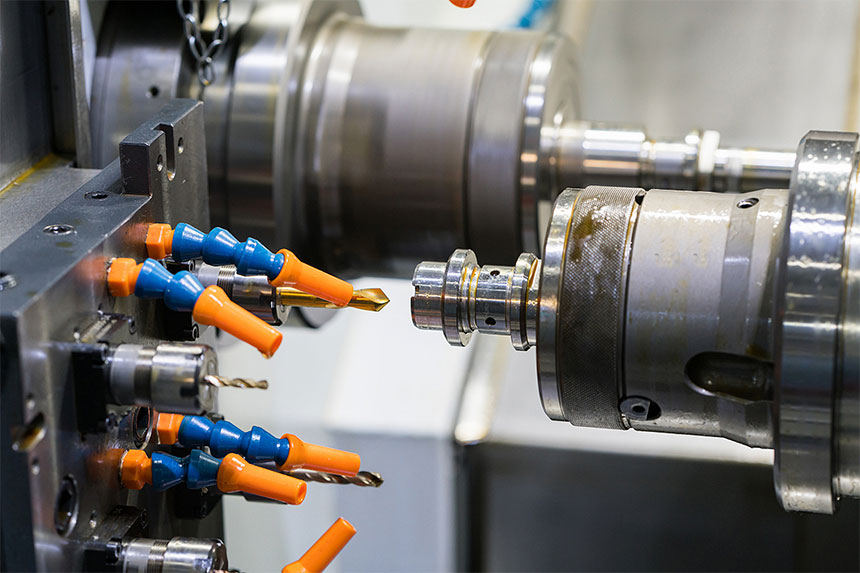
Understanding CNC Machining Axes
In CNC machining, axes refer to the directions of movement controlled by the machine.
A standard 3-axis CNC machine operates along three linear axes:
- X-axis: left and right movement
- Y-axis: front and back movement
- Z-axis: vertical movement
Additional rotational axes allow the cutting tool or workpiece to be positioned from different angles, increasing machining flexibility.
The number of controlled axes determines how the machine approaches the workpiece and what types of geometries it can produce.
What Is 3-Axis CNC Machining?
3-axis CNC machining is the most common CNC machining method. It controls movement along the X, Y, and Z axes while the workpiece remains fixed.
It is suitable for parts with relatively simple geometries, including flat surfaces, holes, pockets, and basic contours.
Common applications include brackets, plates, fixtures, and general mechanical components.
The main advantages of 3-axis machining are its reliability, availability, and cost efficiency. For many standard components, it provides an effective manufacturing solution without requiring more advanced equipment.
What Is 4-Axis CNC Machining?
4-axis CNC machining adds one rotational axis to traditional 3-axis movement.
This additional axis allows the workpiece to rotate during machining, enabling access to multiple sides of a component without frequent manual repositioning.
4-axis machining is commonly used for parts that require machining around a central axis or additional features on different surfaces.
It provides greater flexibility than 3-axis machining while remaining more economical than full 5-axis machining for certain applications.
What Is 5-Axis CNC Machining?
5-axis CNC machining uses three linear axes combined with two rotational axes, allowing the cutting tool or workpiece to move in five directions.
This capability enables the machine to approach the part from multiple angles and manufacture complex geometries with fewer setups.
5-axis machining is often used for components with curved surfaces, complex features, tight tolerances, or difficult-to-reach areas.
Typical applications include aerospace components, medical parts, automotive components, and high-precision industrial parts.
Key Differences Between 3-Axis, 4-Axis, and 5-Axis CNC Machining
The main difference between these machining methods is the level of movement flexibility.
- 3-axis CNC machining is suitable for standard parts where most features can be accessed from one direction.
- 4-axis CNC machining adds rotational movement, making it more suitable for components that require additional side machining or rotational features.
- 5-axis CNC machining provides the highest flexibility, allowing manufacturers to machine complex geometries with fewer setups.
However, a higher number of axes does not always mean a better solution. The most suitable option depends on the actual design requirements of the component.
How to Choose the Right CNC Machining Method?
The choice between 3-axis, 4-axis, and 5-axis CNC machining mainly depends on part design and manufacturing requirements.
3-axis machining is usually the right choice when:
- The part geometry is relatively simple
- Most features are accessible from one direction
- Cost efficiency is important
4-axis machining may be preferred when:
- Additional sides of the part require machining
- Rotational features are needed
- Fewer setups are desirable
5-axis machining is typically selected when:
- The part has complex surfaces or multiple angles
- Tight tolerances are required
- Reducing setups improves manufacturing efficiency
The goal is not to choose the most advanced machine, but to select the machining method that best matches the part requirements.
FlexiTurn CNC Machining Capabilities
FlexiTurn provides CNC machining services including 3-axis, 4-axis, and 5-axis machining for customers worldwide.
With advanced machining capabilities and engineering support, FlexiTurn manufactures custom components using various metals and engineering plastics.
By combining CNC machining, surface treatment, and quality inspection processes, FlexiTurn helps customers produce reliable components for industries including automotive, aerospace, medical devices, robotics, and industrial equipment.
Conclusion
3-axis, 4-axis, and 5-axis CNC machining each serve different manufacturing purposes.
3-axis machining provides an efficient solution for standard components, while 4-axis machining offers additional flexibility for multi-sided parts. 5-axis machining enables the production of complex components that require advanced positioning and fewer setups.
Selecting the right CNC machining method depends on part geometry, accuracy requirements, production needs, and overall project goals.
- Why Do CNC Machining Quotes Differ Between Suppliers?
- How to Prepare a CNC Machining Drawing for Manufacturing?
- How Does Part Geometry Affect CNC Machining Cost?
- Why Are Small Internal Radii Difficult to CNC Machine?
- How Do Deep Pockets Affect CNC Machining?
- Common CNC Machining Design Mistakes That Increase Cost
- How Can DFM Reduce CNC Machining Cost?
- What Is DFM in CNC Machining and Why Does It Matter?