Custom CNC Machined Carbon Fiber Parts
Product Overview:
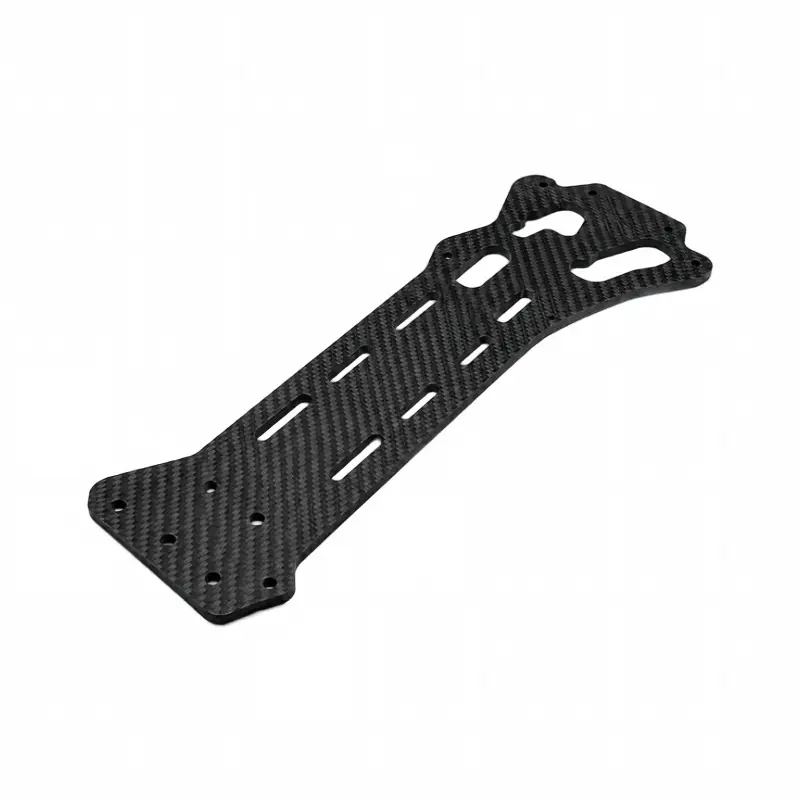
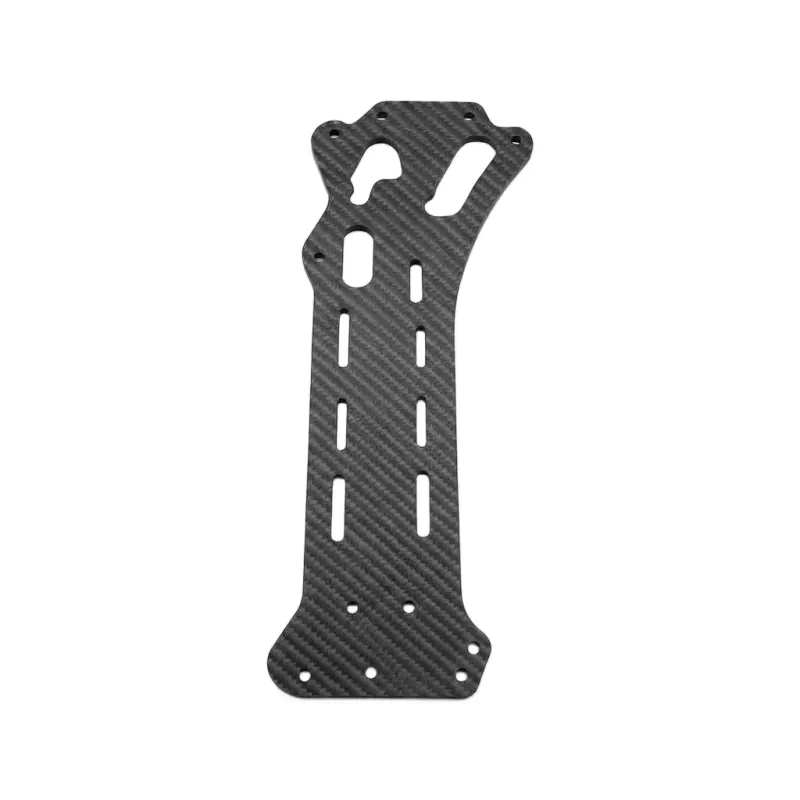
FlexiTurn manufactures custom CNC-routed 3K twill-weave CFRP structural plates from qualified laminate stock. With PCD tooling and vacuum hold-down fixturing, we produce delamination-controlled edge finishes, accurate mounting-hole positions and consistent contour tolerances across complex profiles, slotted openings and drilled hole patterns for robotics, drone gimbals, aerospace auxiliary structures and industrial automation equipment.
Workmanship: CNC Milling, CNC Drilling, 3 Axis CNC Machining
Material: Carbon Fiber
Inquiry Email: sales@flexiturn.com
Custom CNC Machined Carbon Fiber Parts Details
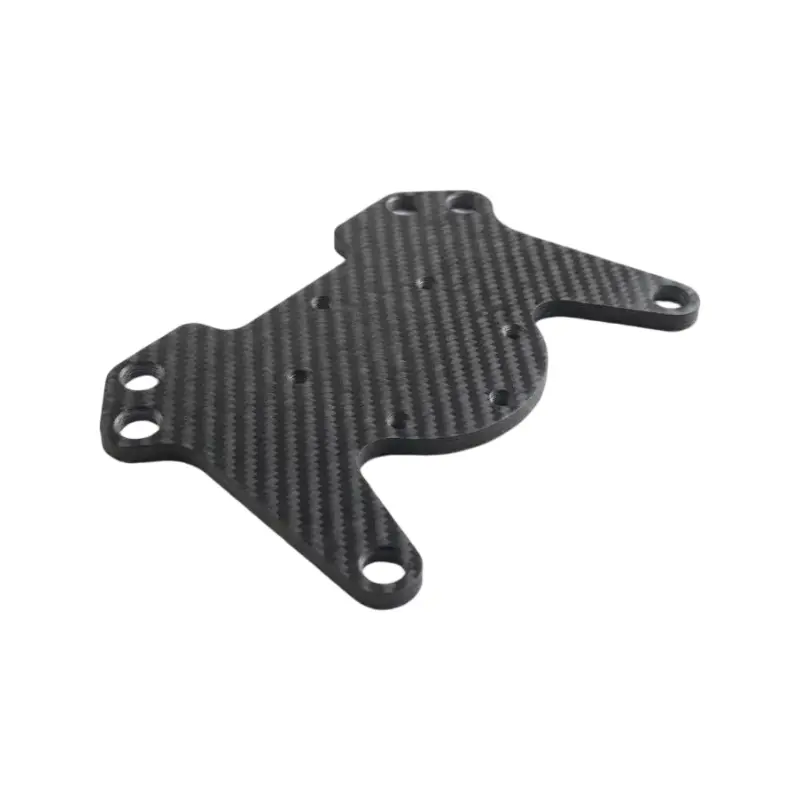
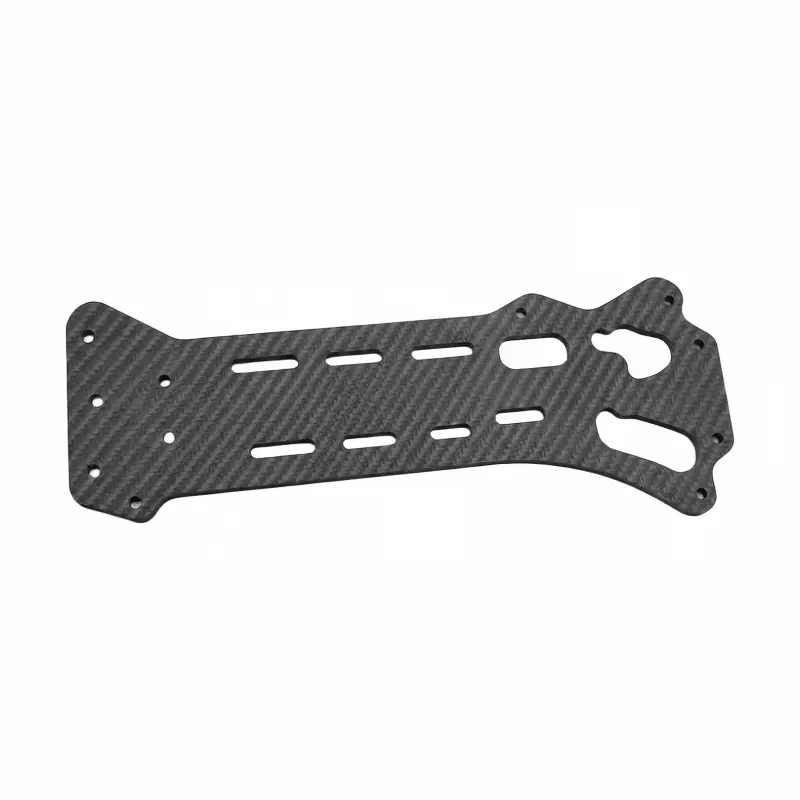
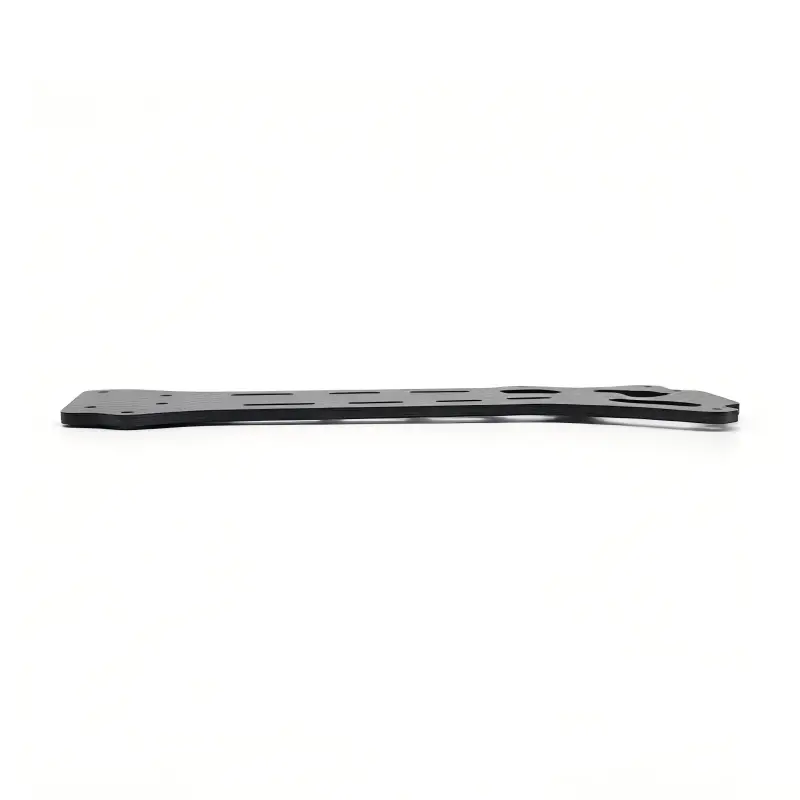
FlexiTurn’s precision 3-axis CNC routing of woven CFRP laminate is exemplified by the complex-contour carbon fiber plates shown above — flat structural mounting plates with slotted openings, custom cutouts, and precision hole patterns for lightweight mounting and stable positioning in precision equipment.
FlexiTurn commonly machines 3K woven CFRP for its high stiffness-to-weight ratio, near-zero in-plane CTE, and corrosion resistance. For flat mounting plates, routing quality strongly influences edge delamination, fiber fraying on slot walls, and hole position consistency. FlexiTurn uses PCD tooling and vacuum hold-down to minimize these risks, delivering controlled edge quality, repeatable hole positioning, and consistent part-to-part accuracy from prototype through medium-volume production.
Machining Process & CapabilitiesFlexiTurn executes all core CFRP machining in-house, with cutting tools, spindle speed and feed parameters specified for woven carbon fiber composite to suppress delamination and preserve laminate surface integrity.
- 3-Axis CNC Routing & Contouring: Outer profiles, slotted cutouts and internal openings are routed from solid CFRP laminate sheets clamped under a vacuum table with a sacrificial phenolic backing board. PCD (polycrystalline diamond) compression-style cutters are used for all contour and slot operations, producing controlled fiber-cut edges with minimal top- and bottom-surface splintering.
- Precision Drilling: Mounting holes are drilled with dedicated carbide drill geometry at controlled feed rates to minimize exit delamination. Heat-set threaded inserts are pressed in post-machining per specification; direct tapping of CFRP is not recommended and is not offered as standard.
- Edge Deburring: Routed edges are deburred to remove micro-splintering without rounding functional mating surfaces. Edge sealing against moisture absorption is available on request for outdoor or humid-environment applications.
- Laminate Sourcing: FlexiTurn stocks 3K twill-weave CFRP laminate in standard thicknesses. Plain-weave CFRP, G10/FR4 fiberglass laminate and other composite sheet materials are available on request for cost-sensitive or electrically insulating applications.
FlexiTurn sources certified composite laminate stock from qualified suppliers, with full material data sheets and batch traceability for every order.
- Standard material: 3K twill-weave CFRP laminate, black epoxy matrix
- Available laminate types: 3K plain-weave CFRP, G10/FR4 fiberglass composite, phenolic laminate
- Standard thicknesses: 1.0 mm, 1.5 mm, 2.0 mm, 3.0 mm, 5.0 mm
- General contour tolerance: ±0.10 mm on cut profiles for parts ≤ 300 mm overall dimension
- Mounting hole position tolerance: ±0.05 mm relative to a common datum
- Edge quality: Controlled delamination within industry-accepted limits; no visible fiber fraying on cosmetic surfaces
- Surface finish: Raw laminate weave as-supplied on cosmetic faces; routed edges with controlled finish
- Maximum routing envelope: 600 mm × 400 mm × 300 mm (3-axis CNC routing); standard off-the-shelf CFRP panel size up to 600 mm × 600 mm, with larger panels requiring multi-fixture staging
Why Choose FlexiTurn
PCD Tooling Controls Delamination and Tool Wear
Most general shops route carbon fiber with uncoated carbide tooling that dulls rapidly under CFRP abrasion, producing frayed edges and interlaminar splintering within a short tool life. FlexiTurn uses PCD cutting tools for all CFRP routing operations, maintaining consistent edge geometry across the production run and delivering controlled cut-edge quality without the rapid degradation seen with standard carbide tooling.
Vacuum Hold-Down Prevents Part Lift and Hole Position DriftUnclamped or mechanically fixtured CFRP sheets flex under routing forces, causing chatter, oversized holes and inconsistent edge finish across the sheet. FlexiTurn uses vacuum table fixturing with sacrificial backing board to lock the laminate flat during all routing and drilling operations, ensuring consistent hole position and edge quality across the entire part envelope.
Documented Feed and Speed Parameters Prevent Resin BurningExcessive spindle speed relative to feed rate generates frictional heat that burns the epoxy matrix, darkening routed edges and degrading interlaminar bond strength. FlexiTurn maintains CFRP-specific feed and speed parameters that optimize material removal without thermal damage to the resin matrix, preserving both structural integrity and edge appearance.
No Direct Tapping — Correct Fastening Method from the StartTapped holes in CFRP suffer from thread stripping and delamination under normal tightening torque. FlexiTurn specifies heat-set threaded inserts as the standard fastening method for CFRP parts, avoiding the common failure mode of tapped-hole thread pull-out and ensuring reliable fastener retention.
Scalable Production From Prototypes to Medium VolumeFlexiTurn supports full product lifecycles: low-volume prototypes routed directly from laminate sheet with no dedicated tooling cost, and medium-volume production with optimized sheet nesting to reduce material waste and per-part cycle time.
Full-Spectrum CNC Machining PartnerBeyond CFRP components, FlexiTurn manufactures precision machined parts in aluminum, stainless steel, brass, copper and engineering plastics. We can consolidate your complete bill of materials — structural composite plates plus machined metal brackets and housings — from a single source.
How to Proceed
- Submit your 2D (PDF/DWG) or 3D (STEP/IGES) CAD files, along with laminate type, sheet thickness, tolerance requirements, cosmetic surface designation, order quantity and operating environment details.
- Receive a CFRP-specific DFM assessment and transparent factory-direct quotation from FlexiTurn within 24 hours.
- Prototype parts are routed and delivered with full dimensional inspection reports and material certification for design validation and fit testing.
- Scale seamlessly to volume production with locked routing parameters, optimized sheet nesting and scheduled in-process dimensional verification.
- Global shipping with edge-protective packaging, delivered directly to your facility.
For custom CNC-machined carbon fiber components backed by CFRP-specific routing expertise and end-to-end quality control, partner with FlexiTurn. Contact our engineering team today to submit your CAD files and request your free project assessment and custom quotation.
FlexiTurn – Precision Machining, Delivered with Trust.

Q1. What types of machining services do you offer?
We provide comprehensive CNC turning and milling services. FlexiTurn machines are equipped with 8-station programmable turrets and support both turning and 5-axis milling operations, making them suitable for everything from simple cylindrical parts to complex multi-axis components.
Q2. What materials can you work with?
We machine a wide range of materials including carbon steel, stainless steel, aluminum, plastics, and other engineering-grade materials. If you have a specific material in mind, just send us your requirements and we'll confirm feasibility.
Q3. What is your typical lead time?
Lead times vary depending on part complexity, quantity, and material availability. For prototypes and small-batch runs, we typically deliver within 5–10 business days. For high-volume production, we'll provide a customized schedule after reviewing your drawings. Contact us with your project details for an accurate timeline.
Q4. How do you price your services?
Pricing is based on several factors: material cost, machining time, tooling requirements, setup complexity, and order quantity. We offer competitive rates for both low-volume prototypes and high-volume production runs. Request a quote with your CAD files or drawings and we'll get back to you within 24 hours.
Q5. What quality control measures do you have in place?
We follow strict quality control procedures throughout the machining process. Our CNC systems support programmable precision down to 1 μm, ensuring high accuracy and repeatability. Every batch undergoes dimensional inspection before shipping, and we can provide inspection reports upon request.