Custom CNC Machined POM Plastic Parts
Product Overview:
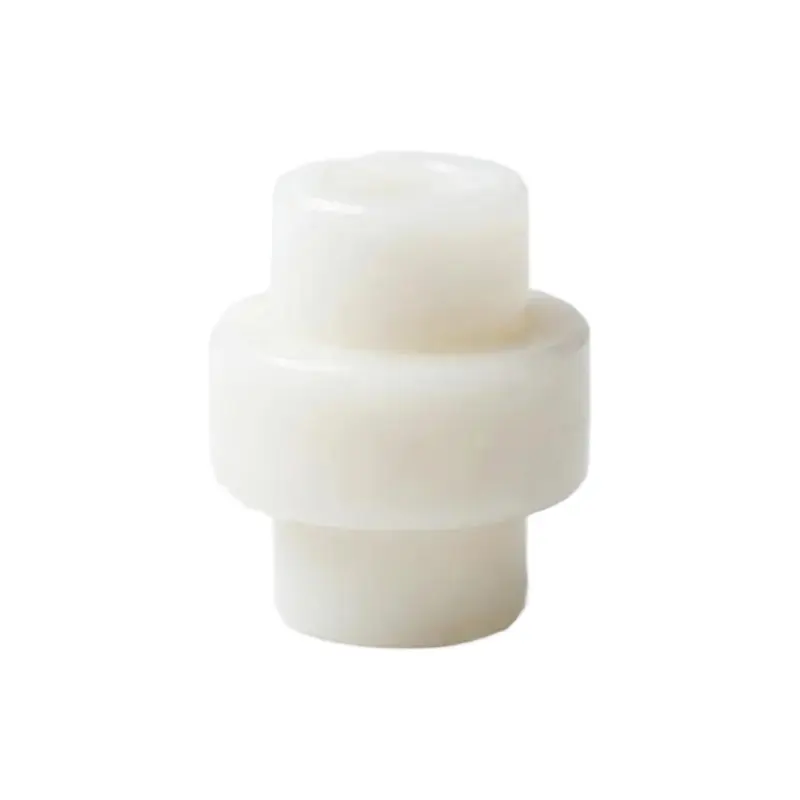
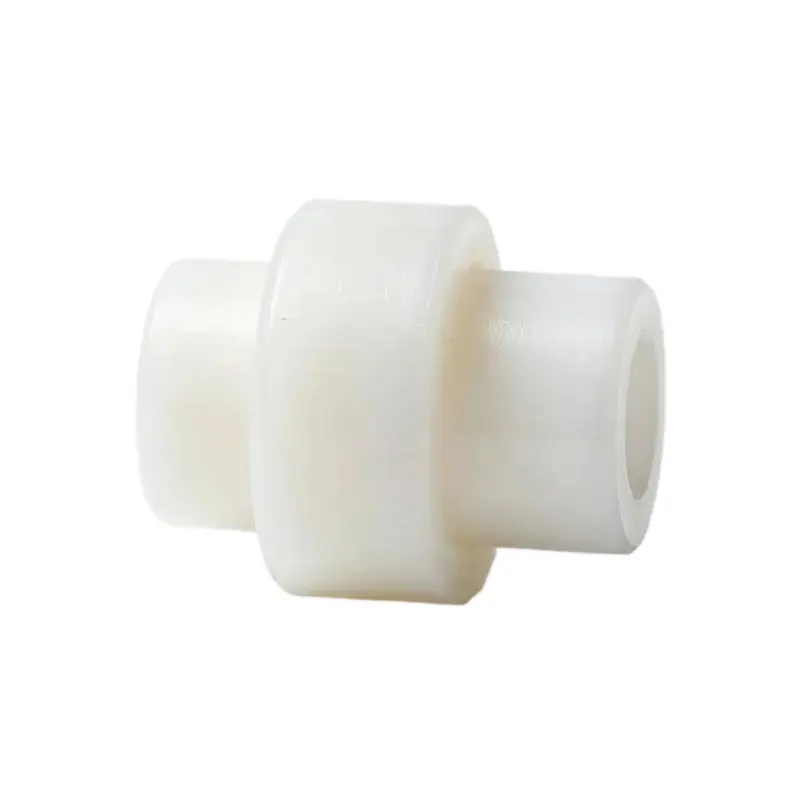
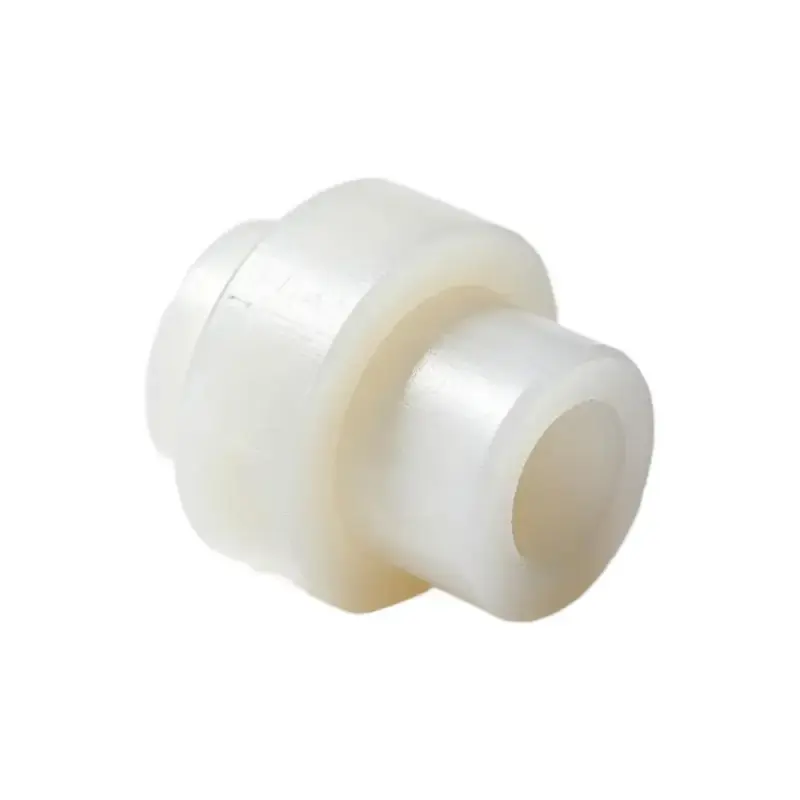
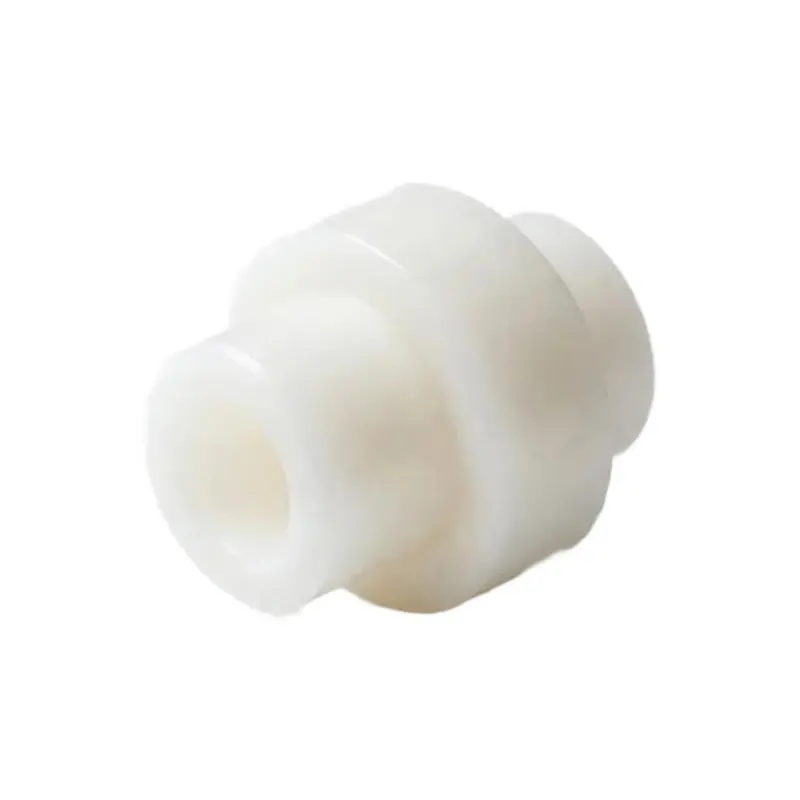
FlexiTurn CNC turns custom POM bushings, spacers, and guide sleeves to your 2D/3D CAD data. Sharp high-rake tooling and light feeds prevent heat buildup and melting burrs; soft-jaw or expanding-mandrel fixturing holds thin-wall bores round. POM-C, POM-H, black, or ESD-grade. Prototype through production.
Workmanship: CNC Milling, CNC Turning
Material: Plastic
Inquiry Email: sales@flexiturn.com
Custom CNC Machined POM Plastic Parts Details
Machining POM is not like machining aluminum or brass. Three things go wrong when a shop treats it like metal.
Heat melts the edge instead of cutting it. POM softens around 150°C and melts near 175°C. A dull tool, too-heavy feed, or wrong geometry generates friction heat that smears the material instead of cutting chips. The result is a gummy burr at the bore exit or a melted edge that looks fine until you assemble it. We run sharp, high-positive-rake tooling with light cuts and chip clearance.
Thin walls distort under clamp pressure. POM is stiffer than nylon but far softer than aluminum. A three-jaw chuck on a thin-walled bushing will ovalize the bore before the tool engages. We turn thin-walled POM sleeves on expanding mandrels or in custom soft jaws, so the bore stays round after unclamping.
Residual stress shifts dimensions slowly. Extruded POM rod carries internal stress from the extrusion process. Boring a through-bore releases that stress, and the part can drift a few hundredths of a millimeter over the next hours. For precision bores, we rough, let the part stabilize, then finish-bore to size.
Materials
- POM-C (Copolymer Acetal) — better thermal and chemical resistance than homopolymer; default for general bushings and sleeves.
- POM-H (Homopolymer Acetal / Delrin) — higher tensile strength and fatigue resistance; for load-bearing wear surfaces.
- Black POM — UV-stabilized grade for outdoor or light-exposed applications.
- ESD / Antistatic POM— dissipative grade for semiconductor and electronics handling where static buildup must be controlled.
- Glass-filled POM — available on request for higher stiffness; more abrasive on tooling, so tool life and surface finish are adjusted accordingly.
All material arrives with mill certificates. POM absorbs under 0.25% moisture — far less than nylon — so humidity does not shift critical dimensions.
Tolerances & Quality
Typical capabilities on turned POM components:
- Bore diameter: ±0.02 mm to ±0.05 mm on critical guide bores (wider than metal, due to polymer relaxation after cutting)
- Outer diameter: ±0.02 mm
- Bore roundness: ≤0.03 mm after unclamping
- Surface roughness: Ra 1.6–3.2 μm as-turned; finer achievable with light finishing passes
- Edge condition: controlled deburr; no sharp burrs at bore exits or flange corners
- Non-critical features: ISO 2768-m
Critical bores are measured after the part has rested and stabilized. CMM reports accompany production orders. The quality system is ISO 9001:2015 certified.
Finishing
POM comes in natural white or black as standard. No anodizing, plating, or powder coating is needed — the material color is consistent through the part. For cosmetic or assembly-critical applications, we tumble or hand-finish edges to a smooth, snag-free condition.
Why FlexiTurn
We treat POM as a material with its own process window — not a cheaper substitute for aluminum. Tool geometry, feed rates, and fixturing are set for polymer, not metal. We review your drawing for wall thickness, bore-to-OD ratio, and edge sharpness before quoting. There is no hard tooling cost: CNC turns directly from your CAD file, and revisions are made in software. Drawings are handled under confidentiality.
These POM components ship into automation machinery, robotics, consumer electronics, semiconductor peripheral equipment, automotive assemblies.
Send your 2D/3D CAD files — specify POM-C or POM-H, natural/black/ESD grade, and critical bore tolerances. Our engineering team reviews wall thickness, heat-management strategy, and stabilization needs, then returns a quote with DFM feedback.
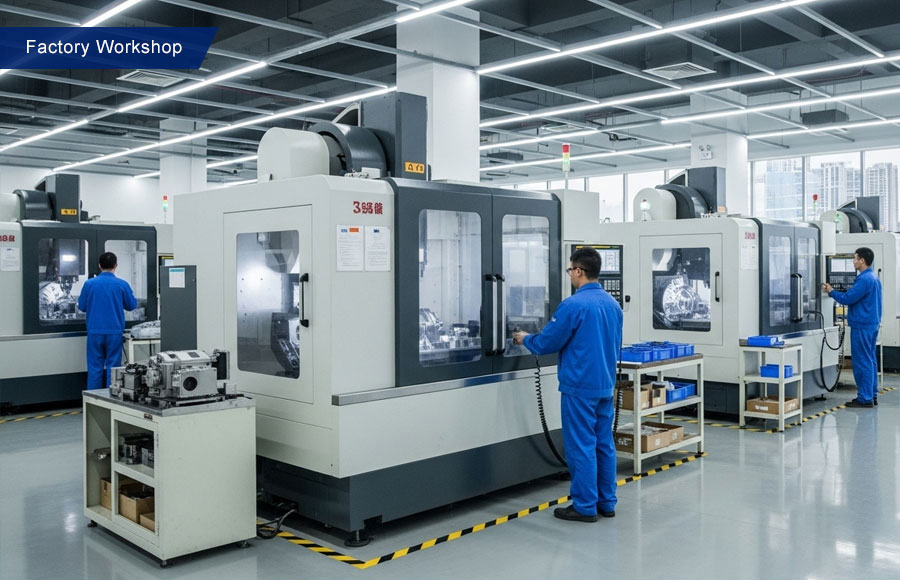
This POM bushing is one part class among many. FlexiTurn's core service is precision CNC machining — turning, milling, and secondary finishing of custom metal and engineering-plastic components across production programs. Send us your drawing.

Q1. What types of machining services do you offer?
We provide comprehensive CNC turning and milling services. FlexiTurn machines are equipped with 8-station programmable turrets and support both turning and 5-axis milling operations, making them suitable for everything from simple cylindrical parts to complex multi-axis components.
Q2. What materials can you work with?
We machine a wide range of materials including carbon steel, stainless steel, aluminum, plastics, and other engineering-grade materials. If you have a specific material in mind, just send us your requirements and we'll confirm feasibility.
Q3. What is your typical lead time?
Lead times vary depending on part complexity, quantity, and material availability. For prototypes and small-batch runs, we typically deliver within 5–10 business days. For high-volume production, we'll provide a customized schedule after reviewing your drawings. Contact us with your project details for an accurate timeline.
Q4. How do you price your services?
Pricing is based on several factors: material cost, machining time, tooling requirements, setup complexity, and order quantity. We offer competitive rates for both low-volume prototypes and high-volume production runs. Request a quote with your CAD files or drawings and we'll get back to you within 24 hours.
Q5. What quality control measures do you have in place?
We follow strict quality control procedures throughout the machining process. Our CNC systems support programmable precision down to 1 μm, ensuring high accuracy and repeatability. Every batch undergoes dimensional inspection before shipping, and we can provide inspection reports upon request.