Custom Ceramic CNC Machining Parts
Product Overview:
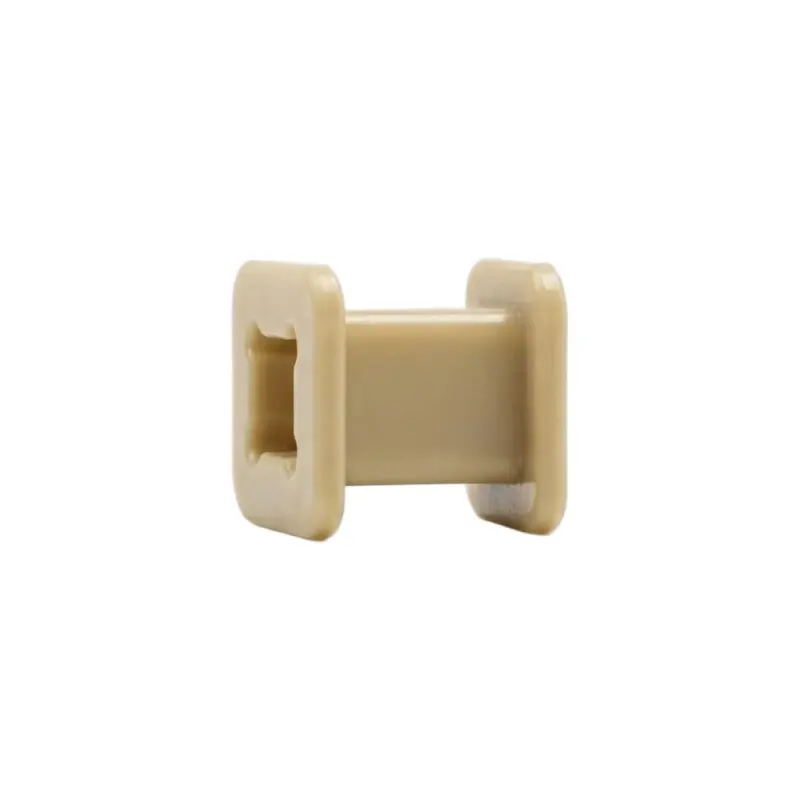
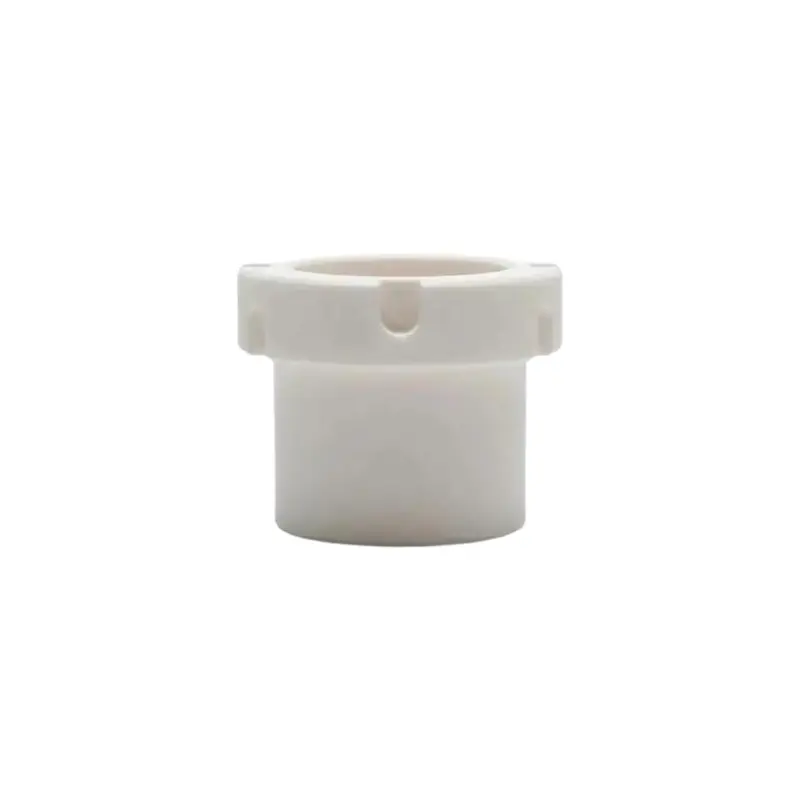
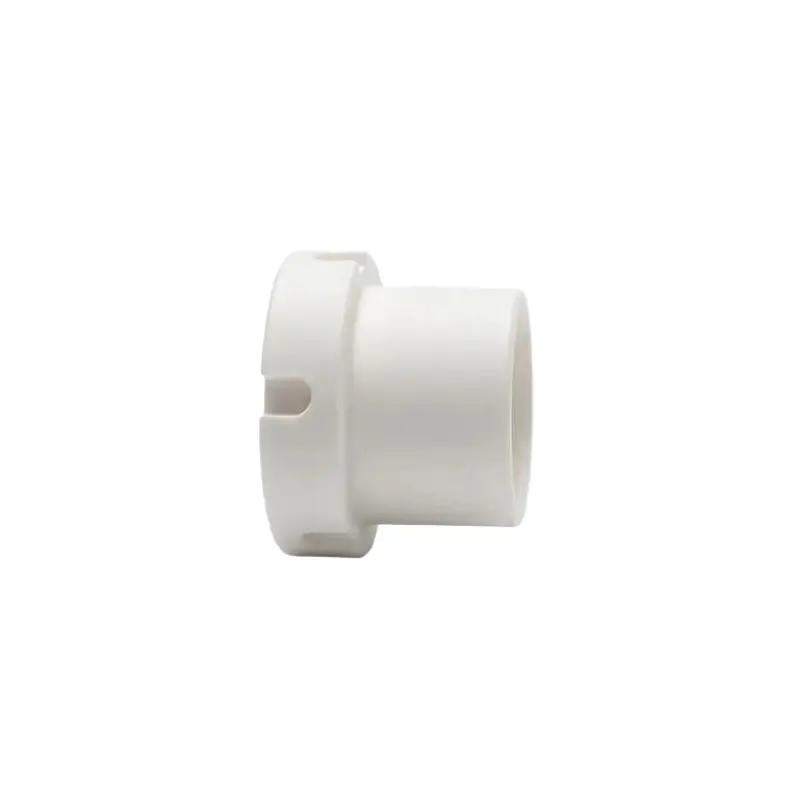
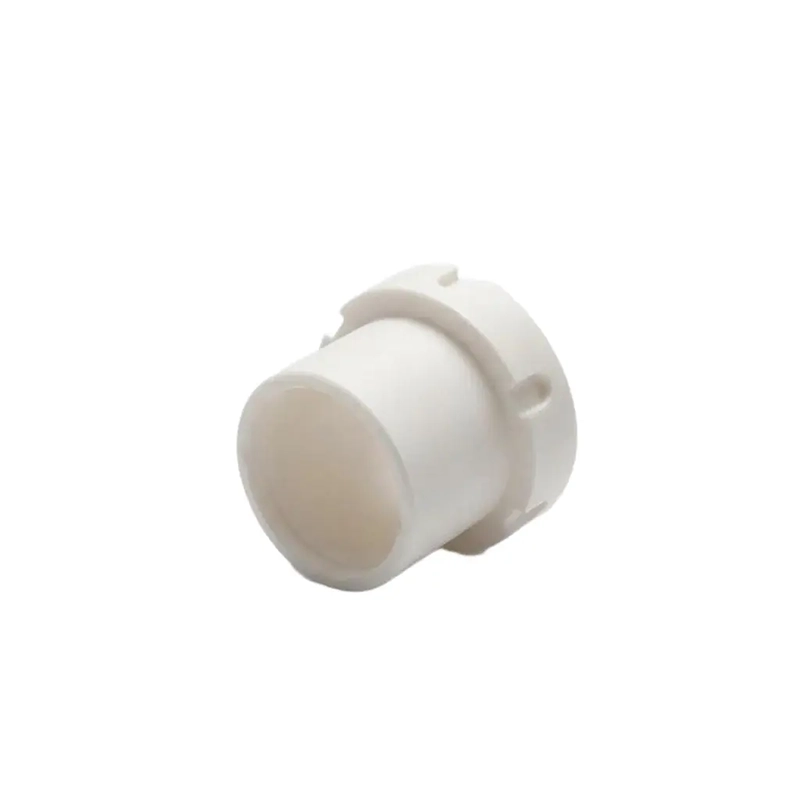
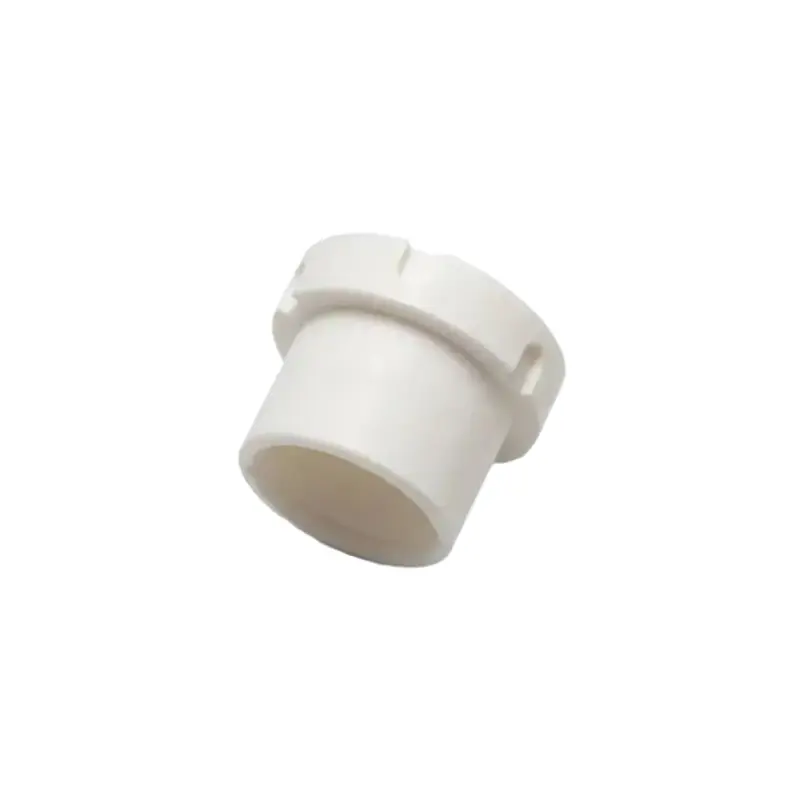
FlexiTurn precision-grinds custom alumina and zirconia ceramic components to your 2D/3D CAD data. Diamond tooling shapes sintered ceramic to ±0.01 mm tolerance; staged grinding controls edge chipping at notches and bore exits. Flanged bushings, insulators, and wear sleeves. Prototype through production.
Workmanship: CNC Grinding, CNC Milling, CNC Turning, CNC Drilling
Material: Ceramic
Inquiry Email: sales@flexiturn.com
Custom Ceramic CNC Machining Parts Details
Sintered alumina is harder than steel and cannot be turned or milled with carbide tools. Final dimensions are achieved by diamond grinding. But the process starts earlier: the part is first green-machined to near-net oversize, sintered by the material supplier at ~1600°C, then diamond-ground to final tolerance. Three failure modes dominate.
- Edge chipping at notches and bore exits. The U-shaped notches are stress concentrators. A too-heavy grinding pass or improper fixturing chips the notch corner — and on ceramic, a chipped edge means scrap, not deburring. We grind notches in light staged passes, with the flange supported to prevent vibration.
- Shrinkage compensation across the sintering step. When the green part is sintered, it shrinks 15–20%. If green-machined dimensions are not sized against the known linear shrinkage factor of that ceramic grade, the finished part misses tolerance. We set green dimensions using the material supplier's published shrinkage rate, then verify post-sinter dimensions before grinding.
- Grinding heat causes microcracking. Alumina conducts heat poorly. A dull diamond wheel or heavy cut generates localized heat that introduces surface microcracks — cracks that may not be visible but fail later in service. We dress wheels regularly and run light cuts with coolant to keep the grinding zone cool.
Materials
- Alumina (Al₂O₃, 95% / 99.5%) — default for insulators, bushings, and wear parts. High hardness, excellent electrical insulation, good chemical resistance.
- Zirconia (ZrO₂) — higher toughness and flexural strength than alumina; for parts subject to impact or higher mechanical load.
- Macor (Machinable Glass Ceramic) — ready-to-machine ceramic that can be turned, drilled, or milled with standard carbide tools in its delivered state. No sintering required. For prototypes or complex low-volume geometries.
- Silicon Carbide (SiC) — available on request for extreme wear or high-heat applications.
All material arrives with supplier certificates and composition data.
Tolerances & Quality
Typical capabilities on diamond-ground ceramic components:
- Bore diameter: ±0.01 mm to ±0.02 mm
- Outer diameter: ±0.01 mm to ±0.02 mm
- Flange perpendicularity: ≤0.01 mm
- Notch position: ±0.02 mm
- Surface roughness: Ra 0.4–0.8 μm as ground; Ra 0.1–0.2 μm with lapping
- Edge condition: no chips or cracks at notches, bore exits, or flange corners
- Non-critical features: ±0.05 mm
Critical dimensions are measured after sintering and stabilization. CMM and optical inspection reports accompany production orders. The quality system is ISO 9001:2015 certified.
Finishing
Ceramic needs no anodizing, plating, or powder coating. The as-ground surface is consistent and chemically inert. Where required, bores can be lapped to Ra 0.1–0.2 μm for precision bearing surfaces, or parts laser-marked with batch numbers.
Why FlexiTurn
We treat ceramic as a brittle, hard material with its own process window — not a harder aluminum. Diamond wheel selection, feed rates, and fixturing are set for precision grinding. We review your drawing for notch sharpness, wall thickness, and bore-to-OD ratio before quoting, and flag features that are likely to chip. There is no hard tooling cost for prototype runs; green-machining revisions are made before the sintering step. Drawings are handled under confidentiality.
These ceramic components ship into semiconductor manufacturing equipment, medical devices, aerospace non-flight-critical applications, and high-temperature industrial fixtures.
Send your 2D/3D CAD files — specify alumina or zirconia, purity grade, and critical bore tolerances. Our engineering team reviews notch geometry, wall thickness, and shrinkage compensation, then returns a quote with DFM feedback.
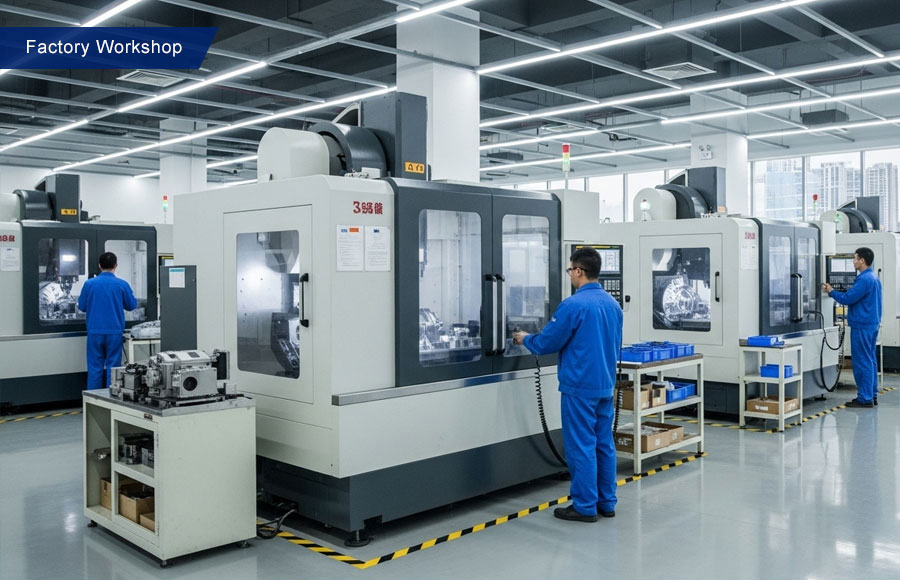
This ceramic bushing is one part class among many. FlexiTurn's core service is precision CNC machining — turning, milling, grinding, and secondary finishing of custom metal, ceramic, and engineering-plastic components across production programs. Send us your drawing.

Q1. What types of machining services do you offer?
We provide comprehensive CNC turning and milling services. FlexiTurn machines are equipped with 8-station programmable turrets and support both turning and 5-axis milling operations, making them suitable for everything from simple cylindrical parts to complex multi-axis components.
Q2. What materials can you work with?
We machine a wide range of materials including carbon steel, stainless steel, aluminum, plastics, and other engineering-grade materials. If you have a specific material in mind, just send us your requirements and we'll confirm feasibility.
Q3. What is your typical lead time?
Lead times vary depending on part complexity, quantity, and material availability. For prototypes and small-batch runs, we typically deliver within 5–10 business days. For high-volume production, we'll provide a customized schedule after reviewing your drawings. Contact us with your project details for an accurate timeline.
Q4. How do you price your services?
Pricing is based on several factors: material cost, machining time, tooling requirements, setup complexity, and order quantity. We offer competitive rates for both low-volume prototypes and high-volume production runs. Request a quote with your CAD files or drawings and we'll get back to you within 24 hours.
Q5. What quality control measures do you have in place?
We follow strict quality control procedures throughout the machining process. Our CNC systems support programmable precision down to 1 μm, ensuring high accuracy and repeatability. Every batch undergoes dimensional inspection before shipping, and we can provide inspection reports upon request.