Custom CNC Machined Brass Parts
Product Overview:
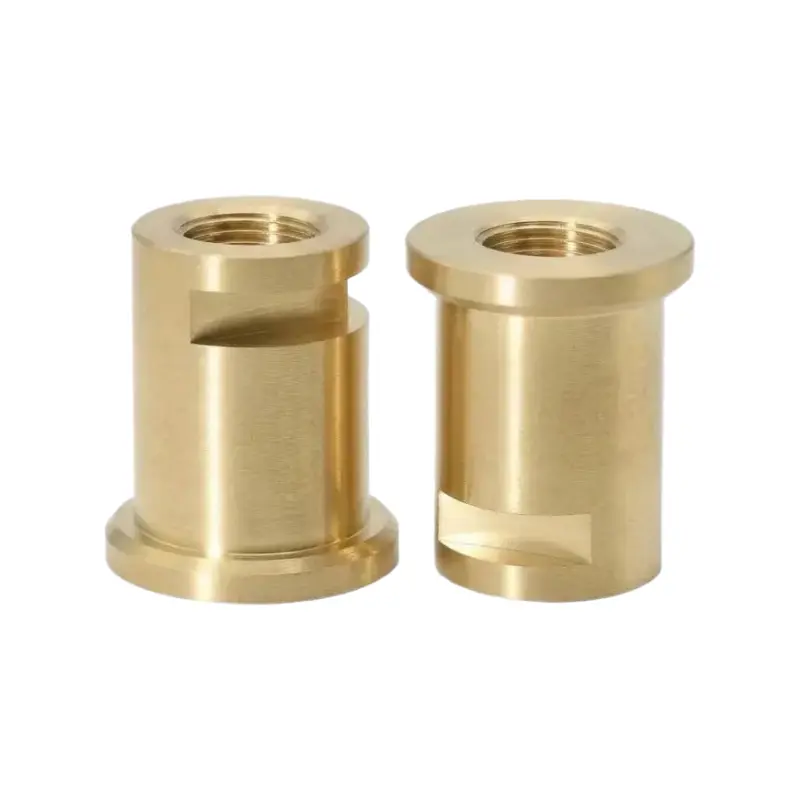
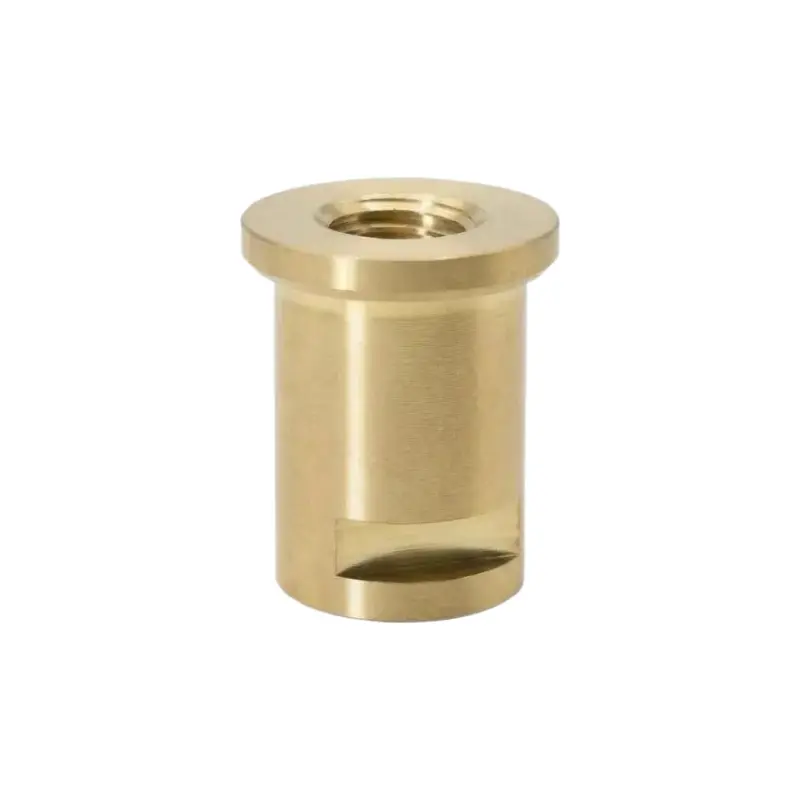
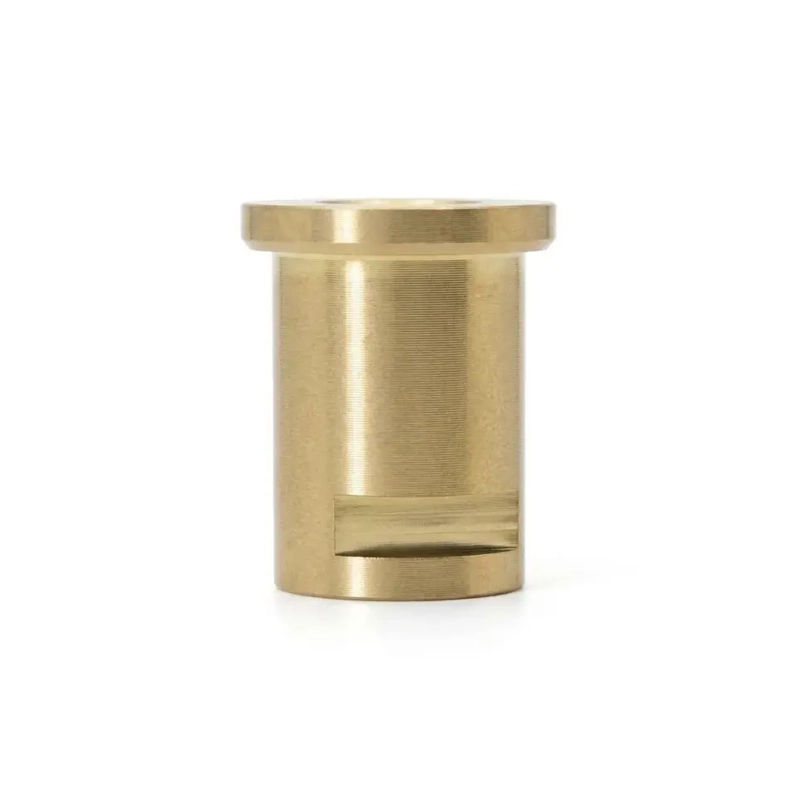
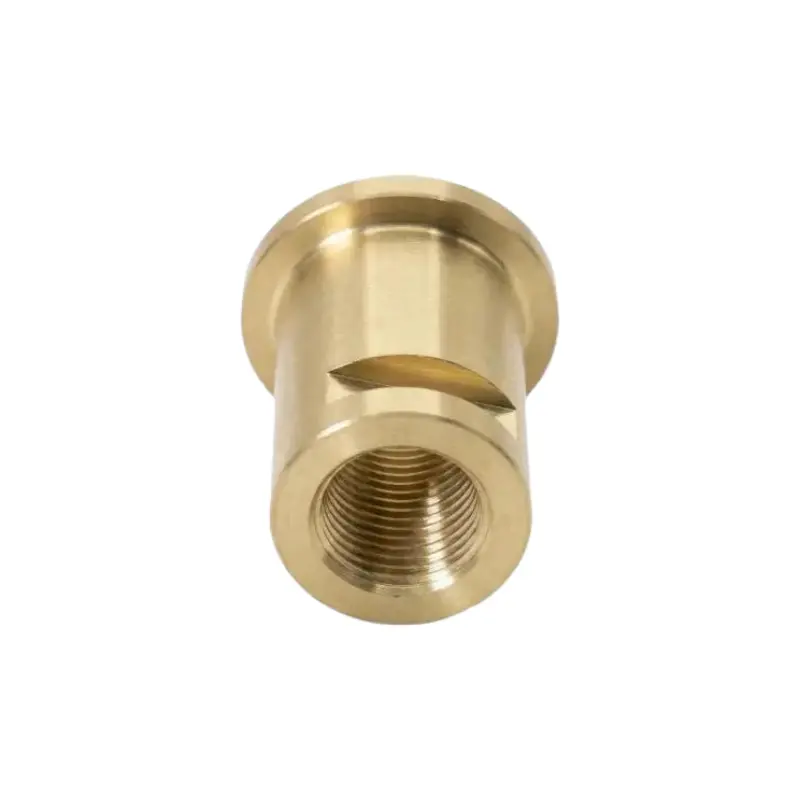
FlexiTurn CNC machines custom brass flanged sleeves with internal threads and milled side slots from C36000 and lead-free brass to your 2D/3D CAD data. Soft-jaw fixturing controls bore distortion; indexed slot milling holds angular position off a defined datum; thread-slot intersections are conditioned so the mating screw threads in freely. Prototype through production.
Workmanship: CNC Milling, CNC Turning, CNC Drilling, 4 Axis CNC Machining
Material: Brass
Inquiry Email: sales@flexiturn.com
Custom CNC Machined Brass Parts Details
The parts shown above are brass flanged sleeves: a machined mounting flange, an internal thread in metric or Unified form, and a milled rectangular side slot through the wall. Every dimension, thread class, and angular datum is defined by your 2D or 3D CAD data.
Why This Part Class Is Not "Just a Threaded Bushing"
A brass sleeve with a flange, an internal thread, and a side slot looks like a straightforward turning job. Three failure modes cause most assembly problems, and none is a machine-speed or feed problem.
- Angular slot alignment. The side slot positions a set screw, pin, or actuator to a defined angular orientation. If its angular position relative to the flange face or thread start is off, the sleeve will not engage or lock as designed.
- Internal thread runout. Brass is soft. Cutting internal threads causes material drag and tear-out if the tool geometry or speed is wrong. If the thread axis is not concentric with the flange and outer diameter, the mating screw binds under torque.
- Burrs at thread-slot intersections. Brass forms sharp burrs. When a milled slot runs close to or breaks through into the internal thread, those burrs snag the mating screw, prevent it from seating, or score the thread flanks. A burr left in the thread root or slot edge is an assembly defect.
How FlexiTurn Controls These Risks
- Machining sequence with indexed slotting. The bore and internal thread are cut first. The side slot is then milled on a rotary indexer or C-axis, positioned off a precise datum so the angular phase between thread start and slot matches your drawing. Phase alignment is controlled as a first-order process parameter, not checked after the fact.
- Soft-jaw or collet fixturing. Thin-walled brass sleeves are held in custom soft jaws or collets rather than a three-jaw chuck, so clamping pressure does not ovalize the bore or distort the slot walls.
- Intersection deburring and dual verification. Thread-slot intersections are edge-broken with specialized tools, not by hand. Each internal thread is verified with go/no-go gauges (6H for metric, 2B for Unified), and the slot intersection is checked for free screw insertion before release.
Materials
FlexiTurn machines these sleeves from the grades specified for threaded brass hardware:
- C36000 (Free-Cutting Brass) — default for high-volume threaded sleeves. Balanced strength and machinability, good surface finish for locking and adjustment functions. Contains lead; not for potable water or medical use.
- Lead-Free Brass (C27450 / CW511L) — for plumbing, fluid-control, potable-water, or non-implantable medical applications. Chip formation differs from C36000; feeds and speeds are adjusted accordingly.
- Phosphor Bronze (C54400) — where higher thread strength, wear resistance, or fatigue life exceeds what brass can provide.
All material arrives with documented mill certificates and heat-number traceability.
Tolerances & Quality
Typical capabilities on brass flanged threaded sleeves:
- Internal thread: metric or Unified (e.g., M6×1.0, 1/4-20 UNC), Class 6H / 2B standard, go/no-go verified
- Mating outer diameter: ±0.02 mm
- Thread-to-OD concentricity: ≤0.02 mm TIR
- Slot angular position: ±0.5° relative to datum (or your drawing spec) Slot width: ±0.02 mm
- Bore surface roughness: Ra 1.6 μm; thread flanks finished with form tools for consistent engagement
- Non-critical features: ISO 2768-m
Dimensions are verified in-process and after unclamping. CMM and thread-gauge reports accompany production orders. The quality management system is ISO 9001:2015 certified.
Surface Finishing
Bare brass tarnishes in storage. Finishing is matched to your operating environment:
- Nickel plating — wear and corrosion protection for high-cycle locking or adjustment mechanisms.
- Tin plating — solderability and lower-cost corrosion protection.
- Anti-tarnish / passivation — for unplated parts requiring extended shelf life before assembly.
Plating adds thickness to the internal thread. FlexiTurn factors plating allowance into the machined thread and re-verifies the finished thread with go/no-go gauges after plating.
Why Choose FlexiTurn
- DFM review before quoting. We check thread depth, slot width, wall thickness-to-slot ratio, and clamping feasibility against your drawing before you commit.
- Material selection guidance. We recommend C36000, lead-free brass, or phosphor bronze based on load, environment, and regulatory requirements.
- No hard tooling. CNC machines your CAD file directly — no mold, die, or dedicated fixture for prototypes and low-to-medium runs. Revisions are made in software, not by retooling. Drawings handled under confidentiality protection.
FlexiTurn supplies these components into automation machinery, electronics hardware, fluid control, and non-implantable medical assemblies.
Get Started
Submit your 2D/3D CAD files, specify the brass grade, internal thread class, and plating requirement. Our engineering team will review thread-slot interference, clamping distortion risk, and angular alignment, then return a quote with DFM feedback.
This flanged threaded sleeve is one part class among many. FlexiTurn's core service is precision CNC machining — turning, milling, and secondary finishing of custom metal and engineering-plastic components across production programs. Send us your drawing.
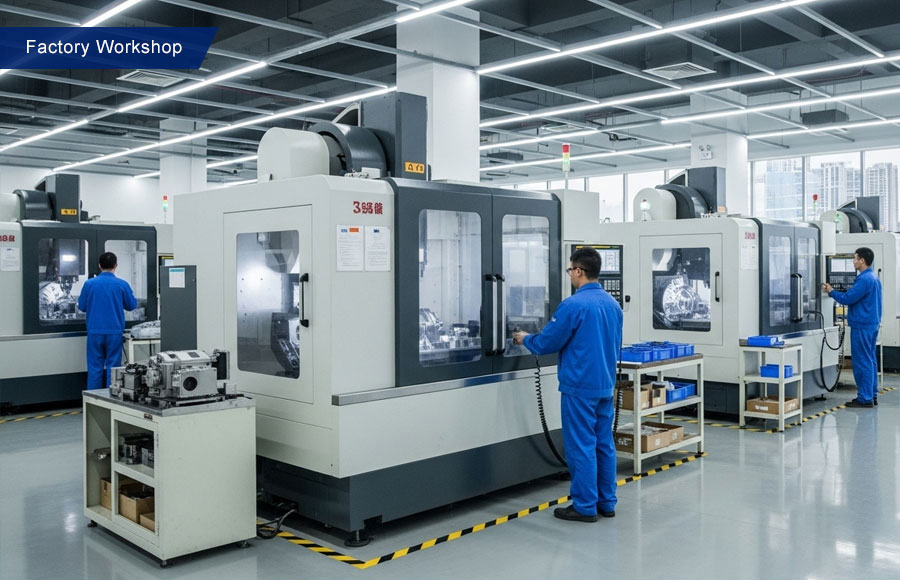

Q1. What types of machining services do you offer?
We provide comprehensive CNC turning and milling services. FlexiTurn machines are equipped with 8-station programmable turrets and support both turning and 5-axis milling operations, making them suitable for everything from simple cylindrical parts to complex multi-axis components.
Q2. What materials can you work with?
We machine a wide range of materials including carbon steel, stainless steel, aluminum, plastics, and other engineering-grade materials. If you have a specific material in mind, just send us your requirements and we'll confirm feasibility.
Q3. What is your typical lead time?
Lead times vary depending on part complexity, quantity, and material availability. For prototypes and small-batch runs, we typically deliver within 5–10 business days. For high-volume production, we'll provide a customized schedule after reviewing your drawings. Contact us with your project details for an accurate timeline.
Q4. How do you price your services?
Pricing is based on several factors: material cost, machining time, tooling requirements, setup complexity, and order quantity. We offer competitive rates for both low-volume prototypes and high-volume production runs. Request a quote with your CAD files or drawings and we'll get back to you within 24 hours.
Q5. What quality control measures do you have in place?
We follow strict quality control procedures throughout the machining process. Our CNC systems support programmable precision down to 1 μm, ensuring high accuracy and repeatability. Every batch undergoes dimensional inspection before shipping, and we can provide inspection reports upon request.